
Servicios de inspección de alcantarillado con cámara en Old House
 Michael Carter
0 comments
Michael Carter
0 comments

Una inspección con cámara de alcantarillado es la forma más rápida de dejar de adivinar sobre un problema de drenaje, un olor a alcantarilla o el riesgo subterráneo de una propiedad antigua. En lugar de tratar los síntomas desde la superficie, se introduce una cámara por la tubería, se registra el aspecto real de la tubería y se toma la siguiente decisión basándose en la evidencia. Esto es importante tanto si eres un propietario que se enfrenta a atascos recurrentes, un arrendador que intenta evitar llamadas de emergencia o un comprador que compara el riesgo de reparaciones antes de cerrar la venta. Para la mayoría de los trabajos residenciales, el valor es simple: inspeccionar antes de reparar y no gastar dinero en excavaciones hasta que las imágenes te digan lo que realmente hay.
Lo que realmente muestra la cámara

Esta es la razón principal de la existencia de la inspección con cámara de alcantarillado: hace visible un problema subterráneo antes de que pagues por la solución equivocada. A diferencia de una visita estándar de limpieza de drenajes, la inspección no se detiene en "la línea está lenta". Muestra cómo se ve la obstrucción o el daño, qué tan grave es y si el problema es de mantenimiento, falla estructural o ambos.
Esa evidencia visual también te indica cuál es el siguiente paso lógico. Algunos hallazgos apuntan a la limpieza. Otros apuntan a reparaciones puntuales. Algunos te dicen que la línea ha llegado a la etapa de reemplazo. Si has leído Cámara de alcantarillado vs. Contratar a un fontanero, esta es la parte en la que tener una empieza a tener sentido: una vez que puedes ver el problema, ya no estás contratando servicios a ciegas.
1. Intrusión de raíces
Las raíces suelen entrar en las baldosas de arcilla más antiguas, el hormigón o las juntas comprometidas donde la humedad las atrae. En la cámara, la intrusión temprana parece filamentos blancos o marrones finos como el pelo que cruzan una junta. La intrusión avanzada parece una cortina fibrosa o un nudo denso que se introduce en el diámetro de la tubería y atrapa papel, grasa y sólidos.
La conclusión práctica es que las raíces rara vez son solo un "pequeño atasco". Si la cámara muestra una junta limpia con unos pocos filamentos, la limpieza y el monitoreo pueden ser suficientes. Si el marco se llena de masa de raíces, estás tratando con un defecto que seguirá regresando hasta que se repare la tubería o la junta.
2. Acumulación de grasa, lodos y sarro
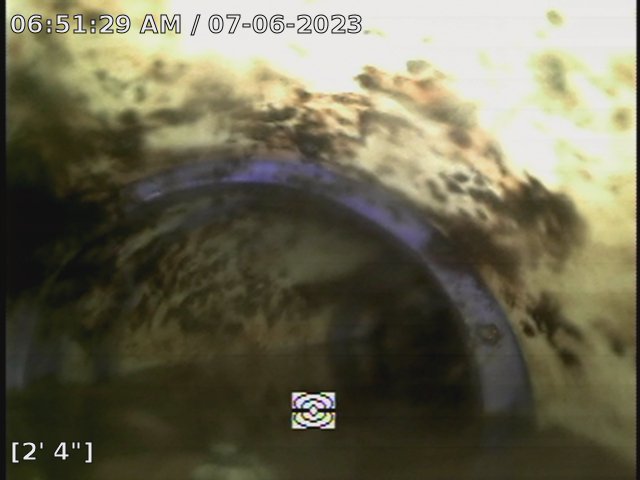
Las casas con mucha cocina y los sistemas de hierro fundido más antiguos a menudo muestran una tubería que se ha estrechado gradualmente desde las paredes hacia adentro. En la cámara, la grasa y los lodos parecen un estrechamiento suave alrededor del centro abierto de la tubería, mientras que la incrustación mineral parece más dura y rugosa a lo largo de la pared.
Lo que importa visualmente es la apertura restante. Una línea aún puede drenar aunque ya esté restringida en un 40% o 50%. La inspección te ayuda a diferenciar entre "necesita limpieza pronto" y "esta tubería está a una mañana fría de un atasco total".
3. Grietas y corrosión
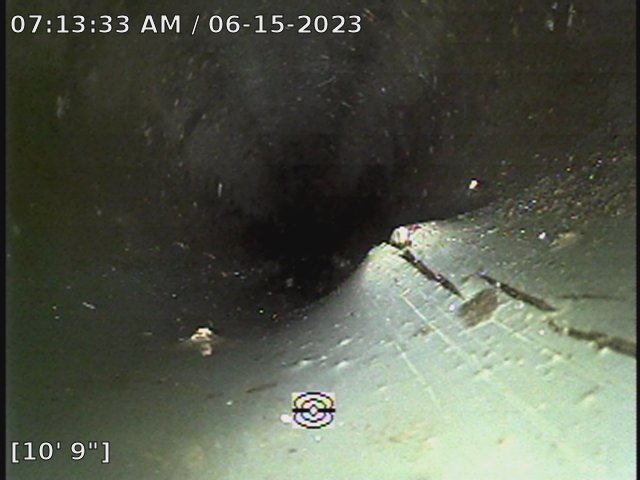
Las grietas aparecen como líneas irregulares o fisuras a través de la cara de la tubería, especialmente en las de arcilla. El hierro fundido corroído aparece rugoso, de color marrón anaranjado y picado, a veces con escamas o trozos que sobresalen en el camino del flujo. La cámara no solo confirma que la línea es antigua, sino que también muestra si la antigüedad es aún manejable o si ya se está convirtiendo en una pérdida estructural.
Es por eso que Guía de identificación de materiales de tuberías es una lectura complementaria tan importante. El mismo defecto significa cosas diferentes según si la línea es de PVC, hierro fundido, teja de arcilla u Orangeburg.
4. Desalineación y separación de juntas

Cuando el suelo se mueve, una junta de tubería puede dejar de alinearse correctamente. En la cámara, esto se ve como un escalón, labio o repisa donde una sección se asienta más alta o más baja que la siguiente. En algunos casos, la separación es lo suficientemente pequeña como para seguir funcionando durante un tiempo. En otros, se convierte en un saliente que atrapa toallitas, grasa y raíces cada vez que se utiliza la línea.
Este es uno de los ejemplos más claros de por qué una cámara supera las conjeturas. Un atasco recurrente a la misma distancia no es necesariamente "solo otro atasco". Puede ser la misma junta desalineada atrapando escombros una y otra vez.
5. Acumulación de agua o secciones de panza
Una tubería de alcantarillado debe tener una pendiente continua hacia la conexión de la calle o el tanque séptico. Cuando parte del recorrido se asienta, el agua se acumula en el punto bajo en lugar de drenar limpiamente. En la cámara, se ve una línea de agua reflectante o la lente sumergiéndose en agua estancada antes de volver a salir.
Esto es visualmente importante porque el agua estancada puede ocultar lo que hay debajo. Si la cámara entra repetidamente en una bolsa de agua a la misma distancia, es probable que se trate de un problema de "panza" o contrapendiente, no simplemente de una obstrucción puntual.
6. Colapso parcial o total
Una sección colapsada es el hallazgo más grave porque la cámara se detiene físicamente. En el video, la tubería puede estrecharse abruptamente, deformarse hacia adentro o desaparecer detrás de material roto e intrusión de tierra. Si el cabezal no puede avanzar más allá de ese punto, esa es tu respuesta.
En esa etapa, las herramientas de limpieza no son la solución. Se trata de excavación, evaluación de revestimiento o reemplazo de la sección. Si la siguiente pregunta es "¿dónde exactamente abrimos?", ahí es donde Localizador de líneas de alcantarillado vs. cámara de tuberías y Tecnología de sonda de 512 Hz se convierten en el siguiente paso natural.
Volver arribaCómo funciona la inspección
Una inspección con cámara de alcantarillado es sencilla cuando la configuración coincide con el trabajo. El proceso es importante porque un acceso deficiente, una inserción apresurada o una falta de disciplina en la grabación pueden convertir una inspección útil en imágenes vagas en las que nadie confía después. El objetivo no es solo introducir una cámara en la tubería, sino regresar con evidencia utilizable.
Paso 1: Encontrar la boca de limpieza
La boca de limpieza es el punto de acceso más eficiente porque permite la entrada directa a la línea principal sin necesidad de quitar inodoros o abrir accesorios. En muchas casas, se encuentra cerca de los cimientos, en un sótano, un espacio de arrastre o cerca del nivel del suelo en el exterior. Si no estás seguro de qué punto de acceso es el más importante, la Guía de inspección con cámara de tuberías desglosa la lógica básica de acceso y las opciones de cable.
Paso 2: Preparar el equipo
La cabeza de la cámara, la varilla de empuje, el carrete, el monitor y el DVR deben estar listos antes de que el cable entre. Para la mayoría de las líneas principales residenciales, eso significa una tubería de 3 o 4 pulgadas, suficiente cable para llegar a la calle o al tanque, y una pantalla lo suficientemente brillante como para leer a la luz del día. El Powerwill L09D1 está diseñado para ese caso de uso residencial exacto: cabezal autonivelante, monitor IPS de 9 pulgadas, grabación DVR y un factor de forma que funciona para propietarios de viviendas, propietarios e inspectores principiantes.
Paso 3: Avance la cámara lentamente
Aquí es donde muchas personas sabotean su propia inspección. No estás corriendo hacia la calle. Estás atento a las uniones, los desajustes, la acumulación, los puntos de entrada de raíces, el agua estancada y los cambios de material. Un avance lento hace que las imágenes sean legibles. Un avance rápido crea borrosidad y pierde el fotograma exacto donde el problema se hace evidente.
Paso 4: Registre y marque los hallazgos
Un buen material no es solo visual; está documentado. Deténgase en cada hallazgo importante, deje que la imagen se asiente y grabe tiempo suficiente sobre el defecto para que otra persona pueda revisarlo más tarde. Esto es especialmente importante para compradores y propietarios. Si la línea se convierte en una negociación o una discusión con el seguro, el material grabado es más sólido que una descripción verbal.
Esa es exactamente la razón por la que el artículo Inspección de alcantarillado antes de comprar una casa trata el video como una ventaja, no como una decoración.
Paso 5: Recuperar, revisar y decidir
Recupere el cable bajo control, confirme los marcos importantes y decida qué significa realmente el metraje. Algunas líneas solo necesitan limpieza. Algunas necesitan una localización adicional. Algunas necesitan que un fontanero presupueste una reparación con el vídeo en la mano. La inspección se completa cuando el metraje se convierte en la siguiente acción correcta, no cuando el cable sale de la tubería.
Volver arribaCuándo programar una inspección de cámara de alcantarillado
La inspección preventiva es más barata que las conjeturas de emergencia. El mejor momento para usar una cámara suele ser antes de que la línea obligue a hacerlo. Estos son los seis desencadenantes más comunes en los que una inspección se amortiza rápidamente.
| Desencadenante | Por qué es importante | Qué ayuda a responder la inspección |
|---|---|---|
| Drenajes lentos recurrentes | Los síntomas repetidos sugieren un defecto persistente, no un atasco puntual. | ¿Son raíces, grasa, incrustaciones o un punto de atrapamiento estructural? |
| Olor a aguas residuales o zonas húmedas en el patio | Los signos superficiales a menudo aparecen después de que el problema subterráneo ya está establecido. | ¿Hay agua estancada, una grieta o una sección dañada? |
| Antes de comprar una casa antigua | Las inspecciones de viviendas estándar suelen excluir la lateral de alcantarillado enterrada. | ¿Estás heredando intrusión de raíces, material antiguo o un futuro reemplazo? |
| Después de repetidos desatascos o hidrojets | El alivio de los síntomas sin un diagnóstico visual a menudo significa que la causa persiste. | ¿Estás limpiando el mismo defecto una y otra vez? |
| Antes de excavar, revestir o realizar trabajos importantes de paisajismo | Debes conocer el estado de la tubería antes de gastar en reparaciones o excavar alrededor de ella. | ¿Dónde está el defecto y cuál es el alcance correcto de la reparación? |
| Después de un atasco importante o un ciclo de quejas de inquilinos | Los eventos de emergencia justifican documentar el estado completo de la línea, no solo reabrir el flujo. | ¿El evento expuso un problema de reparación, un problema de gestión o ambos? |
Para los propietarios, esta sección se trata principalmente de evitar sorpresas. Para los compradores, es una ventaja. Para los arrendadores, es control de riesgos. En los tres casos, la inspección es útil porque convierte una vaga historia de fontanería en imágenes, distancia y una decisión más defendible.
Volver arriba¿Deberías tener una o contratar el servicio?
Aquí es donde la intención informativa se vuelve comercial. Si solo necesitas una inspección cada pocos años, contratar a un fontanero puede seguir siendo racional. Pero la lógica cambia rápidamente para los propietarios, los compradores de propiedades repetidos, los propietarios con laterales más antiguos y cualquiera que gestione múltiples eventos de drenaje.
Cámara de alcantarillado vs. contratar a un fontanero explica el punto de equilibrio con más detalle, pero la versión corta es simple: una vez que esperas inspeccionar más de una o dos veces, la propiedad deja de ser una decisión de "gadget" y se convierte en una decisión de documentación.
También ayuda a comprender qué clase de herramienta necesitas realmente. Si intentas inspeccionar un sifón de ducha o una rama de un accesorio corta, eso es diferente de una tubería principal de alcantarillado. Endoscopio vs. cámara de alcantarillado existe precisamente por esa razón: no todas las cámaras de inspección son cámaras de alcantarillado, y comprar el factor de forma incorrecto es un atajo caro.
El siguiente paso correcto para los compradores de Powerwill
Si tu caso de uso es la inspección de propiedades residenciales o de uso ligero, la Powerwill L09D1 es el punto de partida ideal. Te ofrece las tres cosas que la mayoría de los compradores primerizos realmente necesitan: suficiente cable para tramos residenciales típicos, imágenes autonivelantes fáciles de interpretar y video grabado que puedes guardar o compartir.
Si ya sabes que necesitas mayor alcance, cobertura de tuberías más grandes o un conjunto de comparación más amplio, empieza con la línea completa de cámaras de alcantarillado Powerwill. Esa ruta tiene más sentido cuando comparas la longitud del cable, el tamaño del monitor, el soporte de la sonda y la frecuencia de trabajos más profesionales.
El objetivo de la inspección con cámara de alcantarillado no es recopilar vídeos impresionantes, sino tomar una mejor decisión de reparación, compra o mantenimiento a partir de imágenes reales en lugar de suposiciones. Esa es la lógica detrás de toda esta página de categoría, y es la lógica en la que se basa Powerwill.
Volver arribaConclusiones clave
- Una inspección con cámara de alcantarillado muestra lo que realmente hay dentro de la línea antes de pagar por un método de reparación incorrecto.
- Los seis hallazgos más importantes a reconocer son raíces, acumulación, grietas, desniveles, agua estancada y colapso.
- Una inspección útil sigue un flujo de trabajo simple de cinco pasos: acceso, configuración, avance lento, grabación y luego revisión.
- El mejor momento preventivo es antes de que los síntomas repetidos o las grandes decisiones de gasto te obliguen a adivinar.
- Para trabajos residenciales de línea principal, Powerwill L09D1 es el punto de entrada práctico, mientras que la línea completa cubre necesidades más exigentes.
Preguntas frecuentes
¿Necesito una licencia para realizar una inspección de cámara de alcantarillado en mi propia propiedad?
No. Pasar una cámara a través de una boca de limpieza accesible es una tarea de diagnóstico visual, no un problema de licencia de reparación de fontanería. El requisito principal es un acceso seguro y la herramienta adecuada para el tamaño de la tubería.
¿Qué tamaños de tubería puede inspeccionar normalmente una cámara de alcantarillado residencial?
La mayoría de las líneas principales residenciales son de 3 o 4 pulgadas, y ese es el rango principal que una cámara de alcantarillado residencial estándar está diseñada para cubrir. Los desagües de ramales más pequeños a menudo requieren una cámara de drenaje más delgada en lugar de un carrete de línea principal.
¿Qué debo hacer si la cámara encuentra algo grave?
Usa las imágenes para definir la siguiente decisión. Algunos problemas justifican la limpieza, otros justifican un presupuesto para una reparación puntual y otros justifican la evaluación del revestimiento o el reemplazo. El valor de la inspección es que dejas de tomar esa decisión a ciegas.
¿Cuánto tiempo dura una inspección normal con cámara de alcantarillado?
La mayoría de las inspecciones residenciales toman aproximadamente de 20 a 45 minutos una vez que se tiene acceso, dependiendo de la longitud de la línea, las curvas y la frecuencia con la que se detiene para documentar los hallazgos.
¿Qué formato de grabación debo buscar al elegir una cámara de alcantarillado?
Necesitas un sistema que grabe videos compartibles en una tarjeta SD u otro formato exportable, no uno que solo muestre imágenes en vivo en la pantalla. Si el material no se puede guardar, es mucho más difícil usarlo para presupuestos, inquilinos o documentación inmobiliaria.
¿En qué se diferencia una cámara de alcantarillado de una cámara de serpiente o una cámara de drenaje?
Una cámara de alcantarillado está diseñada para tramos de línea principal más largos y tuberías más grandes. Una cámara de estilo serpiente corta es mejor para sifones y pequeños drenajes de derivación. Si su objetivo es la alcantarilla del edificio o la tubería lateral, necesita una verdadera cámara de alcantarillado en lugar de una varilla de inspección corta.
Conclusión
Una inspección con cámara de alcantarillado es valiosa porque responde a la pregunta que los síntomas superficiales no pueden: qué hay realmente dentro de la línea en este momento. Una vez que puede ver la tubería, puede dejar de pagar de más por conjeturas y comenzar a elegir el siguiente paso correcto.
Si desea una configuración residencial amigable para el propietario, comience con la Powerwill L09D1. Si necesita comparar longitudes de cable, cobertura de tuberías más grandes u opciones de alta resistencia, explore la colección completa de cámaras de alcantarillado Powerwill.
Volver arriba
Comments
No comments