
Herramienta localizadora de tuberías de agua: lo que utilizan los fontaneros para encontrar tuberías enterradas rápidamente
 Michael Carter
0 comments
Michael Carter
0 comments
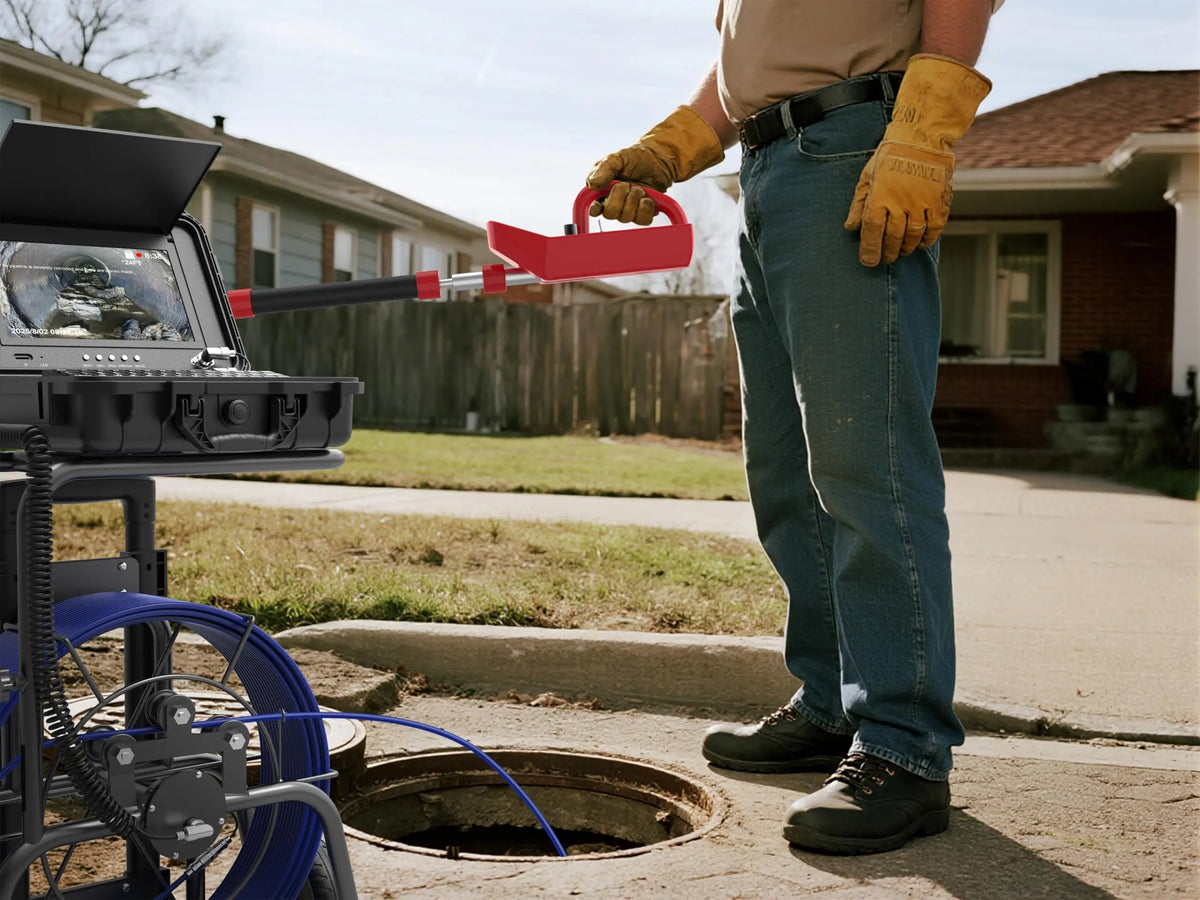
Una herramienta localizadora de tuberías de agua es lo que los fontaneros utilizan cuando necesitan dejar de excavar a ciegas y marcar rápidamente una tubería de servicio privada enterrada. Esa necesidad es real porque la guía 811 de la ciudad de Leesburg indica que las tuberías de servicios públicos privadas no se marcan, incluyendo la tubería de agua desde el contador hasta la casa, y la guía de reparación de tuberías de agua principales de HomeGuide de 2026 dice que las reparaciones promedian entre $400 y $1,500, pero pueden alcanzar los $5,000 cuando el acceso es difícil o el daño es grave. Si usted es el fontanero que está en ese patio, la velocidad es importante, pero también lo es acertar. Por eso los profesionales utilizan un flujo de trabajo de localización basado en un transmisor, un receptor y una ruta documentada antes de aprobar la excavación o el reemplazo.

La localización rápida de tuberías enterradas no es una conjetura. El flujo de trabajo correcto combina marcas de servicios públicos, rastreo de señales y un plan claro para exponer la línea de forma segura.
Qué usan realmente los fontaneros para localizar una tubería de agua enterrada
La respuesta práctica no es "un detector de metales" o "una buena estimación a partir del contador". Los fontaneros suelen utilizar un flujo de trabajo de localización basado en señales. Una parte energiza la tubería objetivo o un cable de empuje, y el receptor lee esa señal desde la superficie para que el operador pueda rastrear la trayectoria de la tubería.
La página oficial del transmisor SeekTech ST-305R de RIDGID describe el transmisor como una herramienta utilizada con un receptor para encontrar conductores enterrados como tuberías, cables y alambres. La página del localizador NaviTrack Scout correspondiente dice que el receptor está diseñado para localizaciones exigentes de sondas y admite frecuencias comunes de sonda y rastreo de líneas, incluyendo 512 Hz, 640 Hz, 874 Hz y 33 kHz.
Esto es importante porque el trabajo de tuberías de agua enterradas no suele consistir solo en encontrar "algo bajo tierra". Se trata de seguir una tubería objetivo desde el contador, la válvula de cierre, la entrada del espacio de arrastre o la penetración de la pared hasta el área problemática. Un localizador basado en señales es más rápido que la excavación exploratoria porque le da al fontanero una ruta probable antes de que la pala, la sierra o el equipo de excavación intervengan.
Por qué el 811 no resuelve el problema de la tubería de agua privada
Llamar al 811 sigue siendo lo primero, pero no resuelve el problema de las tuberías de servicio de agua privadas. La guía de servicios públicos de Leesburg es inusualmente clara: las tuberías de servicios públicos privadas no se marcan, y eso incluye la tubería de agua desde el contador hasta la casa o el edificio. También dice que el propietario es responsable de mantener y localizar esas tuberías antes de la excavación.
Esa única limitación es la razón por la que los fontaneros, los especialistas en fugas y los contratistas de excavación terminan necesitando su propio flujo de trabajo de localización, incluso en una reparación residencial sencilla. Los servicios públicos pueden estar marcados correctamente, pero la tubería de servicio real propiedad del propietario aún puede no estar documentada, desplazada de la acera o enrutada alrededor de antiguos paisajes o cambios de superficie.
Esta es también la razón por la que "ya llamamos al 811" nunca debe tratarse como lo mismo que "sabemos dónde está la tubería de agua privada". El 811 reduce el riesgo de impacto de las instalaciones públicas. Un flujo de trabajo de localización de tuberías privadas reduce la excavación desperdiciada en el lado del cliente del contador. Esos son objetivos relacionados, pero no son la misma tarea.
Volver arribaEl flujo de trabajo de campo más rápido para encontrar tuberías enterradas
El flujo de trabajo más rápido es predecible porque las buenas localizaciones son procesales, no místicas. Comience con la lógica visible: ubicación del medidor, punto de entrada a la casa, posición de la válvula de cierre, características del bordillo, parches de reparaciones anteriores y cualquier croquis existente. Luego agregue el rastreo de señales para que la ruta probable se convierta en algo que pueda marcar en el suelo en lugar de algo que solo sospeche.
El manual de localización SeeSnake de RIDGID explica bien la mecánica. Dice que se debe configurar el transmisor de línea y el localizador a la misma frecuencia, usar el localizador para rastrear la línea y, al usar un flujo de trabajo con sonda, introducir el cable de empuje de 5 a 10 pies en la tubería y localizar nuevamente desde el punto anterior a medida que avanza. Ese enfoque paso a paso es exactamente cómo los profesionales mantienen la ruta honesta en lugar de intentar resolver todo el trabajo con un solo barrido.
- Llame al 811 y espere las marcas públicas. Esto lo protege de confundir el rastreo de líneas privadas con el desmonte de servicios públicos.
- Identifique los puntos finales de la tubería de agua privada. La entrada de la caja del medidor a la casa es la lógica de inicio habitual en trabajos residenciales.
- Energice el objetivo. Eso puede significar un transmisor de línea de conexión directa, un cable de empuje conectado o un sistema de inspección equipado con sonda, según el acceso.
- Haga coincidir la frecuencia del transmisor y el receptor. Si esas configuraciones no coinciden, su “localización rápida” se convierte en ruido y marcas errantes.
- Trace y vuelva a verificar en incrementos cortos. Los operadores más rápidos siguen readquiriendo la línea repetidamente en lugar de confiar en un barrido largo.
- Exponga antes de una excavación importante. La localización reduce la zona de excavación. No elimina la necesidad de verificar antes de cortar hormigón o excavar tramos largos.
Ese flujo de trabajo es rápido porque limita la incertidumbre temprano. En lugar de abrir veinte pies de patio para encontrar una tubería de agua que se desvía debajo de un sendero, puede reducir la zona de reparación a la sección que realmente merece trabajo.
Volver arribaQué puede confirmar el localizador y qué no
Un buen localizador suele confirmar el trayecto probable de la línea, ayudar a marcar el punto de señal más fuerte y, a menudo, ayudar a acotar dónde se encuentra una rotura, un accesorio o una transición con respecto al patio o la entrada. Eso por sí solo es operativamente valioso porque la economía de la reparación de líneas de agua es brutalmente sensible al acceso.
HomeGuide dice que una pequeña fuga accesible puede costar entre $150 y $300, mientras que las fugas graves o de difícil acceso pueden oscilar entre $600 y $5,000. La guía actual de reparación de líneas de agua principales de Angi sitúa la reparación promedio en torno a los $1,025, con una restauración paisajística adicional que suele oscilar entre $1,200 y $6,300 y los permisos entre $25 y $500. En otras palabras, cada pie de excavación innecesaria puede convertir una reparación manejable en una pérdida de beneficios para el fontanero o un problema de confianza con el cliente.
Pero los localizadores todavía tienen límites. El manual de localización de RIDGID dice que el rastreo activo de líneas depende de una señal correctamente aplicada y de la coincidencia de los ajustes del receptor. La guía de localizadores de 512 Hz de Powerwill añade que la señal puede debilitarse en arcilla húmeda o con una mayor profundidad de enterramiento, y que la interferencia electromagnética de las líneas eléctricas cercanas o las estructuras metálicas puede distorsionar el resultado. La página del kit receptor de sonda Powerwill de 512 Hz relacionada dice que el receptor suele detectar la señal hasta unos 3 metros de profundidad en la mayoría de las condiciones de suelo y tuberías, lo que es útil pero no mágico.
Qué configuración de Powerwill tiene sentido para los fontaneros
Si ya tiene una cámara de inspección compatible y lo que necesita principalmente es un complemento de localización, el kit receptor de sonda Powerwill de 512 Hz es el punto de entrada más ligero. La página actual del producto lo lista a $372.95 y lo posiciona para fontaneros y técnicos de inspección que necesitan control de profundidad y dirección durante la localización de tuberías.
Si desea un sistema de inspección listo para localizar más ligero para el servicio residencial, la guía de selección de Powerwill lista el L09D1 desde $799 con un monitor de 9 pulgadas, autonivelación, DVR, contador de distancia y localización de 512 Hz para líneas residenciales de 2 a 6 pulgadas. Ese es el tipo de configuración que tiene sentido cuando la combinación de trabajos es principalmente solución de problemas de contador a casa, líneas de servicio cortas y documentación orientada al propietario.
Si su trabajo se extiende habitualmente a tramos más largos, cruces de caminos o un uso más exigente por parte del contratista, el Powerwill 10DX1 es la plataforma de campo más completa. La página actual lista la versión de 246 pies / 75 metros con localizador de 512 Hz a $1,630.77 y destaca un monitor IPS de 10 pulgadas, cabezal autonivelante, LED ajustables y cable de empuje largo e impermeable.
| Opción | Señal de precio actual | Mejor ajuste |
|---|---|---|
| Kit receptor de sonda de 512 Hz | $372.95 | Fontaneros que ya tienen la cámara y principalmente necesitan localización en superficie. |
| L09D1 | Desde $799 | Trabajos de servicio residencial donde la portabilidad, las marcas del medidor y la documentación de las imágenes importan más que un alcance adicional. |
| 10DX1 con localizador de 512 Hz | $1,630.77 para la variante equipada con localizador de 246 pies / 75 m | Profesionales que necesitan una estación de trabajo de inspección y localización de mayor alcance antes de aprobar reparaciones mayores. |
La regla de compra real es simple: elija el sistema más pequeño listo para localizar que se adapte a las decisiones de reparación que necesite defender. Si el problema de encontrar la línea es ocasional, un receptor adicional puede ser suficiente. Si la localización es parte del flujo de trabajo de ventas, diagnóstico y documentación cada semana, una plataforma completa de cámara más localizador es más fácil de justificar.
Volver arribaConclusiones clave
- Los fontaneros suelen encontrar tuberías de agua enterradas con un flujo de trabajo de localización basado en señales, no adivinando desde la caja del contador o utilizando un detector genérico.
- Llamar al 811 sigue siendo obligatorio, pero no marca la tubería de agua privada desde el contador hasta la casa, por lo que la localización de tuberías privadas sigue siendo un trabajo aparte.
- El flujo de trabajo de campo más rápido combina pistas visibles del sitio, frecuencias coincidentes de transmisor y receptor, rastreo en intervalos cortos y exposición antes de una excavación importante.
- Los resultados del localizador ahorran más dinero cuando reducen las excavaciones innecesarias en trabajos donde los costos de reparación de la línea de agua aumentan drásticamente con la profundidad, el acceso, el paisajismo y la interrupción del pavimento.
- El kit receptor de Powerwill, el L09D1 y el 10DX1 cubren tres niveles sensatos de trabajo de fontanería listos para localizar, desde la localización adicional hasta el flujo de trabajo completo de inspección y marcado.
Preguntas frecuentes
¿Qué herramienta utilizan los fontaneros para encontrar una tubería de agua enterrada?
La mayoría de los profesionales utilizan una configuración de localizador de transmisor y receptor, a veces emparejada con un cable de empuje o un sistema de inspección equipado con sonda. El objetivo es rastrear una señal vinculada a la línea objetivo para que la ruta pueda marcarse desde la superficie.
¿Marcará el 811 la tubería de agua desde el contador hasta la casa?
Normalmente no. La marcación de servicios públicos sigue siendo obligatoria, pero muchas jurisdicciones consideran que la línea de servicio privada desde el medidor hasta la casa es responsabilidad del propietario, lo que significa que es posible que el 811 no la marque.
¿Puede un localizador decirme la profundidad exacta en cada punto de la línea?
No de forma fiable en todas las condiciones. El suelo, la profundidad de enterramiento, las interferencias y la forma en que se aplica la señal afectan al resultado, por lo que la localización debe tratarse como una herramienta de acotación en lugar de la autoridad final de excavación.
¿Cuándo es un sistema completo de cámara y localizador mejor que solo un receptor?
Cuando necesita diagnosticar la línea y marcar la zona de reparación en una sola visita. Ahí es donde un sistema listo para localizar como el Powerwill L09D1 o 10DX1 se vuelve más valioso que un receptor independiente.
¿Por qué es tan importante la localización rápida de tuberías de agua en trabajos de reparación?
Porque la parte costosa de muchas reparaciones no es la tubería en sí. Es la excavación evitable, el trabajo de acceso, la interrupción del paisajismo y el tiempo de inactividad del cliente que ocurren cuando el equipo abre la zona equivocada primero.
Conclusión
Una herramienta localizadora de tuberías de agua se amortiza cuando convierte un problema vago en el jardín en un plan de reparación marcado y defendible antes de que comience la excavación. Esa es la verdadera ventaja profesional: menos excavaciones a ciegas, diagnósticos más rápidos y una comunicación más clara con el cliente.
Si desea un flujo de trabajo listo para localizar basado en la lógica de inspeccionar antes de reparar, comience con la guía de selección de Powerwill y elija la configuración de solo receptor, compacta o de estación de trabajo que coincida con la frecuencia con la que necesita marcar líneas privadas enterradas rápidamente.
Volver arribaFuentes
- Ciudad de Leesburg, Virginia - Miss Utility / Llame al 811 antes de excavar
- Transmisor RIDGID SeekTech ST-305R
- Localizador RIDGID NaviTrack Scout
- Manual de localización RIDGID SeeSnake
- HomeGuide - Costo de reparación de la línea de agua principal (2026)
- Angi - Costo de reparación de la línea de agua principal (2026)
- Guía de localizadores Powerwill de 512 Hz
- Kit receptor de sonda Powerwill de 512 Hz
- Guía de selección de cámaras de alcantarillado Powerwill
Comments
No comments