
Sewer Line Locator vs. Pipe Camera: Do You Need Both or Just One?
 Michael Carter
0 comments
Michael Carter
0 comments
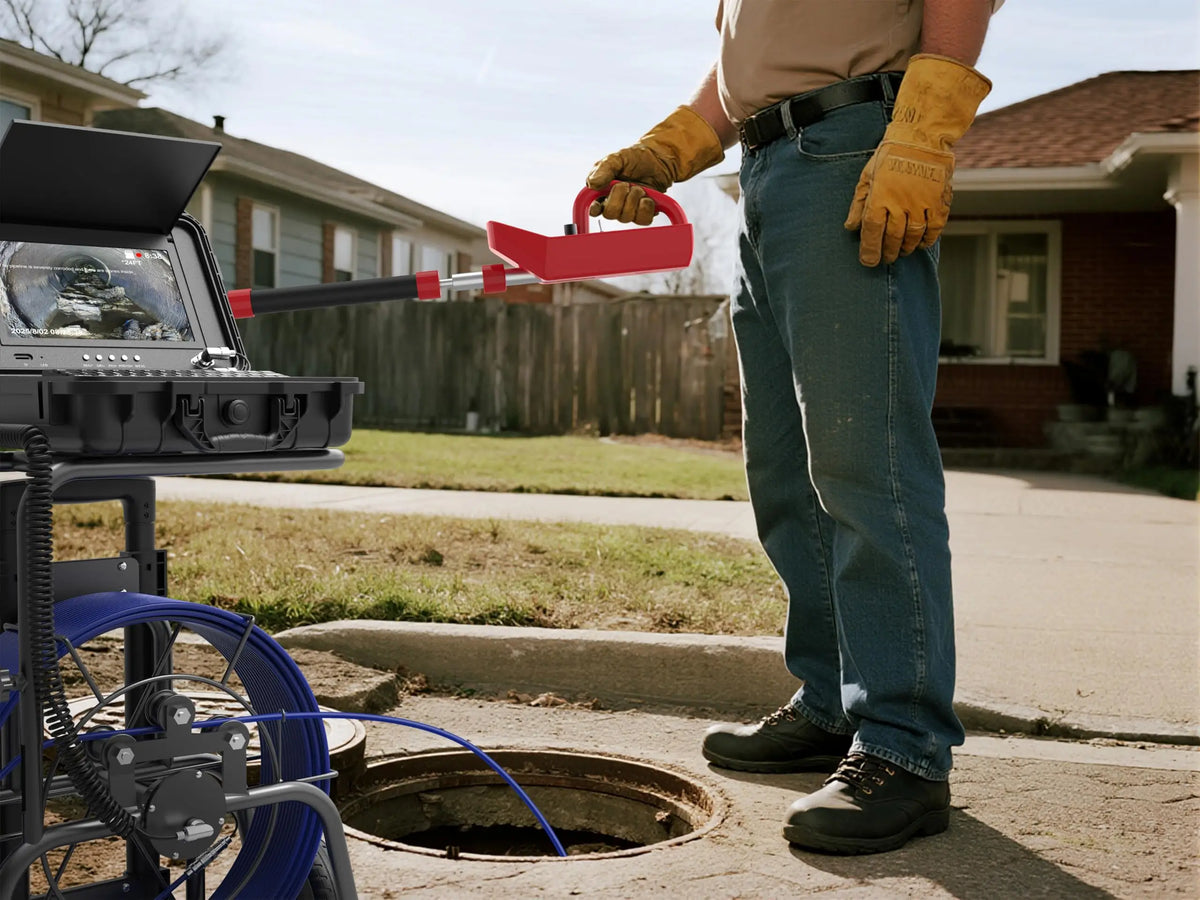
A sewer line locator and a pipe camera answer different questions, so most pros eventually need both. A camera tells you what is happening inside the pipe, while a locator helps you trace where the camera head or sonde sits from the surface. That distinction matters because the national 811 program still requires you to request utility marking before every digging job, and OSHA warns that underground locators alone typically cannot give dependable depth information. If your workflow stops at video, you may know the defect but not the dig point. If it stops at locating, you may know the path but not the failure. The real inspect-before-repair answer is understanding when one tool is enough and when the pair saves the job.

The most efficient repair workflow usually starts with footage inside the line and ends with a surface mark above the defect.
What a Pipe Camera Actually Does
A pipe camera is a diagnostic tool first. Its job is to show the blockage, crack, root mass, offset, standing water, or collapsed section inside the line before a crew commits to jetting, lining, or excavation.
The Powerwill PW9D2 is a good example of that workflow because it combines self-leveling video, DVR recording, a distance counter, IP68 waterproofing, and cable options from 64 feet to 230 feet. Those features let a plumber capture visual proof, note where the defect appears in the run, and review the footage with the customer later.
What a camera does not do on its own is mark the defect on the lawn or driveway surface. A distance counter helps, but distance alone can be misleading when the line bends, crosses under slabs, or takes a less direct path than the owner expects.
Back to topWhat a Sewer Line Locator Actually Does
A sewer line locator is a surface-tracing tool. It reads a signal from a sonde or transmitter and helps the operator sweep that signal from above ground so the buried path or target point can be marked.
Powerwill's 512Hz locator guide explains the basic system clearly: the sonde transmits a 512 Hz signal, and the handheld locator follows that signal through soil so you can identify where the camera head is traveling. That matters most when the next step is to dig selectively instead of opening a whole yard, sidewalk, or driveway.
For a pro, the biggest value is communication. A spray-painted mark above the defect, combined with recorded footage, turns a vague recommendation into a specific repair plan. Customers understand "root intrusion at 43 feet, marked here" much faster than they understand "somewhere under this side of the lawn."
But the locator still depends on a usable signal source and operator technique. It does not tell you whether the line is cracked, scaled, root-filled, or simply full of water. It only helps you trace or mark the location of the target emitting the signal.
Back to topWhen One Tool Is Enough and When It Is Not
| Scenario | Camera only | Locator only | Both tools |
|---|---|---|---|
| Confirming a clog near an accessible cleanout | Often enough | Rarely useful | Not usually needed |
| Explaining a repeat backup to a customer | Useful | Not enough alone | Best if digging may follow |
| Marking a dig point above a defect | Not enough alone | Helpful but blind | Usually the right answer |
| Tracing a buried sewer lateral before landscape work | Helpful if access exists | Helpful if signal exists | Strongest workflow |
| Finding exact utility depth before drilling | No | No | Still requires verification |
If the only question is whether a line is open or obstructed, a camera may be enough. If the only question is where a known sonde is sitting in the yard, a locator may be enough. But once the job becomes "what failed and where do we open?", the tools stop competing and start complementing each other.
That is why many professional workflows move from visual diagnosis to locating, not one or the other. The camera creates the evidence. The locator turns that evidence into a marked repair zone.
Back to topThe Limits That Keep Crews Honest
Locating is useful, but it is not magic. OSHA says underground service locators typically cannot provide depth information for utility lines and recommends that crews verify locations through multiple methods before drilling or trenchless work. That point alone should keep anyone from treating a locator tone as the final answer.
The 811 program adds another layer: even when you are tracing a sewer lateral, you still have to request utility marking before digging because gas, power, water, cable, and telecom lines may cross the same area. A locator tied to your sewer camera tells you about your target line, not every buried risk around it.
Powerwill also notes that wet clay, rebar, nearby power sources, and other interference can distort a 512 Hz read. The honest takeaway is that locating gets you close enough to plan smarter, but not careless enough to skip verification.
Which Powerwill Setup Makes the Most Sense
If you already know the line itself is the job, the better buying decision is usually a locator-ready camera instead of trying to buy separate cheap tools that only solve half the workflow. The PW9D2 is the clean middle-ground option for many pros because it combines self-leveling footage, 512 Hz locating, and residential-to-light-commercial reach.
If you need a larger workstation and longer runs, the 10DX1 adds a 10-inch IPS monitor, 246-foot cable, and more room for heavier jobsite use. Either way, the value is not just "having a locator." It is being able to diagnose, document, and mark the repair zone inside one repeatable workflow.
If your work never moves beyond simple confirmation through a cleanout, a camera alone may be enough for now. But if your quotes regularly end with concrete cuts, trenching, or customer pushback on where to dig, the locator function stops being optional very quickly.
Back to topKey Takeaways
- A pipe camera tells you what the defect is inside the line, while a sewer line locator helps you mark where that target sits from the surface.
- One tool can be enough for simple confirmation work, but most repair-planning jobs need both diagnosis and locating to avoid wasted excavation.
- Locators still have depth and interference limits, so OSHA and 811 guidance both push crews toward verification rather than blind digging.
- The best workflow is usually camera footage first, locator tracing second, and physical verification before ground is opened.
- If you repeatedly move from diagnosis to excavation, a locator-ready Powerwill system such as the PW9D2 or 10DX1 is usually the smarter buy than separate partial tools.
FAQ
Can a sewer line locator replace a pipe camera?
No. A locator can help you trace or mark the line, but it cannot show roots, cracks, bellies, or blockages inside the pipe.
Can a pipe camera replace a sewer line locator?
Only for simple confirmation jobs. Once you need to mark a dig point from above ground, the camera alone usually is not enough.
Does a locator tell me exact pipe depth?
Not reliably. OSHA specifically warns that underground service locators typically cannot provide dependable depth information, so depth still needs verification.
Do I still need to call 811 if I have a locator-ready camera?
Yes. Your locator helps with your sewer target, but 811 is still the required step for identifying other buried utilities before digging.
Which Powerwill model is the better fit if I want both functions in one unit?
The PW9D2 is the better all-around starting point for many pros, while the 10DX1 makes more sense when your jobs demand longer runs and a larger workstation.
Conclusion
Sewer line locator versus pipe camera is the wrong framing for most professional work. The better framing is which question comes first and whether the job ends with footage, a marked dig zone, or both.
If your crews keep moving from diagnosis into excavation planning, start with a Powerwill locator-ready camera workflow so you can inspect first, mark second, and repair with less guesswork.
Back to top
Comments
No comments