
Pipe Camera Inspection Guide: What Homeowners and Plumbers Need to Know
 Michael Carter
0 comments
Michael Carter
0 comments
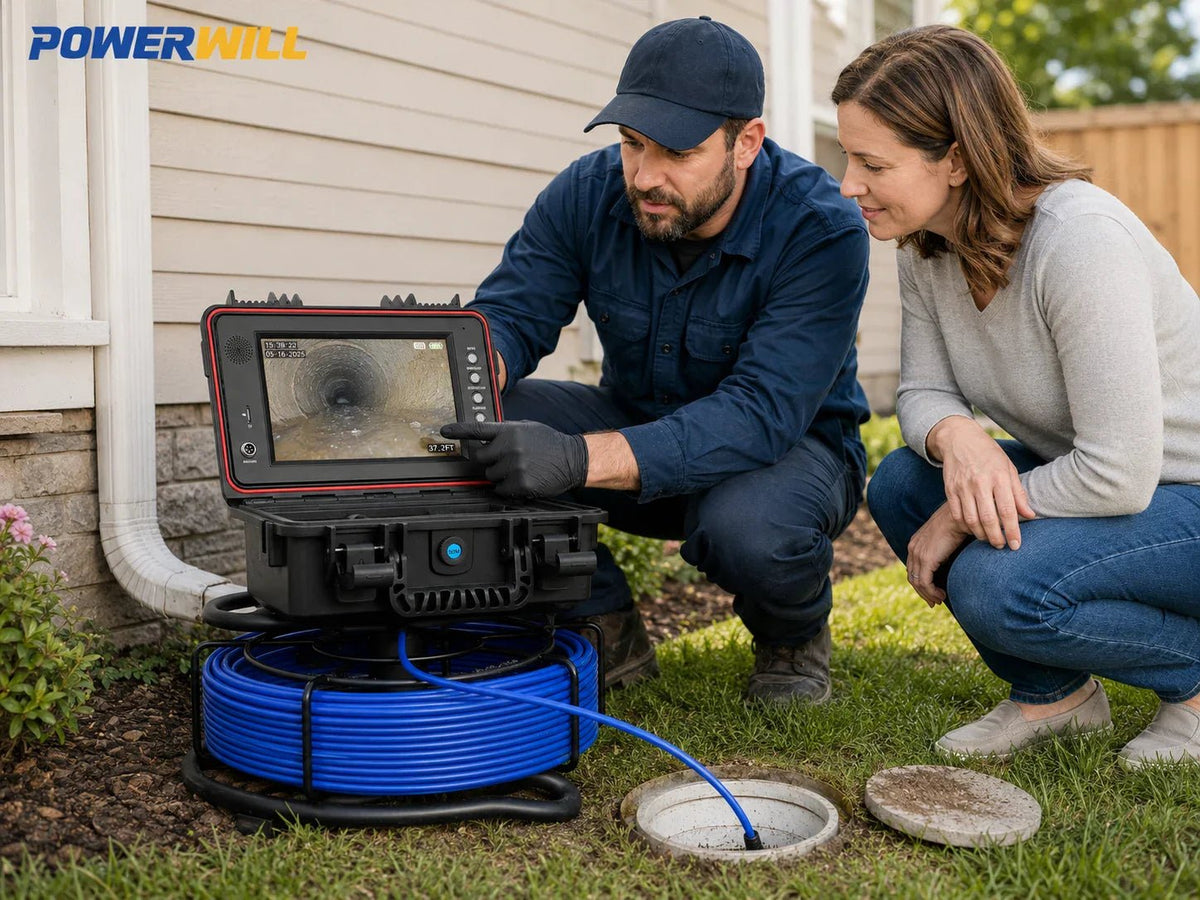
A pipe camera inspection is valuable only when it answers four practical questions: what part of the line was inspected, what defect was seen, where it sits, and what the next step should be. InterNACHI's sewer scope standards require inspectors to describe visible defects and note uninspected portions, while HomeGuide's 2026 pricing guide shows why that clarity matters: camera inspections usually cost $125 to $500 before any repair work starts. Whether you are a homeowner comparing bids or a plumber building a documented service, the inspection has to be specific enough to support a real decision.

The best pipe camera inspection does more than show a clog. It tells you what part of the line was inspected, what was found, where it sits, and what action makes sense next.
What a Pipe Camera Inspection Should Include
A usable pipe camera inspection is not just a video clip. It should identify the access point, the portions inspected, the visible defects, and any portions the camera could not inspect. That boundary matters because a partial inspection can still be useful, but it should never be mistaken for a full diagnosis.
InterNACHI says the report should identify visible cracks, roots, standing water over one inch, offsets greater than one-quarter inch, broken or separated pipe, and collapsed sections when they are observed. That means a solid report already contains the language you need to compare cleaning, monitoring, lining, or repair options.
For both homeowners and plumbers, the most useful add-ons are distance markers, a recorded video file, and clear endpoint notes. Without those, even good footage can turn into an argument later.
Back to topHow Homeowners and Plumbers Use the Same Footage Differently
Homeowners usually use pipe camera footage to answer a risk question: do I need cleaning, a second opinion, or a repair budget? Plumbers use the same footage to answer an operations question: what tool, what location, and how much documentation do I need for the customer and the crew?
That difference is why the camera setup matters. A homeowner can live with a simpler workflow if the goal is basic confirmation. A plumber usually needs better screen visibility, longer cable reach, and recording quality that supports a quote or follow-up job.
Powerwill's current plumbing-business guide makes the economics explicit: plumbers charging $250 to $400 per residential sewer inspection can recoup a mid-range camera after only a few jobs. That is very different from a homeowner using the tool twice a year.
Back to topThe Five Specs That Change Inspection Quality
| Spec | Why it changes the result | Where it matters most |
|---|---|---|
| Camera head size | Determines whether the camera can enter smaller branch lines and bends. | Homeowner spot checks, small residential drains, tight turns. |
| Cable reach | Decides whether you can inspect a fixture branch, a full lateral, or a longer commercial run. | Whole-home and professional lateral inspections. |
| Self-leveling | Keeps the image upright, making roots, cracks, and offsets easier to explain. | Customer-facing work, insurance, real estate, and repeat documentation. |
| Distance counter | Turns a visible defect into a location you can mark, price, and revisit. | Repair planning, callbacks, excavation, and verification after cleaning. |
| Locator capability | Helps trace the line from above ground before digging or lining decisions. | Longer runs, deeper lines, and higher-stakes repair jobs. |
The current Powerwill PW9D1 page highlights a 9-inch IPS monitor, 1080p recording, self-leveling, and a 100-foot 5 mm cable for 1-inch to 4-inch style residential maneuverability. The Powerwill selection guide moves up to the PW9D2 for 1.5-inch to 6-inch household drains and the 10DX1 for longer main-line work with 246 feet of cable and 512 Hz locating.
Those specs are not marketing filler. They are what decide whether the footage is useful enough to support a real budget decision.
Back to topHow the Findings Change the Budget
The reason pipe camera inspections matter is simple: the price jump between maintenance and structural repair is huge. HomeGuide says sewer line repair commonly runs $150 to $3,800, while full replacement often falls in the $2,000 to $10,000 range. A camera helps you learn which side of that gap you are really on.
Angi's 2026 inspection-cost guide also shows how add-ons affect the bill: video reporting often adds $50 to $150, locating the defect adds about $40 to $100, and hydro-jetting or cleaning can add $250 to $800. That means the cheapest inspection is not always the cheapest path if it leaves the real issue unresolved.
A vague report often leads to the wrong spend. A location-specific report gives you a cleaner choice between cleaning first, re-scoping after cleaning, pricing a spot repair, or planning something bigger.
Back to topHow to Choose the Right Pipe Camera Tier
If you are a homeowner who mainly wants clarity on smaller residential drains, the PW9D1 is the easiest starting tier. If you want more reach and locating help on household laterals, the PW9D2 is the smarter middle tier because it adds longer cable options and locator support without jumping straight to heavy-duty commercial gear.
If you are a plumber handling longer laterals or deeper professional work, the Powerwill 10DX1 is purpose-built for it. Current product copy highlights a 10-inch IPS monitor, self-leveling head, 246-foot cable, stainless camera housing, and 512 Hz locating for longer-run diagnostics.
The right tier is not about ego. It is about matching cable size, run length, and reporting needs to the jobs you actually do. That is how a pipe camera inspection becomes a dependable workflow instead of a one-time gadget purchase.
Key Takeaways
- A pipe camera inspection should always define what was inspected, what was found, where it sits, and which portions were not inspected.
- Homeowners usually use the footage to judge risk, while plumbers use the same footage to guide tools, pricing, and documentation.
- Camera head size, cable reach, self-leveling, distance counting, and locator support are the five specs that most strongly change inspection quality.
- Specific findings matter because the cost jump from cleaning to structural repair is large, and a vague report can easily push you into the wrong spend.
- For many residential jobs PW9D1 is enough, PW9D2 fits longer household laterals, and 10DX1 is the right tier when longer professional runs are part of the job.
FAQ
What should I ask for after a pipe camera inspection?
Ask for the full video, the written summary, the access point used, the endpoint reached, and the footage location of any major defect. Those details make second opinions and repair bids much more reliable.
Is self-leveling really worth it on a pipe camera?
Usually yes if the footage will guide a real decision. Upright video is easier to read, easier to explain, and easier to compare across multiple inspections.
Can a homeowner use a pipe camera without a plumber?
Yes for straightforward checks, especially when the access point is easy and the goal is diagnosis. A system like the Powerwill PW9D1 is easier to handle because the screen, self-leveling, and meter marking simplify interpretation.
Why do some camera inspections cost so much more than others?
Price changes with line length, access difficulty, camera type, reporting, locating, and any cleaning needed before or after the inspection. An inexpensive partial inspection and a full documented lateral inspection are not the same service.
Which Powerwill camera is better for plumbers?
If the work stays mostly residential, PW9D2 is a strong middle-tier choice. If longer laterals, locating, and deeper professional documentation are routine, 10DX1 is the stronger fit.
Conclusion
A pipe camera inspection should make the next step clearer, not fuzzier. When the report ties visible defects to real locations and realistic options, both homeowners and plumbers make better decisions.
If you want to match the camera tier to your actual jobs, start with the Powerwill selection guide and choose the setup that fits your pipe size, reach, and reporting needs.
Back to topSources
- InterNACHI sewer scope standards of practice
- HomeGuide sewer camera inspection cost
- HomeGuide sewer line repair cost
- Angi sewer line camera inspection cost
- Powerwill PW9D1 sewer inspection camera
- Powerwill How To Choose
- Powerwill plumbing business sewer camera guide
- Powerwill 10DX1 sewer inspection camera
Comments
No comments