
Pre-Purchase Sewer Inspection: What the Footage Reveals and What to Ask
 Michael Carter
0 comments
Michael Carter
0 comments
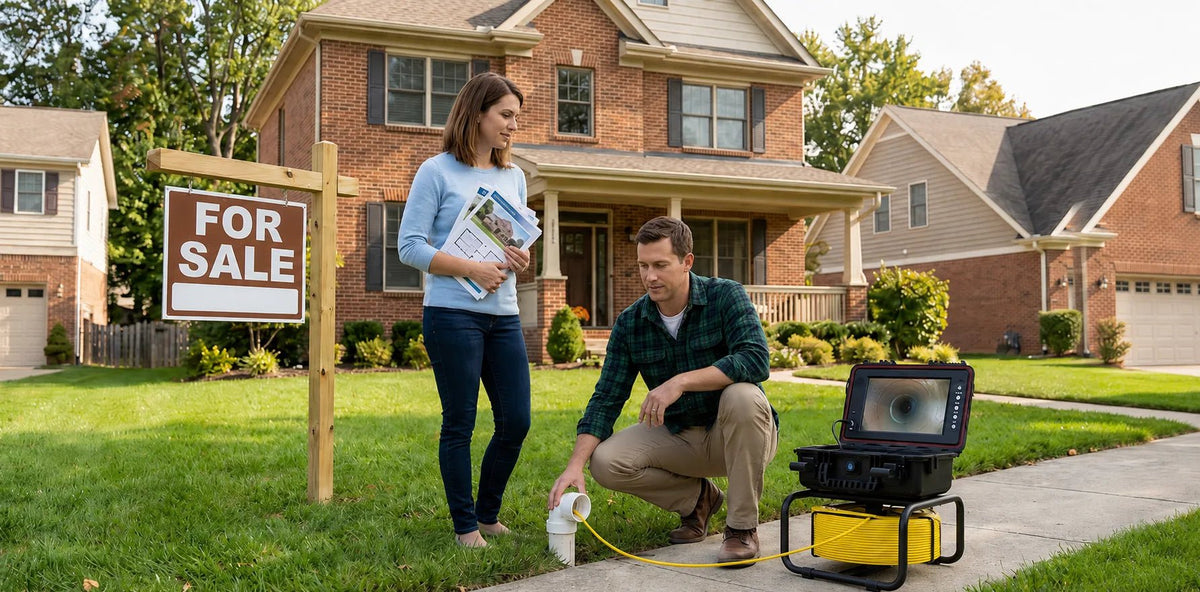
Pre-Purchase Sewer Inspection: Start Here
Buying a home with an unknown sewer history? Confirm whether a dedicated sewer scope is included in your inspection agreement. The useful deliverable is footage plus an explanation of visible findings, access limitations and the next assessment needed.
- Ask which line will be inspected and where the camera can enter.
- Request the full recording, written findings and the portions not inspected.
- Leave time to review significant findings and obtain a qualified repair assessment before your agreed deadlines.
Know the limits: For a one-time home purchase, a qualified sewer-scope inspector is usually the practical starting point. Owning a camera does not replace interpretation, establish remaining pipe life or guarantee that every defect has been found.
interactive Home Drainage Inspection Center · Choose your next step ↓
A general home inspection typically evaluates accessible systems and visible plumbing within its agreed scope.
A dedicated sewer scope may be an additional service. Ask the inspector what is included rather than assuming the buried lateral has been examined.
The sewer lateral connects the building to a public or shared sewer, or to a septic tank, depending on the property. Repair costs vary with the actual defect, length, depth, access and local conditions; obtain a site-specific estimate.
A general inspection report is not a sewer repair estimate. Confirm separately whether sewer video, locating and repair pricing are included.
A sewer camera can document visible conditions inside the accessible line. This guide explains what the footage can contribute to a purchase decision and which questions still require a qualified inspector or repair contractor.
Why Sewer Lines Don't Come Up in Standard Inspections
A sewer scope is not required by InterNACHI’s general home-inspection standards, although many inspectors offer it as an additional service. Qualifications, local requirements and the inspection agreement should be checked for the actual provider.
When booking, ask whether the home inspector offers sewer scoping as an add-on, who will perform it, and whether you will receive a recording and written findings.
This is not a failure of home inspection. It's a scope limitation that most buyers don't know exists until after closing.
The result: buyers regularly inherit sewer lines with root intrusion, cracked clay tile, offset joints from soil settling, or partially collapsed sections. These conditions may not cause any noticeable symptom during the walkthrough or inspection period. They become your problem after the deed transfers.
What a Camera Inspection Actually Shows

A sewer camera inspection records real-time footage from inside the main line as the camera travels from the cleanout toward the street connection. The footage reveals conditions that no surface-level inspection can detect:
Root intrusion. Roots may enter through compromised joints or openings. Record where they appear and how much of the visible opening they obstruct. Their presence warrants assessment; house price or age alone cannot establish the extent of a root problem.
Pipe material. Footage, accessible pipe ends and property records may help identify materials such as clay, cast iron or plastic. Deposits and mixed repairs can make identification uncertain. Ask the inspector to distinguish a confirmed material from a suspected one; footage alone cannot predict remaining service life.
Joint separation and offset. Soil movement, frost heave, and settling foundations cause pipe joints to shift. An offset joint — where two pipe sections are no longer aligned — creates a ledge that catches waste and accelerates blockage. Significant offset is a structural repair, not a maintenance item.
Cracks and collapse. Visible fractures, deformation or broken sections warrant professional assessment. A camera that cannot advance does not prove collapse: bends, deposits or an unsuitable head may also prevent travel. The repair method depends on the confirmed condition.
Grease and buildup. In kitchen lines and in homes where cooking habits have led to heavy grease discharge, buildup along the pipe walls is visible as a narrowing of the pipe interior. This is a maintenance issue in its early stages, but significant buildup in an inspection indicates deferred maintenance.
How Buyers Use Sewer Inspection Footage in Negotiations

The footage from a sewer camera inspection has real dollar value in a real estate transaction — but only if it's recorded.
A verbal report from a plumber who ran a camera and told you "there's some root intrusion" gives you weak negotiating ground. The seller's agent can dispute it, the seller can claim it's minor, and you have no documentation to support a repair credit request.
A saved recording and written inspection notes can be shared with a qualified contractor for assessment and discussed with your property adviser. Record the access point and any uninspected sections. Footage does not establish when damage occurred or guarantee a seller credit or insurance coverage.
A useful report separates observed defects, suspected conditions and unknown areas. This gives the next professional a clearer starting point than an unsupported conclusion.
If findings may affect the purchase, obtain an appropriate repair assessment and discuss available options with your property adviser. The inspection does not determine contract rights or guarantee an outcome.
When Should You Schedule a Sewer Inspection?
Arrange the scope early enough to review the results before the deadlines in your inspection agreement and purchase contract. Confirm access permission and scheduling with the owner and your property adviser.
If access or timing is restricted, document that limitation and discuss the available options with the relevant professionals before making a decision.
Can You Run the Inspection Yourself?
Some owners use cameras for repeat observations, but operating the equipment and interpreting a pre-purchase scope are different tasks.
Confirm access permission, local requirements and the agreed inspection scope. Use a suitable accessible cleanout and never force the camera through an obstruction. A qualified provider is the better starting point when access or findings are uncertain.
Measure or establish the likely route before choosing cable length. Bends, deposits and access geometry can reduce usable reach. Do not assume a nominal 100-foot or 165-foot cable covers every residential lateral.
Powerwill PW9D1 lists a 9-inch IPS monitor, self-leveling camera and DVR recording. Cable and locator options vary by selected configuration. These features help collect footage; they do not make an inexperienced inspection equivalent to a professional report.
For a one-time purchase decision, compare the scope and deliverables of a professional service before buying equipment. For repeated property inspections, compare current camera configurations and the training needed to interpret and document footage. No fixed purchase price or “two visits” saving applies to every case.
Which Powerwill Camera Fits a Pre-Purchase Inspection?
For a one-time purchase, a qualified sewer-scope inspector is usually the practical starting point. If you plan to own a camera for ongoing checks, repeat property work or documented findings, match the system to the job:
PW9D1 — Homebuyer / Homeowner
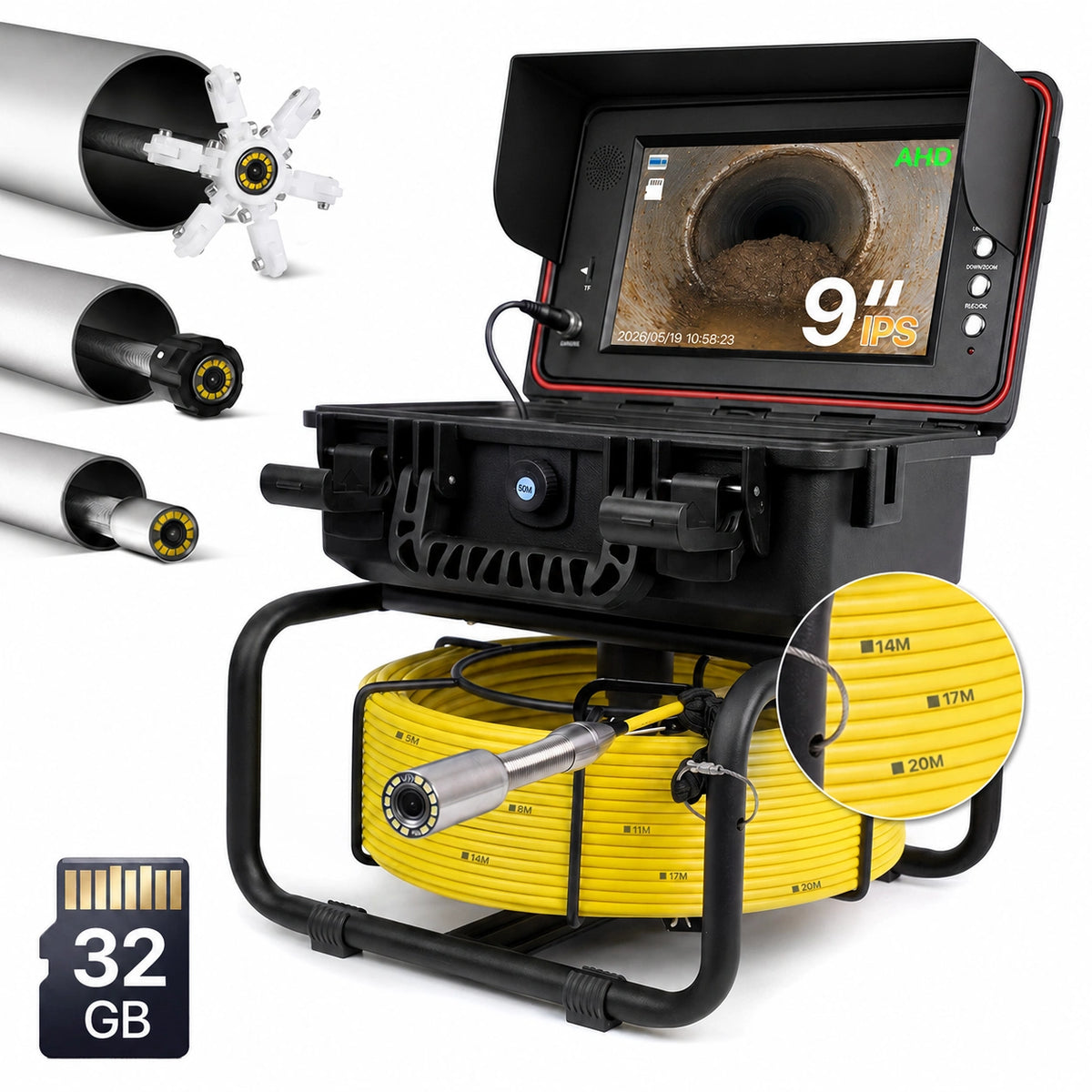
Best for: a homeowner who wants to see and save footage from a residential line.
9-inch self-leveling video, DVR recording, 5mm cable and 20–50m (65–164ft) options keep this the simplest entry point.
Trade-off: distance is read from cable markings; there is no electronic distance counter.
PW9D2 — Home Inspector / Investor / Landlord
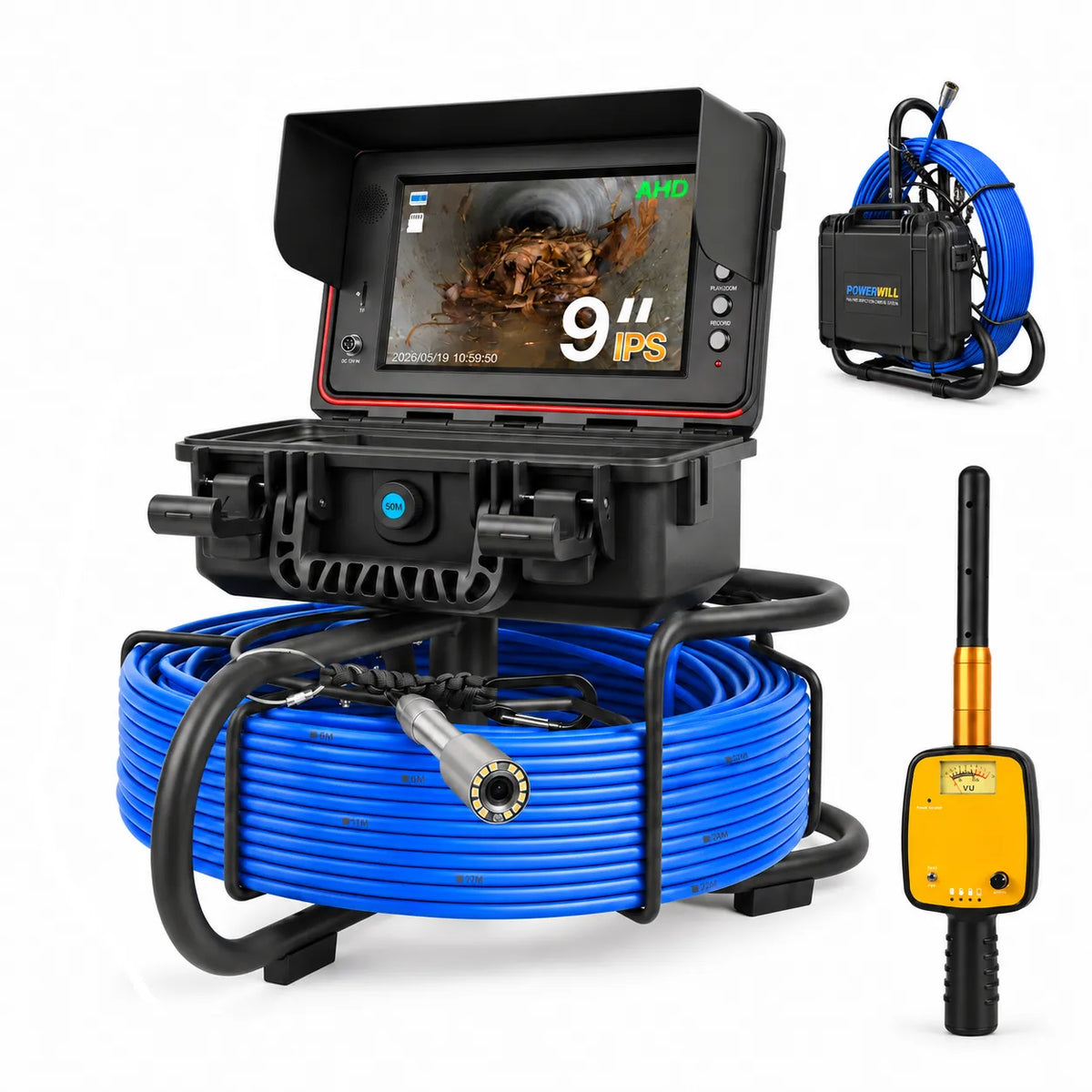
Best for: repeat inspections across client homes or multiple properties.
The 7mm push cable is available in 20–70m (64–230ft) configurations with self-leveling video and DVR recording. Choose a distance-counter version and a compatible 512Hz receiver when your report needs insertion-distance references or surface locating.
Trade-off: the counter and locating options depend on the configuration you select.
PW9DA — Report / Location Upgrade
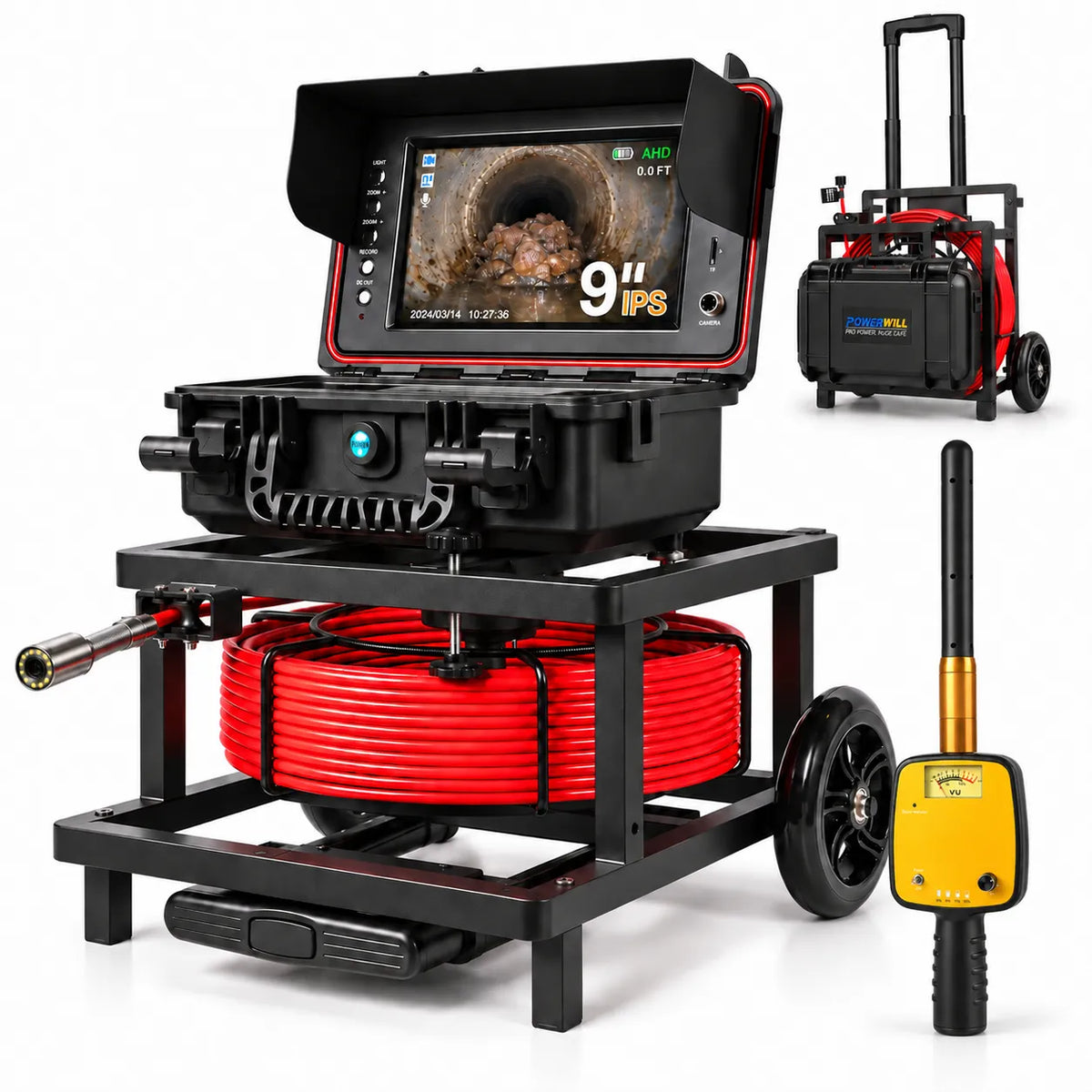
Best for: documented inspections where built-in distance tracking matters.
This fixed 165ft / 50m system uses a 7mm cable with self-leveling video, DVR recording, a built-in distance counter and a 512Hz sonde. The product page currently shows a $949.99–$1,099.99 range across configurations, so it is usually more than a one-time buyer needs.
Configuration note: the sonde is built in to both versions, but the 512Hz locator receiver is included only with the locator bundle.
Choose cable length around the properties you inspect; nominal length does not guarantee usable reach. A counter records cable deployment; it is not the same as an underground locator.
If you're comparing camera options and want to understand the difference between a sewer camera and smaller inspection tools — including borescopes and drain cameras — Borescope vs. Sewer Camera: Which Tool Does What covers the distinctions clearly. For most pre-purchase applications, you need a sewer camera, not a borescope.
What If You Find Something?
The right response to a concerning sewer inspection finding depends on what you find and how severe it is.
Roots at a joint: Ask a qualified drain professional whether cleaning is suitable and whether the entry point needs further assessment. Request a written scope and estimate rather than relying on a standard credit amount.
Extensive root intrusion: Ask what could be inspected, whether cleaning is needed for a clearer view, and which repair options the confirmed pipe condition supports.
Suspected aging fiber pipe: Ask how the material was identified and what visible condition supports the recommendation. Avoid assuming a fixed remaining lifespan or replacement date from appearance alone.
Offsets or visible damage: Request a qualified assessment of the affected area, access requirements and suitable repair alternatives before agreeing on a budget.
Suspected structural failure: Obtain a specialist assessment and discuss the documented findings and any purchase options with your property adviser.
For locating the precise surface position of any issue you find underground — useful for getting excavation estimates before you close — Sewer Line Locator vs. Pipe Camera: Do You Need Both or Just One? explains how the two tools work together.
Make the Inspection Part of an Informed Decision
A sewer scope can provide useful information when the buried line’s condition could materially affect a home purchase.
Consider the property’s symptoms, records, access and inspection scope. A clear-looking recording is not a warranty of future performance, and an incomplete inspection should be reported as incomplete.
For a one-time home purchase, prioritize a qualified scope and an explanation of the results. For ongoing homeowner checks, explore PW9D1. For home inspectors and people managing multiple properties, explore PW9D2. If your deliverable needs built-in distance references, explore PW9DA and select the locator bundle when surface locating is required.
Record what was seen, what remains unknown and what needs follow-up.
Back to topChoose Your Next Step
Buying a home? Arrange a qualified sewer scope and request the recording, findings and inspection limitations.
Planning ongoing checks at your own property? Explore PW9D1 for your camera setup.
Inspecting homes for clients or managing multiple properties? Explore PW9D2 configurations for longer runs, recorded findings and optional distance tracking and locating.
Need built-in distance references for a documented inspection? Explore PW9DA for the fixed 165ft / 50m system; choose the locator bundle when you need the receiver as well as the built-in sonde.
camera selection guide · compare sewer camera systems · Ask Powerwill about kit fit
Product configurations checked September 18, 2026. Current prices and kit contents are shown on the selected product variant. Nominal cable length is not a guarantee of usable reach or locating depth.
Inspection reference: InterNACHI sewer-scope scope and limitations.
Comments
No comments