
Should You Get a Sewer Scope Before Buying a House? A Practical Buyer Checklist
 Michael Carter
0 comments
Michael Carter
0 comments
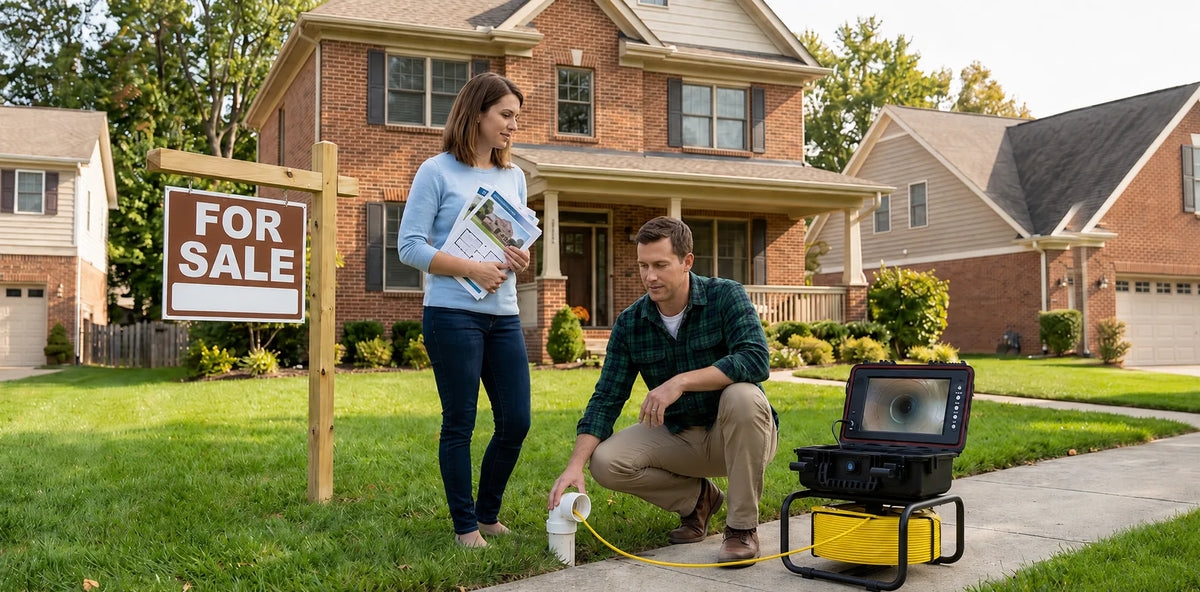
Usually yes when the home is older, the yard has large trees, the drains have a backup history, or nobody can prove the lateral line was recently scoped. InterNACHI's October 2022 Home Inspection Standards of Practice defines a home inspection as a non-invasive visual exam of accessible areas, while InterNACHI's sewer-scope standards treat the sewer line video inspection as a separate service with its own reporting requirements. The money risk is real: Angi's April 6, 2026 cost guide says sewer line camera inspections average $996 per visit, but standard 50-to-100-foot home lines often cost $250 to $400, while This Old House puts average sewer line replacement at $3,320. That gap is why a buyer checklist matters. You are not buying a video. You are buying a cleaner closing decision.
Start With the Right Question, Not the Cheapest Add-On
The first question is not “Can I skip the sewer scope?” It is “What evidence do I have today about the buried lateral line?” A general home inspection can still be useful, but it is not the same as a dedicated scope unless the agreement explicitly included sewer-line video inspection.
InterNACHI says a home inspection is a non-invasive visual exam of accessible areas and is based on what is observed on the day of the inspection. That standard is broad by design. A sewer scope is narrower and more specific: InterNACHI's sewer-scope standards define it as a video inspection of the lateral sewer line from the house to the tap or septic tank, with written reporting of observed material defects.
That distinction is why buyers should stop treating the scope like an optional gadget line on an invoice. It is a separate due-diligence decision for a separate system, and buried systems create some of the most expensive surprises in a house purchase.
Back to topThe Four Property Signals That Make a Scope More Urgent
A sewer scope becomes more urgent when the property profile suggests higher buried-line risk. Angi says regular inspections are especially valuable for older homes and properties with recurring issues like tree roots. The same guide shows older or fragile materials such as cast iron, clay, and Orangeburg usually cost more to inspect because they need extra care.
| Signal | Why it matters | Buyer move |
|---|---|---|
| Older home | Older homes are more likely to have aging cast iron, clay, or other legacy pipe conditions. | Ask for a dedicated scope before contingencies expire. |
| Mature trees near the sewer path | Roots can enter joints and turn a maintenance issue into a repair conversation. | Request video plus a written note on any root intrusion. |
| Slow drains or backup history | Past symptoms may point to standing water, blockage, or structural defects farther down the line. | Do not rely on a quick fixture test alone. |
| No recent sewer documentation | If no one can show recent footage, you are negotiating blind on a buried system. | Treat the scope as part of core due diligence, not a luxury add-on. |
If two or more of those signals are present, the buyer should usually assume the scope is worth ordering. The inspection does not guarantee a perfect line, but it materially improves the odds that you learn about a major problem before it becomes yours.
Back to topWhat Your Checklist Should Require From the Inspection
A buyer should not just order a sewer scope. A buyer should define what counts as a usable result. InterNACHI's sewer-scope standards say the inspector should inspect and video-record the main or exterior lateral line, record the full video and provide it to the client, document observed defects, and note when a cleanout is not visible or accessible.
- Confirm the access point. Ask where the camera entered the system and whether that path realistically reaches the main lateral.
- Confirm the endpoint. Ask whether the camera reached the municipal tap or septic connection, or where it stopped and why.
- Confirm you receive the full video. A short clip is weaker than the full file when you need second opinions or seller credits.
- Confirm written defect notes. The report should identify visible roots, standing water, offsets, cracks, blockages, scale, or separation when observed.
- Confirm any uninspected areas. If access was partial, the buyer needs that limitation stated plainly.
This is also the right moment to read Powerwill's related buyer content: Does a Home Inspection Include the Sewer Line? and What Is a Sewer Scope Inspection?.
Back to topHow the Cost Checklist Compares With the Repair Risk
The sewer scope is easiest to justify when you compare inspection cost with the repair range it may uncover. Angi says sewer line camera inspections cost $271 to $1,727 per visit overall, with most homeowners spending $996. For a standard 50-to-100-foot home sewer line, the same guide shows a typical range of $250 to $400. Recording or reporting often adds $50 to $150, and locating or marking can add another $40 to $100.
If the scope finds a structural issue, the numbers rise sharply. HomeGuide says sewer line repairs run about $150 to $3,800, while replacement commonly runs $2,000 to $10,000 for 40 linear feet. This Old House currently shows a low-end replacement cost of $1,390, an average of $3,320, and a high end of $5,320.
That is the core checklist math: spending a few hundred dollars before closing is often rational when the buried downside is in the thousands. The scope does not need to find a catastrophe to be worth it. It only needs to help you avoid making a five-figure decision from a two-minute sink test.
Back to topWhat to Do With the Result Before and After Closing
A useful sewer scope should change what the buyer does next. If the line looks healthy, the footage becomes peace-of-mind evidence and a baseline for future maintenance. If the footage shows roots, standing water, or separation, the buyer should use the report to get another opinion, request seller concessions, or revise the repair reserve before removing contingencies.
After closing, the economics can change. The live Powerwill PW9D1 page lists a self-leveling system with DVR recording, meter marking, a 9-inch IPS monitor, optional 512Hz locating, and 65-foot, 100-foot, and 165-foot lengths. The same page marks the 100-foot package as “Most Homes,” which makes it a realistic ownership option once the buyer becomes the owner and expects repeated inspect-before-repair checks.
For the purchase itself, though, the checklist stays conservative: hire the first due-diligence scope out, use the result to make the closing decision, and only think about ownership if the property profile suggests the follow-up workload will be real. Buyers who want to study that second stage can continue with Pipe Inspection Camera for Old House and Powerwill's sewer camera selection guide.
Back to topKey Takeaways
- A sewer scope is usually worth it when the property profile suggests buried risk. Older homes, mature trees, backup history, and missing sewer documentation are the clearest triggers.
- Buyers should define what a usable scope result looks like. The full video, written defect notes, the inspection endpoint, and any uninspected areas should all be documented.
- The cost is small compared with the repair exposure. A standard home scope often costs a few hundred dollars, while repair or replacement can move into the thousands quickly.
- The inspection should change the closing conversation. Good footage supports second opinions, seller credits, and more realistic reserve planning before contingencies disappear.
- Powerwill fits more naturally after closing than before it. Hire the due-diligence scope first, then consider ownership only if the home is likely to need repeated follow-up checks.
FAQ
Should I get a sewer scope before buying a house if the home inspection already happened?
Usually yes if nobody can prove the sewer line was separately scoped. A standard home inspection and a dedicated sewer scope are not the same service.
When is a sewer scope most worth the money for a buyer?
It is most worth it on older homes, properties with mature trees, homes with drain symptoms or backup history, and deals where no recent lateral-line footage exists.
How much does a sewer scope usually cost before closing?
Angi says standard 50-to-100-foot home lines often cost $250 to $400, while overall per-visit pricing averages $996 and ranges from $271 to $1,727.
What should I ask for after the sewer scope is done?
Ask for the full video, a written summary of observed defects, the endpoint reached, and a note on any areas that could not be inspected.
Should I buy my own sewer camera before buying the house?
Usually no for the purchase decision itself. A professional scope is cleaner for due diligence, while ownership makes more sense after closing if repeated follow-up inspections are likely.
Conclusion
If you are wondering whether to get a sewer scope before buying a house, the practical answer is to compare the inspection cost with the size of the hidden risk and the amount of evidence you already have. In many deals, that alone makes the scope worth it.
Use the checklist to decide when to order the inspection, what to demand from the report, and how to act on the result before closing. If the house later turns into a repeat inspection property, then it makes sense to compare the Powerwill PW9D1 with the broader Powerwill sewer camera lineup.
Back to top
Comments
No comments