
What Is an Inspection Camera? A Complete Guide to Types, Uses & Buying Tips
 Michael Carter
0 comments
Michael Carter
0 comments
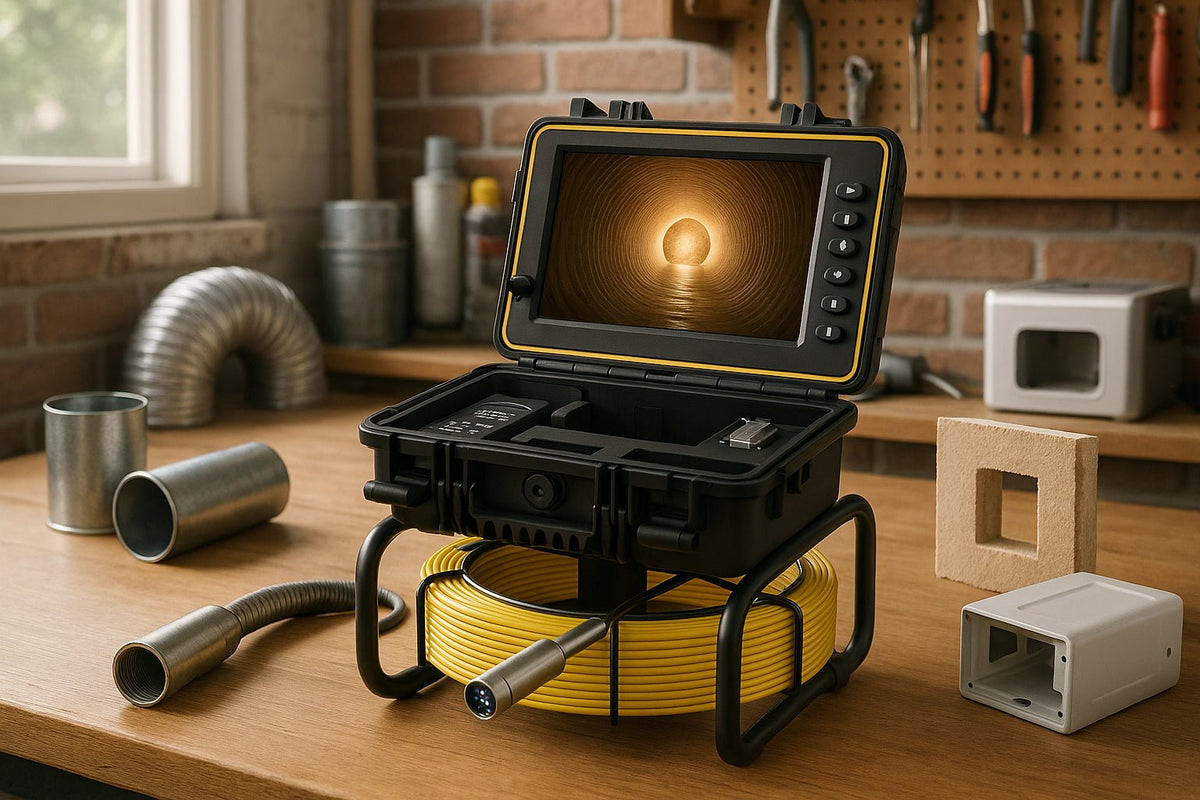

An inspection camera is a remote-visual-inspection tool that lets you see inside spaces you cannot inspect directly - pipes, wall cavities, ducts, engine bores, crawlspaces, and similar hard-to-reach areas. The term is broad: it can describe a sewer camera, a small borescope, a duct inspection camera, or any other camera designed to reach hidden spaces without destructive teardown. For homeowners, the useful question is not just "What is an inspection camera?" but "Which kind of inspection camera fits the job I actually need to do?"
What an inspection camera actually is
The direct answer is that an inspection camera is a camera-based tool for remote visual inspection. It helps you see into areas that are hidden, narrow, dirty, or risky to open up without first verifying the problem.
ViewTech's glossary describes the term as a loose category for remote visual inspection cameras. That broad definition is helpful because it explains why the same phrase can show up in industrial borescope conversations, HVAC inspections, and plumbing tool searches.
For homeowners and plumbers, the most common real-world use is plumbing. You feed a waterproof camera head into a line, watch the live image on a screen, and document what is actually happening before you decide to snake, jet, repair, or excavate. That is the core "inspect before repair" workflow that brands like Powerwill are explicitly building around in 2026.
The four types of inspection cameras most buyers should know
The easiest way to understand the category is to break it into four practical buckets. Once you see the buckets, the buying confusion drops fast.
| Type | Best for | What makes it different |
|---|---|---|
| Borescope | Machinery, auto, appliance, tight cavities | Small probe, short reach, often articulating |
| Drain or pipe camera | Household drains and short pipe inspections | Waterproof push cable, larger screen, easier line navigation |
| Sewer camera | Main sewer laterals and longer exterior runs | Longer cable, stronger reel, self-leveling, optional locator |
| Duct or cavity camera | HVAC, wall cavities, vents | Built around dry cavities and access openings rather than wet sewer lines |
A borescope is not the same thing as a sewer camera. A sewer camera is an inspection camera, but not every inspection camera is meant for sewer work. That distinction matters because the tool must match the environment. Wet lines need waterproofing. Longer runs need stronger push cable. Accurate pipe reporting benefits from self-leveling footage. And underground locating is a sewer-specific workflow feature, not a generic camera feature.
The features that matter most
The direct answer is that you should care more about environment fit than headline resolution.
On the residential plumbing side, the current Powerwill PW9D1 combines a 9-inch HD IPS screen, IP68 waterproof self-leveling system, and 65-foot, 100-foot, or 165-foot cable options. Those three specs tell you far more about usability than a vague "HD" badge on a product tile.
On the pro side, the current Powerwill 10DX1 is built around a 10-inch IPS monitor, 246-foot cable, self-leveling head, and 512 Hz locator. That is a completely different workflow profile. It is not just "a bigger camera." It is a field-reporting and pre-digging tool.
Cost also clarifies category. HomeGuide's current 2026 numbers put a sewer and plumbing camera inspection at $125 to $500 on average, and a sewer scope added to a home inspection at $100 to $250. That means even homeowners with only occasional inspection needs should think carefully about whether they need a full professional reel or a lighter-duty system that covers shorter runs well.
Where sewer and drain cameras fit inside the inspection-camera category
This is where most buyers get tripped up. They search the broad phrase inspection camera, then land on plumbing products and assume every tool is interchangeable. It is not.
If your real job is seeing inside drains, traps, branch lines, or sewer laterals, the plumbing category is the right category. That is why Powerwill's home page emphasizes pipe visibility, locator workflows, and documented inspections rather than mechanical articulation or engine work. Sewer and drain cameras are purpose-built inspection cameras for plumbing systems.
That also explains why the term can feel confusing in search results. A homeowner may search for "inspection camera" because they do not yet know the product category name. A plumber might search for "drain camera" or "pipe camera." A homebuyer may search for "sewer scope." They are all close, but they are not identical purchase moments.
How to buy the right inspection camera for the job
The practical answer is to buy by access path, environment, and inspection distance.
- If you are inspecting a machine cavity, appliance, or auto component, buy a borescope.
- If you are inspecting wet household drains or short residential lines, buy a compact drain camera.
- If you are doing full sewer lateral work, recurring paid inspections, or pre-excavation locating, buy a sewer camera.
- If you are inspecting ducts or wall cavities, buy a tool meant for those dry access paths rather than forcing a sewer camera into the wrong environment.
For most homeowners entering the plumbing category, the strongest starting point is a compact self-leveling system like the PW9D1 because it is simple enough to use and still serious enough to produce useful footage. For pros and heavier long-run work, the 10DX1 makes more sense because the reach and locating workflow are already built in.
Back to topKey Takeaways
- An inspection camera is a broad remote-visual-inspection category that includes borescopes, drain cameras, sewer cameras, and other hidden-space camera tools.
- The right inspection camera depends on the environment: dry machine cavities, wet drains, long sewer laterals, and HVAC ducts all call for different tool designs.
- For plumbing work, the features that matter most are waterproofing, self-leveling, screen readability, cable length, and whether locator support is needed.
- The Powerwill PW9D1 fits homeowners and short residential plumbing runs, while the Powerwill 10DX1 is built for longer professional sewer jobs.
- If your real need is plumbing diagnosis, do not buy a generic inspection camera blindly - buy the right inspection-camera subtype for the pipes you actually inspect.
FAQ: Inspection camera basics
Is an inspection camera the same as a borescope?
No. A borescope is one type of inspection camera. The phrase inspection camera is broader and can include sewer, drain, duct, and cavity-inspection tools as well.
Can I use a regular inspection camera in a sewer line?
Only if it is actually built for sewer work. Sewer lines require waterproof heads, push cable, and a screen workflow designed for wet and dirty pipe environments, which many generic inspection cameras do not have.
What kind of inspection camera should a homeowner buy first?
For plumbing-related use, most homeowners should start with a compact self-leveling drain or sewer camera like the Powerwill PW9D1. It is much more practical than buying a tiny borescope for a job that really needs push-cable navigation.
How much does a professional sewer scope inspection cost?
HomeGuide says sewer and plumbing camera inspections average $125 to $500, while sewer scope inspections added to a home inspection usually run $100 to $250. That makes ownership easier to justify when inspection needs are recurring.
Do all inspection cameras record video?
No. Some low-cost tools are view-only. If documentation matters, check for DVR, still-image capture, export options, and a display large enough to review footage clearly in the field.
Conclusion
The phrase inspection camera is broad, but your buying decision should not be. Once you know whether you are inspecting machines, ducts, walls, or plumbing lines, the right category becomes much easier to choose.
If your hidden-space problem lives inside a drain or sewer line, skip the generic guesswork and start with a purpose-built plumbing inspection camera. For compact residential work, that usually means the Powerwill PW9D1. For longer professional sewer inspections, it means the Powerwill 10DX1.
Comments
No comments