
Drain Camera vs. Sewer Camera: What's the Difference and Which One Do You Need?
 Michael Carter
0 comments
Michael Carter
0 comments
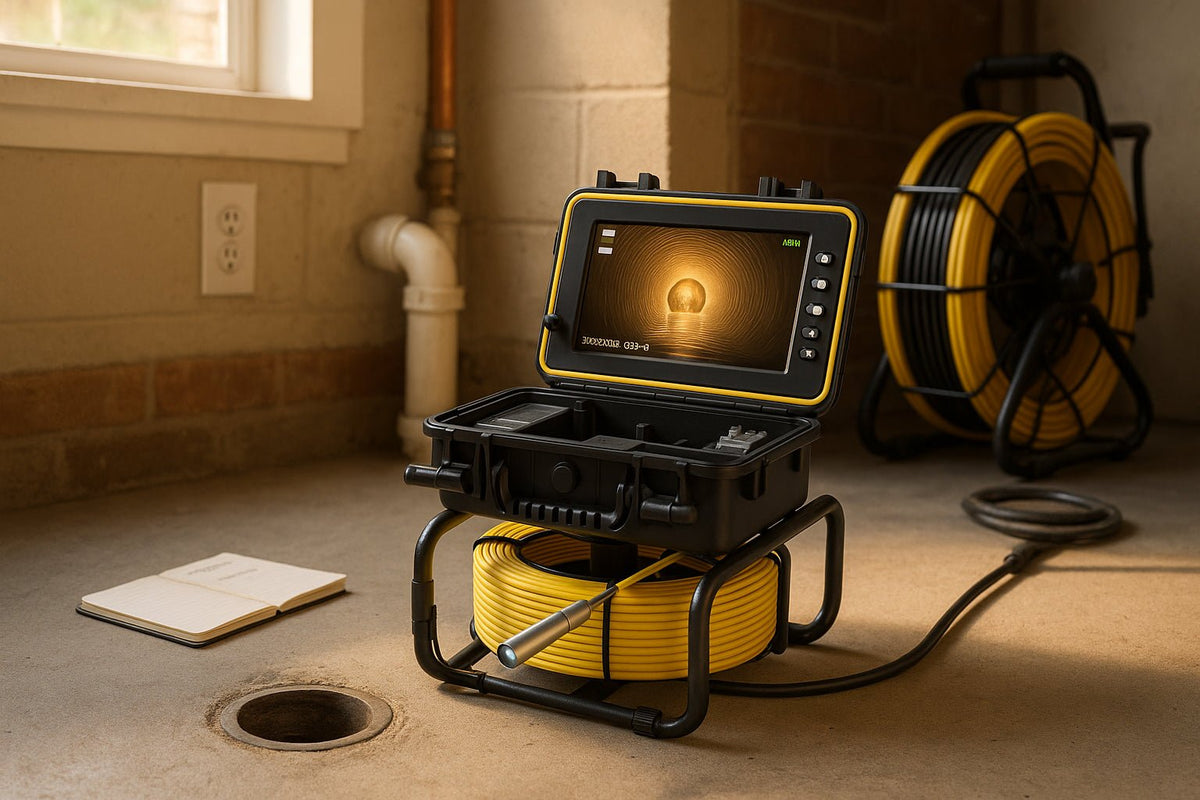

A drain camera and a sewer camera do the same basic job - they show you what is happening inside a pipe - but they are not the same tool. A drain camera is usually the better fit for shorter indoor branch lines, tighter bends, and homeowner-level troubleshooting, while a sewer camera is built for longer main-line runs, larger pipe diameters, and jobs where you may also need self-leveling footage or a locator. If you choose the wrong one, you either overpay for features you will never use or you end up with a camera that cannot reach the problem you are trying to diagnose.
What is the actual difference between a drain camera and a sewer camera?
The short answer is that drain camera is the narrower, more practical term for cameras used on shorter and smaller residential drain runs, while sewer camera usually refers to heavier inspection systems made for longer, larger, and dirtier main-line work.
That is why many product pages and plumbers use the names interchangeably, even though the job profile is different. On its current drain camera collection page, Powerwill lists compact inspection systems with 9-inch screens, self-leveling heads, and cable lengths aimed at residential pipe work. On the pro side, the 10DX1 product page positions that unit for municipal and commercial drain systems, with a 246-foot push cable, 10-inch monitor, and built-in 512 Hz locating capability.
In real jobs, the distinction matters because a camera that feels great on a 30-foot laundry line can feel underbuilt on a 100-foot exterior lateral. The opposite is also true. A large long-run reel may be overkill when you only need to confirm grease buildup under a kitchen sink or inspect a short branch from a basement cleanout.
| Question | Drain camera | Sewer camera |
|---|---|---|
| Typical job | Indoor drains, short residential runs, homeowner checks | Main sewer laterals, exterior lines, commercial runs |
| Best cable behavior | More maneuverable in tighter bends | More stable on long straight pushes |
| Typical value features | Compact reel, moderate reach, easy setup | Long cable, stronger head, better reporting tools |
| Locator needed? | Usually no | Often yes, especially before digging |
| Buyer profile | Homeowners, inspectors, light-service plumbers | Full-time plumbers, drain contractors, utility work |
The specs that matter most when you compare the two
The direct answer is that cable length, self-leveling, screen size, and locator support matter more than the product label on the box.
Homeowners often fixate on resolution first, but most mis-buys come from mismatched reach and workflow. The current PW9D1 page lists 65-foot, 100-foot, and 165-foot options, a 9-inch HD IPS screen, and an IP68 waterproof self-leveling system. That profile is strong for residential drains because it keeps the system compact while still covering most common runs inside a single-family home.
The 10DX1 page goes another direction: 246 feet of waterproof push cable, a 10-inch IPS monitor, self-leveling head, and 512 Hz locator. That package is better when you need long pushes, distance marking, and field-ready locating before excavation.
Price is the other hard divider. The current PW9D1 price is $595.80, while the current 10DX1 price is $1,630.77. That gap only makes sense if your jobs actually benefit from longer reach and locating. Otherwise, you are paying pro-level money for capacity you may never use.
When a drain camera is the right choice
A drain camera is the right tool when the pipe problem is closer, smaller, and more likely to be part of normal home maintenance than excavation planning.
That includes checking a kitchen branch after repeated grease backups, inspecting a laundry drain, following up after a sink snake, or documenting what a home inspector found before calling a plumber. It is also a strong fit for property managers who want visual confirmation before approving a repair ticket.
There is a financial reason to start smaller. According to HomeGuide's 2026 cost guide, a sewer and plumbing camera inspection costs $125 to $500 on average, and a camera rental costs $120 to $225 per day. If you only need occasional confirmation work, a compact drain camera can make more sense than repeatedly renting or paying for repeated service calls.
In short: if the inspection target is inside the home's normal plumbing footprint and you are not planning to trace or mark the line in the yard, a drain camera is usually the better first buy.
When a sewer camera is the right choice
A sewer camera is the right choice when the risk, distance, and cost of being wrong are much higher.
Use a true sewer camera when the blockage is likely beyond the house, when you are tracing a line before digging, when you need longer push distance through exterior laterals, or when you need footage clear enough for a repair recommendation or client report. This is also the right class of tool for plumbers who want to turn inspection into a repeatable paid service line rather than an occasional troubleshooting add-on.
Cost exposure is what pushes many users into the sewer-camera category. Angi's current 2026 guide puts the normal range for sewer line camera inspection work at $270 to $1,729, depending on scope and location. Once the project moves beyond a simple indoor drain problem, inspection errors get expensive quickly.
That is where a locator-capable system earns its keep. If you need to know not just what the problem is but also where to dig, a sewer camera with a 512 Hz sonde dramatically changes the workflow.
Can one camera do both jobs?
Yes, but only up to a point. The honest answer is that many all-in-one sewer cameras can cover most residential drain jobs, but the reverse is not always true.
A homeowner or light-service plumber can often use one self-leveling compact reel for both indoor drains and shorter sewer runs. That is why the PW9D1 sits in the middle so well. It works as a homeowner-friendly drain camera, but it is still a real pipe inspection system rather than a novelty scope.
The limitation shows up when you get into longer laterals, rougher pushes, bigger diameters, and jobs where locating matters. That is when a true long-run sewer camera stops being optional. If you do both categories every week, the smarter path is usually to start with the camera that covers your highest-cost jobs and use that as your anchor system.
Cost, rental, and payback: how to think about the purchase
The practical answer is that the right camera is the one that costs less than repeated outsourced inspections for your real workload.
Using HomeGuide's current range, two or three paid inspections can cover a daily rental. A few more can cover an entry-level owned system. The PW9D1 at $595.80 is easy to justify if you expect repeated homeowner checks, property-management calls, or pre-repair verification. The 10DX1 at $1,630.77 makes more sense if longer sewer jobs or locator work are already part of your schedule.
If you are still unsure, use this rule: buy a drain camera when the main value is see before you call; buy a sewer camera when the main value is diagnose, document, and locate before you repair.
Back to topKey Takeaways
- A drain camera is usually the better fit for shorter indoor residential runs, while a sewer camera is built for longer main-line and exterior work.
- The real buying factors are cable reach, self-leveling, screen usability, and whether you need a 512 Hz locator - not just the label on the product listing.
- The Powerwill PW9D1 is the stronger starting point for mixed residential drain work because it combines a 9-inch screen, self-leveling, and compact reach at $595.80.
- The Powerwill 10DX1 is the better choice when your jobs involve long sewer laterals, field reporting, or underground locating before digging.
- If your inspection need is recurring, ownership often beats repeated rentals or service calls quickly, especially once you move beyond simple one-off indoor drain checks.
FAQ: Drain camera vs. sewer camera
Is a drain camera the same thing as a sewer camera?
Not exactly. People use the terms interchangeably, but drain cameras usually refer to compact inspection systems for shorter residential drain runs, while sewer cameras are built for longer and heavier main-line work.
Can a homeowner use a drain camera without hiring a plumber?
Yes, if the goal is basic visual confirmation. A homeowner-friendly system like the Powerwill PW9D1 is easier to set up and move than a large contractor reel.
Do I need a locator with my camera?
Only if you need to mark the line from above ground or locate the exact defect before digging. For indoor drain checks, a locator is usually unnecessary; for exterior sewer troubleshooting, it is often worth it.
How much does a sewer camera inspection usually cost?
According to HomeGuide, sewer and plumbing camera inspections average $125 to $500, and sewer scope inspections added to a home inspection often run $100 to $250. Angi's broader 2026 range is $270 to $1,729 depending on scope and location.
What should a plumber buy first: a drain camera or a full sewer camera?
Buy the one that covers your highest-frequency paid jobs first. If most jobs are residential drains and short laterals, start smaller; if your business regularly handles buried exterior lines, go straight to a locator-capable sewer camera.
Conclusion
The best choice is not about which label sounds more professional. It is about matching the tool to the line length, job type, and level of documentation you actually need.
If you want a compact system for indoor and residential pipe work, start with the Powerwill PW9D1. If you need longer reach, stronger reporting, and built-in locating for sewer work, move up to the Powerwill 10DX1. Either way, the logic stays the same: inspect before repair.
Comments
No comments