
The Complete Guide to Drain Inspection Cameras: How They Work, What They Find, and When to Buy One
 Michael Carter
0 comments
Michael Carter
0 comments
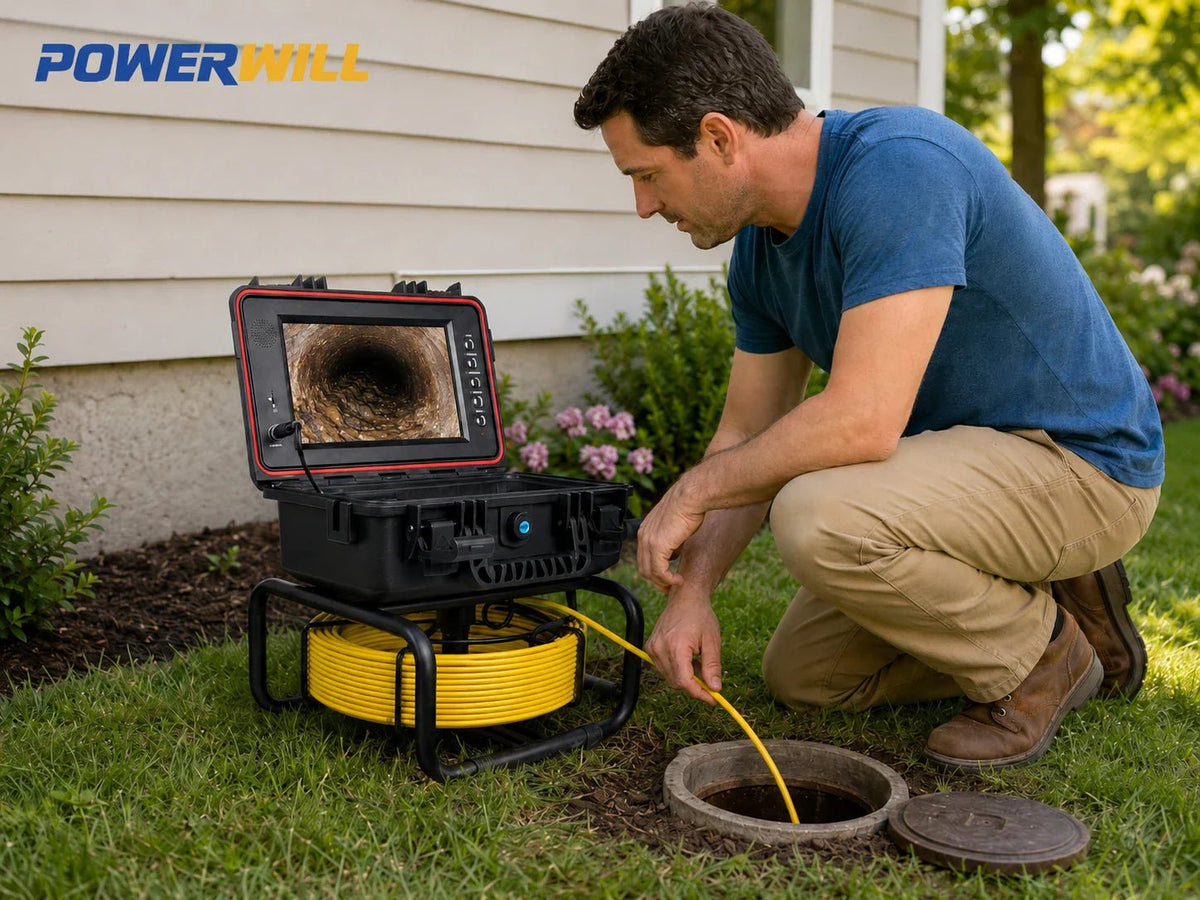
A drain inspection camera is a waterproof camera head on a flexible push cable that lets you see inside a drain or sewer line before you pay for cleaning, digging, or replacement. HomeGuide says a sewer camera inspection costs $125 to $500 on average, while current rental pricing runs about $120 to $225 per day. That makes the tool valuable for homeowners, but only if you understand what it can actually find, what pipe sizes it fits, and when ownership makes more sense than another one-time service call.

A drain inspection camera is most valuable when it helps you inspect before you repair, not when it becomes an expensive gadget you never match to the pipe.
How a Drain Inspection Camera Actually Works
A drain inspection camera works by pushing a small waterproof camera through the pipe while a monitor shows live video in real time. The useful part is not just seeing the inside of the line. It is being able to match what you see to a location, a pipe size, and a likely next step.
Powerwill's current PW9D1 product page lists a 9-inch HD IPS screen, 1080p recording, a self-leveling camera head, 100-foot 5 mm fiberglass cable with meter marking, and IP68 waterproofing. Those details matter because they affect what kind of pipe you can enter, how far you can push, and how easy the footage is to interpret later.
The camera does not repair anything by itself. Its job is to replace guessing with evidence. That is why the best drain camera buying decisions start with access point, pipe diameter, and likely defect, not with the longest cable on the page.
Back to topWhat a Drain Camera Can Reliably Find
A good drain camera is best at confirming whether the problem is buildup, roots, standing water, a broken section, or a location issue. It is the fastest way to separate "slow drain" from "structural sewer problem."
InterNACHI's sewer scope standards list visible roots, standing water over one inch, offsets greater than one-quarter inch, broken or separated pipe, and collapsed sections as visible defects worth reporting. Those are exactly the kinds of findings that change whether you need cleaning, re-checking, lining, or excavation pricing.
What the camera is not perfect at is seeing through sludge, confirming every hidden structural weakness, or repairing the cause of the problem. If the water is muddy or the pipe is packed with grease, the first pass may only tell you that cleaning has to happen before the real inspection can finish.
Back to topWhich Specs Matter for Homeowners More Than Marketing Hype
| Spec | Why it matters | What a homeowner usually needs |
|---|---|---|
| Cable length | Determines whether you can reach a fixture branch, a main line, or the street side lateral. | About 65 to 100 feet for many residential checks; more if you want full lateral reach. |
| Cable diameter | A thinner cable handles smaller drains and bends better. | 5 mm class is easier in smaller residential lines. |
| Self-leveling | Keeps the image upright so defects are easier to explain and compare later. | Very helpful if you plan to make decisions from the footage yourself. |
| Recording and meter marking | Lets you save proof and note where the issue sits. | Important whenever a plumber, seller, or insurer may need the video later. |
| Locator capability | Helps trace the line and mark a defect from above ground. | Useful but not essential for every homeowner; more important if digging may follow. |
Powerwill's How To Choose page makes the residential fit pretty clear. It describes the PW9D1 as most flexible for 1-inch to 4-inch residential pipes, while the PW9D2 moves into 1.5-inch to 6-inch household drains with up to 230 feet of 7 mm cable and 512 Hz locating support.
That is the practical takeaway. Homeowners do not need every professional feature, but they do need the right combination of cable size, reach, and image clarity for the actual pipe they plan to inspect.
Back to topWhen Renting, Hiring, or Buying Makes Sense
The money decision is simple once you compare ownership to real service pricing. HomeGuide says one camera inspection usually runs $125 to $500, and homes without a cleanout can run $175 to $750 because toilet removal may be required. That means repeated inspections add up faster than many homeowners expect.
Angi's updated April 6, 2026 cost guide also shows how inspection type changes the bill: standard camera work often runs $150 to $300, HD camera work $300 to $600, and specialty self-leveling or unique-material inspections can move from $600 to $1,500 or more. Video reports, locating, and follow-up review add even more.
Renting is logical if you have one clear access point and one short-term problem. Hiring a pro is smartest when the line is blocked, the access is difficult, or the report may support a sale, insurance claim, or repair bid. Buying starts to make sense when you own an older home, manage rentals, or know you will need repeat visual checks after cleaning or repair.
Back to topWhich Drain Camera Type Fits Your Home Best
If your most common concern is smaller household drains and maneuverability, the PW9D1 is the easiest fit. Its current product page lists a 100-foot 5 mm cable, 9-inch monitor, self-leveling head, 12 adjustable LEDs, and up to 10 hours of battery life.
If you want more reach and locator support for medium-length home sewer lines, the same Powerwill selection guide points to the PW9D2 with cable options up to 230 feet, built-in DVR, distance counter, and 512 Hz locating. That is a better match when you care about full-lateral diagnostics rather than only fixture-side checks.
If you are working in especially tight 2-inch to 4-inch residential pipe and care about maneuverability more than run length, the Powerwill 7DH2 adds a rotating dual-camera system with a built-in distance counter. That makes it a niche but useful option for hard-to-view bends and side detail.
Key Takeaways
- A drain inspection camera is a diagnostic tool, not a repair tool, and its value comes from replacing guesswork with visible evidence inside the line.
- The camera is best at finding roots, standing water, offsets, breaks, and buildup, but dirty water or packed debris can still limit what the first pass shows.
- For homeowners, cable length, cable diameter, self-leveling, recording, and location marking matter more than inflated marketing claims about raw power.
- Renting works for a one-off check, hiring a pro works for blocked or high-stakes lines, and buying works best when repeated inspections are likely.
- Powerwill's PW9D1 fits smaller residential drains, PW9D2 fits longer household laterals, and 7DH2 fits tighter maneuverability-focused pipe work.
FAQ
What is the difference between a drain inspection camera and a sewer camera?
The terms overlap, but a drain inspection camera often refers to shorter-run residential work, while a sewer camera usually implies longer laterals, larger reels, or locator features. The important part is matching cable size and reach to your actual pipe.
Can a homeowner use a drain inspection camera without plumbing experience?
Yes, especially if the access point is straightforward and the goal is diagnosis rather than repair. A homeowner-friendly system like the Powerwill PW9D1 is easier to use because the screen, self-leveling, and meter marking reduce guesswork.
How far does a residential drain camera need to reach?
Many homeowner checks fit inside 65 to 100 feet, but a full residential lateral can need more. If you want to inspect from the cleanout toward the street connection, extra reach matters.
Should I rent a drain camera or hire a plumber?
Rent if the access is easy and you only need a quick look. Hire a plumber if the line is blocked, the camera may need locating support, or the footage has to back up a repair bid or home sale decision.
Which Powerwill camera is best for a homeowner?
For many homes, the PW9D1 is the easiest starting point because it is built around smaller residential pipes and manageable reach. If you need longer runs and locating support, move up to the PW9D2.
Conclusion
A drain inspection camera is worth the money when it helps you inspect before you repair. Once you know what the camera can see, what it cannot, and what your actual pipe requires, the buying decision gets much easier.
If you want a homeowner-friendly place to start, the Powerwill drain camera collection covers the most common residential inspection needs without forcing you into municipal-scale equipment.
Back to top
Comments
No comments