
Sewer Snake vs. Sewer Camera: Two Tools, Two Jobs-Are You Using the Right One?
 Michael Carter
0 comments
Michael Carter
0 comments
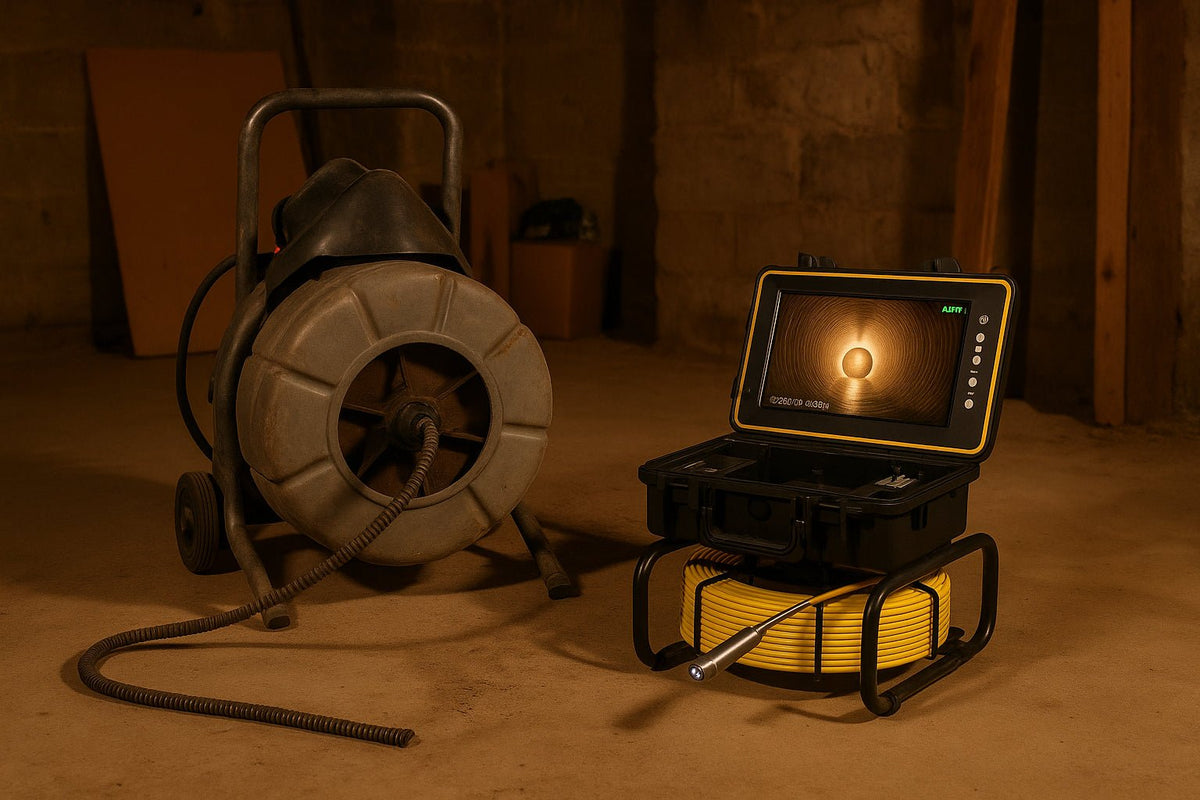

A sewer snake and a sewer camera are not competing tools - they do different jobs. A sewer snake is for clearing a blockage. A sewer camera is for diagnosing what the blockage is, where it is, and whether the pipe itself is damaged. If you use a snake when you really need a camera, you may clear the symptom without learning why the line failed. If you use a camera when the line simply needs mechanical cleaning, you may delay the obvious fix.
Two tools, two jobs: what each one is supposed to do
The direct answer is simple: a sewer snake removes or breaks through obstructions, while a sewer camera shows you what is happening inside the line.
The Home Depot's drain snake guide explains that a drain snake or auger travels through the pipe until it reaches a clog. The same guide explicitly notes that when you need a camera system to check the drain, that is a different tool category altogether. That is the whole distinction in one sentence.
The plumber side of the equation shows up clearly in RIDGID's current drain cleaning and diagnostics materials. In its inspection, locating, and drain-cleaning overview, RIDGID describes drum and sectional machines as tools that clear obstructions, while camera systems sit in the inspection side of the lineup. One category cleans. One category diagnoses. Serious sewer work uses both categories on purpose.
| Question | Sewer snake | Sewer camera |
|---|---|---|
| Main goal | Open the line | See what is inside the line |
| Best at | Hair, paper, soft clogs, some roots, obstruction removal | Roots, offsets, cracks, grease patterns, bellies, repeat-failure diagnosis |
| What it cannot tell you | Why the clog keeps coming back | Whether the clog can be physically cleared by itself |
| Most useful outcome | Drain flows again | Repair plan or proof before repair |
| Ideal user mindset | Action first | Evidence first |
When a sewer snake is the right first move
A sewer snake is usually the right first tool when the symptom points to a simple blockage and the line has no history of repeat failure.
Think slow drains that suddenly stop, toilet paper clogs, soft organic buildup, or a line that worked normally until a specific backup event. In those cases, clearing the line may solve the whole problem. That is exactly what a snake is built to do.
There is also a cost reason to start there in straightforward cases. According to HomeGuide's 2026 cost guide, renting a drain camera for DIY inspection typically costs $120 to $225 per day. If the issue is clearly a simple stoppage, a snake-first approach may be faster and cheaper than turning the job into a camera investigation right away.
But here is the limitation: a snake can restore flow without telling you whether the real issue is grease, roots, scale, a misaligned joint, or a broken section of pipe. If the backup returns, the snake alone did not give you a diagnosis.
When a sewer camera is the right first move
A sewer camera is the smarter first move when the line has repeated backups, you suspect structural damage, or you need evidence before approving expensive repair work.
This is especially true when you are dealing with older homes, tree-root territory, buried exterior runs, pre-purchase inspections, or disagreement about whether the issue is "just a clog" or something much more expensive. In those cases, seeing the line first is often the cheapest way to avoid the wrong repair.
Current cost data supports that logic. HomeGuide says sewer and plumbing camera inspections average $125 to $500, while Angi's 2026 guide places the broader normal range at $270 to $1,729. That can feel like an extra line item - until you compare it with digging in the wrong spot, replacing the wrong section, or snaking a broken pipe over and over.
For users who want to own the diagnostic side of that workflow, a compact self-leveling system like the Powerwill PW9D1 starts at $595.80. If your work includes longer sewer runs or locating before excavation, the Powerwill 10DX1 at $1,630.77 adds the long-run and locator capability that a simple snake cannot touch.
Why pros often use both tools on the same job
The best workflow on serious jobs is often snake first, camera second - or camera first, snake second - depending on what you need to know first.
If the line is totally blocked and there is no useful visual path, a plumber may snake or clear enough of the obstruction to get the camera through. Once the camera can travel, the plumber can confirm whether the blockage was the whole problem or just a symptom of roots, scaling, or pipe damage.
On the other hand, if the customer is deciding whether to authorize a larger repair, the camera may come first so there is proof before anyone starts cutting roots or recommending excavation. That is one reason camera footage increases customer confidence so dramatically: people authorize repairs faster when they can see the offset joint, standing water, or root mass with their own eyes.
This is also where self-leveling and locator features start to matter. If the footage is going to be used for repair planning, orientation and location are not luxury extras - they are part of the evidence.
Cost and ownership math: which tool pays back faster?
The practical answer is that snakes solve more one-off blockages cheaply, but cameras create better long-term decisions and better paid inspection workflows.
For a homeowner, a sewer snake often wins on first-pass affordability. For a plumber, a sewer camera often wins on downstream value because it creates a billable service and improves repair close rates. A camera also protects credibility. If a snake clears the line but the problem returns next month, you still need an explanation.
That is why many shops end up standardizing on both categories: one for clearing, one for proof. If you are buying the camera side today, the strongest starting point is usually a self-leveling system that lets you inspect, document, and explain. That is why the PW9D1 works so well for homeowners and light-service plumbers, while the 10DX1 is better when your business includes long sewer runs and locator-driven repair planning.
Back to topKey Takeaways
- A sewer snake clears blockages, while a sewer camera diagnoses what the blockage is, where it is, and whether the pipe itself is damaged.
- Snake first makes sense for simple stoppages with no history of repeat failure; camera first makes more sense when the line keeps backing up or major repair decisions are on the table.
- Pros often use both tools on the same job because clearing flow and proving root cause are not the same task.
- Camera inspections cost far less than guessing wrong on excavation or replacement, which is why evidence-first workflows have become standard on recurring sewer issues.
- If you want to own the diagnostic part of the job, a self-leveling camera like the Powerwill PW9D1 or 10DX1 gives you proof before repair instead of repeat guesswork.
FAQ: Sewer snake vs. sewer camera
Can a sewer snake tell me why my line keeps clogging?
No. A snake can clear or break through a blockage, but it does not show whether the cause is roots, grease, scale, standing water, or pipe damage. That is what the camera is for.
Should I snake the drain before using a camera?
Sometimes. If the line is so blocked that the camera cannot pass, partial clearing may be needed first. But when repair decisions or recurring failures are involved, many plumbers camera the line as early as possible to document the real issue.
Is a sewer camera worth it for a homeowner?
It can be, especially if you own an older home, manage property, or have repeated line issues. A system like the Powerwill PW9D1 gives you visual proof before you authorize costly work.
How much does a sewer camera inspection cost compared with snaking?
HomeGuide says sewer and plumbing camera inspections average $125 to $500, while camera rental usually runs $120 to $225 per day. Snaking can be cheaper when the problem is just a basic clog, but it does not provide the same diagnostic evidence.
What if I need to know where the problem is before digging?
That is a camera-and-locator job, not a snake job. A locator-capable system such as the Powerwill 10DX1 is built for that workflow.
Conclusion
A sewer snake and a sewer camera are both useful because they answer different questions. One asks, "Can I get this line flowing again?" The other asks, "What is actually wrong in there?"
For the best decisions - especially on recurring or high-cost sewer problems - the evidence-first move is to inspect before repair. If you want a compact self-leveling system for residential work, start with the Powerwill PW9D1. If you need longer reach and locating before excavation, move up to the Powerwill 10DX1.
Comments
No comments