
Older Home Sewer Lines: What a Camera Inspection Can Reveal
 Michael Carter
0 comments
Michael Carter
0 comments

Older Home Sewer Lines: Start Here
An older house may have original pipe, replacement sections or a mix of materials. Start with the line’s history and visible condition. A sewer camera can help document roots, deposits, joint changes and damage along the accessible route before maintenance or repair decisions.
- Collect earlier inspection videos, repair records and any known pipe-material information.
- Record material transitions, visible roots, scale, joints and places where the view is obscured.
- Ask which findings justify cleaning, monitoring or a separate repair assessment.
Know the limits: Age alone does not prove failure. Video cannot establish remaining wall thickness, watertightness, remaining life or the condition hidden beneath deposits or standing water.
interactive Home Drainage Inspection Center · Choose your next step ↓
Older sewer lines deserve a condition-based inspection rather than assumptions based on the age of the house. A camera can document the accessible interior for owners, landlords and buyers, including material changes, recurring deposits and visible damage. Keep prior recordings so observations can be compared over time.
What the Camera Actually Shows

The camera records the visible pipe interior. A qualified review can help distinguish an apparent cleaning issue from a suspected structural defect, but areas behind water, deposits or obstructions remain unassessed.
That visual evidence also tells you which next step makes sense. Some findings point toward cleaning. Some point toward spot repair. Some tell you the line has reached replacement territory. If you have read Sewer Camera vs. Hiring a Plumber, this is the part where ownership starts to make sense: once you can see the problem, you are no longer buying blind service calls.
1. Root intrusion
Roots usually enter older clay tile, concrete, or compromised joints where moisture attracts them. On camera, early intrusion looks like hair-thin white or brown tendrils crossing a joint seam. Advanced intrusion looks like a fibrous curtain or a dense knot that eats into the pipe diameter and catches paper, grease, and solids.
Visible roots suggest an entry point that deserves attention. Cleaning may improve access or flow, but the condition of the joint or opening should be assessed separately. Record what is visible after any appropriate cleaning.
2. Grease, sludge, and scale buildup
Kitchen-heavy homes and older cast iron systems often show a pipe that has gradually narrowed from the walls inward. On camera, grease and sludge look like soft narrowing around the open center of the pipe, while mineral scale looks harder and rougher along the wall.
Record the visible opening and the extent of deposits without treating an uncalibrated image as a precise restriction measurement. A camera view alone cannot predict when a backup will occur.
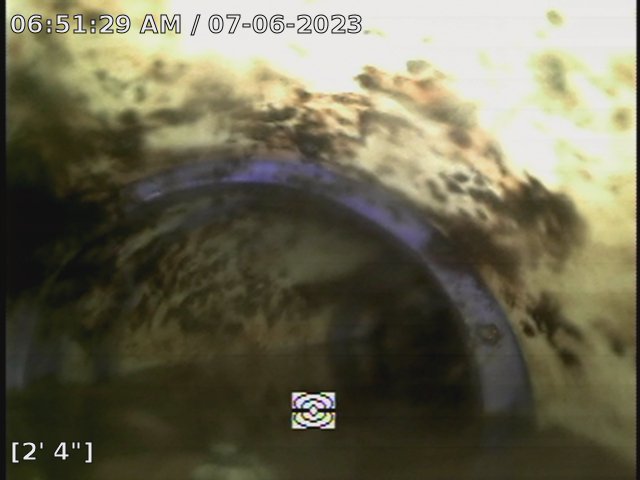
3. Cracks and corrosion
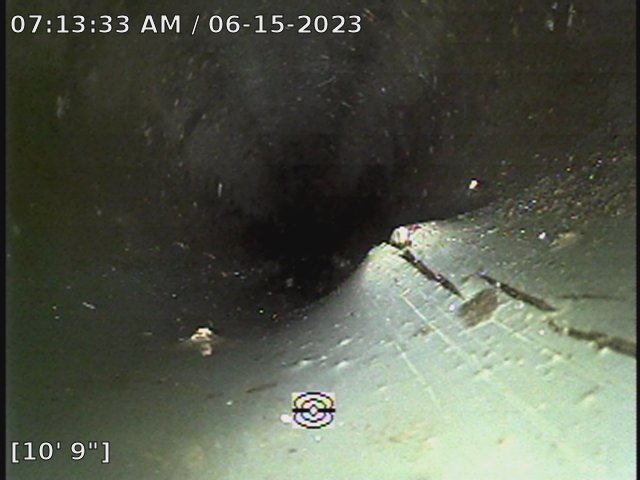
Visible cracks, rough surfaces and corrosion products can help identify areas for further assessment. The image does not measure remaining wall thickness or prove how much load the pipe can carry.
That is why Pipe Materials Identification Guide is such an important companion read. The same defect means different things depending on whether the line is PVC, cast iron, clay tile, or orangeburg.
4. Offset joints and separation

When soil shifts, a pipe joint can stop lining up cleanly. On camera, that looks like a step, lip, or shelf where one section sits higher or lower than the next. In some cases the separation is small enough to keep functioning for a while. In others, it becomes a ledge that traps wipes, grease, and roots every time the line is used.
This is one of the clearest examples of why a camera beats guesswork. A recurring clog at the same distance is not necessarily "just another clog." It may be the same misaligned joint catching debris over and over.
5. Standing water or belly sections
A sewer line should pitch continuously toward the street connection or septic tank. When part of the run settles, water pools in the low point instead of draining cleanly. On camera, you see a reflective waterline or the lens dipping into standing water before climbing back out.
Standing water can obscure defects and may have several causes, including a restriction or a low section. Record where it occurs; video alone does not measure grade or establish the cause.
6. Partial collapse or full collapse
Visible deformation, broken material or soil intrusion may indicate serious damage. If the camera stops, do not force it: an obstruction, tight bend or incompatible head may also prevent travel. Report the inaccessible portion rather than diagnosing collapse from resistance alone.
A qualified contractor should determine the next step for suspected structural damage. If surface locating is needed, use a compatible sonde and receiver and record uncertainty; see the underground pipe locating guide.
Back to topHow the Inspection Works
A sewer camera inspection is straightforward when the setup matches the job. The process matters because poor access, rushed pushing, or no recording discipline can turn a useful inspection into vague footage that nobody trusts later. The goal is not just to get a camera into the line. It is to come back with usable evidence.
Step 1: Find the cleanout
The cleanout is the most efficient access point because it gives direct entry into the main line without removing toilets or opening fixtures. In many homes it sits near the foundation, in a basement, crawlspace, or near grade outside. If you are not sure which access point matters, Pipe Camera Inspection Guide breaks down the basic access logic and cable choices.
Step 2: Set up the equipment
Check camera-head dimensions, bends, cable length and recording requirements against the actual pipe. Powerwill PW9D1 lists a 9-inch IPS monitor, self-leveling camera and DVR recording, with several cable lengths and optional locator configurations. Verify the selected kit before ordering.
Step 3: Advance the camera slowly
This is where many people sabotage their own inspection. You are not racing to the street. You are watching for seams, offsets, buildup, root entry points, standing water, and material changes. A slow push makes the footage readable. A fast push creates blur and misses the exact frame where the problem becomes obvious.
Step 4: Record and mark the findings
Good footage is not just visual; it is documented. Stop at each major finding, let the image settle, and record enough time on the defect that another person can review it later. This matters especially for buyers and landlords. If the line becomes a negotiation or insurance discussion, recorded footage is stronger than a verbal description.
That is exactly why the article Sewer Inspection Before Buying a House treats video as leverage, not decoration.
Step 5: Retrieve, review, and decide
Pull the cable back under control, confirm the important frames, and decide what the footage actually means. Some lines only need cleaning. Some need further locating. Some need a plumber to quote a repair with the video in hand. The inspection is complete when the footage turns into the right next action, not when the cable comes out of the pipe.
Back to topWhen to Schedule a Sewer Camera Inspection
Preventive inspection is cheaper than emergency guessing. The best time to run a camera is usually before the line forces the issue. These are the six most common triggers where an inspection earns its keep quickly.
| Trigger | Why it matters | What the inspection helps answer |
|---|---|---|
| Recurring slow drains | Repeat symptoms suggest a persistent defect, not a one-time clog. | Is this roots, grease, scale, or a structural catch point? |
| Sewage odor or wet yard areas | Surface signs often appear after the underground issue is already established. | Is there standing water, a crack, or a damaged section? |
| Before buying an older house | Standard home inspections usually exclude the buried sewer lateral. | Are you inheriting root intrusion, old material, or a future replacement? |
| After repeated snaking or hydrojetting | Symptom relief without visual diagnosis often means the cause remains. | Are you cleaning the same defect over and over? |
| Before trenching, lining, or major landscape work | You should know the pipe condition before spending on repair or digging around it. | Where is the defect and what is the correct repair scope? |
| After a major backup or tenant complaint cycle | Emergency events justify documenting the full line condition, not just reopening flow. | Did the event expose a repair issue, a management issue, or both? |
For homeowners this section is mostly about avoiding surprise. For buyers it is leverage. For landlords it is risk control. In all three cases, the inspection is useful because it converts a vague plumbing story into footage, distance, and a more defensible next decision.
Back to topShould You Own One or Hire It Out?
For an occasional inspection or uncertain pipe condition, a qualified drain professional can provide interpretation as well as footage. Repeat users may benefit from owning a camera when they have suitable access, equipment and the ability to document limitations.
Compare frequency of use, equipment and maintenance cost, and whether you need a professional report. The ownership-versus-service guide offers further context; there is no universal break-even after one or two inspections.
It also helps to understand which tool class you actually need. If you are trying to inspect a shower trap or a short fixture branch, that is different from a main sewer run. Borescope vs. Sewer Camera exists for exactly that reason: not every inspection camera is a sewer camera, and buying the wrong form factor is an expensive shortcut.
The Right Next Step for Powerwill Buyers
For recurring residential observations, review Powerwill PW9D1 against the actual access, cable reach and recording needs. Use camera selection guide before deciding whether a particular head and cable are suitable.
If you already know you need longer reach, larger pipe coverage, or a broader comparison set, start with the full Powerwill sewer camera lineup. That route makes more sense when you are comparing cable length, monitor size, sonde support, and more professional job frequency.
Use the footage to support an informed maintenance or repair discussion. Record uncertain findings and uninspected areas alongside the visible conditions.
Back to topKey Takeaways
- A sewer camera inspection shows what is actually inside the line before you pay for the wrong repair method.
- The six most important findings to recognize are roots, buildup, cracks, offsets, standing water, and collapse.
- A useful inspection follows a simple five-step workflow: access, setup, slow advance, recording, then review.
- The best preventive timing is before repeated symptoms or major spending decisions force you into guesswork.
- For residential main-line work, Powerwill PW9D1 is the practical entry point while the full lineup covers heavier needs.
FAQ
Do I need a license to run a sewer camera inspection on my own property?
Requirements depend on location, the work being performed and whether you are providing a service for others. Confirm local rules and permission to access the line. When access or interpretation is uncertain, use a qualified sewer-scope professional.
What pipe sizes can a residential sewer camera usually inspect?
Most residential main lines are 3-inch or 4-inch, and that is the core range a standard residential sewer camera is meant to cover. Smaller branch drains often call for a thinner drain camera instead of a main-line reel.
What should I do if the camera finds something serious?
Use the footage to define the next decision. Some problems justify cleaning, some justify a quote for spot repair, and some justify lining or replacement evaluation. The value of the inspection is that you stop making that decision blind.
How long does a normal sewer camera inspection take?
Inspection time varies with access, line length, deposits, bends and reporting needs. Ask the provider what is included and whether extra access or cleaning work may be required.
What recording format should I look for when choosing a sewer camera?
You want a system that records shareable video to SD card or another exportable format, not one that only shows live footage on-screen. If the footage cannot be saved, it is much harder to use for estimates, tenants, or real-estate documentation.
How is a sewer camera different from a snake camera or drain camera?
A sewer camera is built for longer main-line runs and larger pipe. A short snake-style camera is better for traps and small branch drains. If your goal is the building sewer or lateral, you need a true sewer camera rather than a short inspection wand.
Conclusion
A sewer camera inspection is valuable because it answers the question that surface symptoms cannot: what is actually inside the line right now. Once you can see the pipe, you can stop overpaying for guesswork and start choosing the right next step.
If you need equipment for repeat inspections, review Powerwill PW9D1 or compare sewer camera systems. Match the selected cable, head and locating options to the actual line; for a one-time assessment, consider hiring a qualified professional.
Back to topSources
- 811 Before You Dig
- Powerwill PW9D1 sewer camera
- Powerwill sewer camera collection
- Powerwill sewer camera selection guide
Choose Your Next Step
Need a one-time diagnosis? Arrange a qualified sewer scope and ask for footage, written findings and inspection limitations. For repeated inspections, compare equipment against the actual pipe and access.
camera selection guide · compare sewer camera systems · Ask Powerwill about kit fit
Product configurations checked September 8, 2026. Current prices and kit contents are shown on the selected product variant. Nominal cable length is not a guarantee of usable reach or locating depth.
Inspection reference: InterNACHI sewer-scope scope and limitations.
Comments
No comments