
Orangeburg Pipe: What a Sewer Camera Inspection Can Reveal
 Michael Carter
0 comments
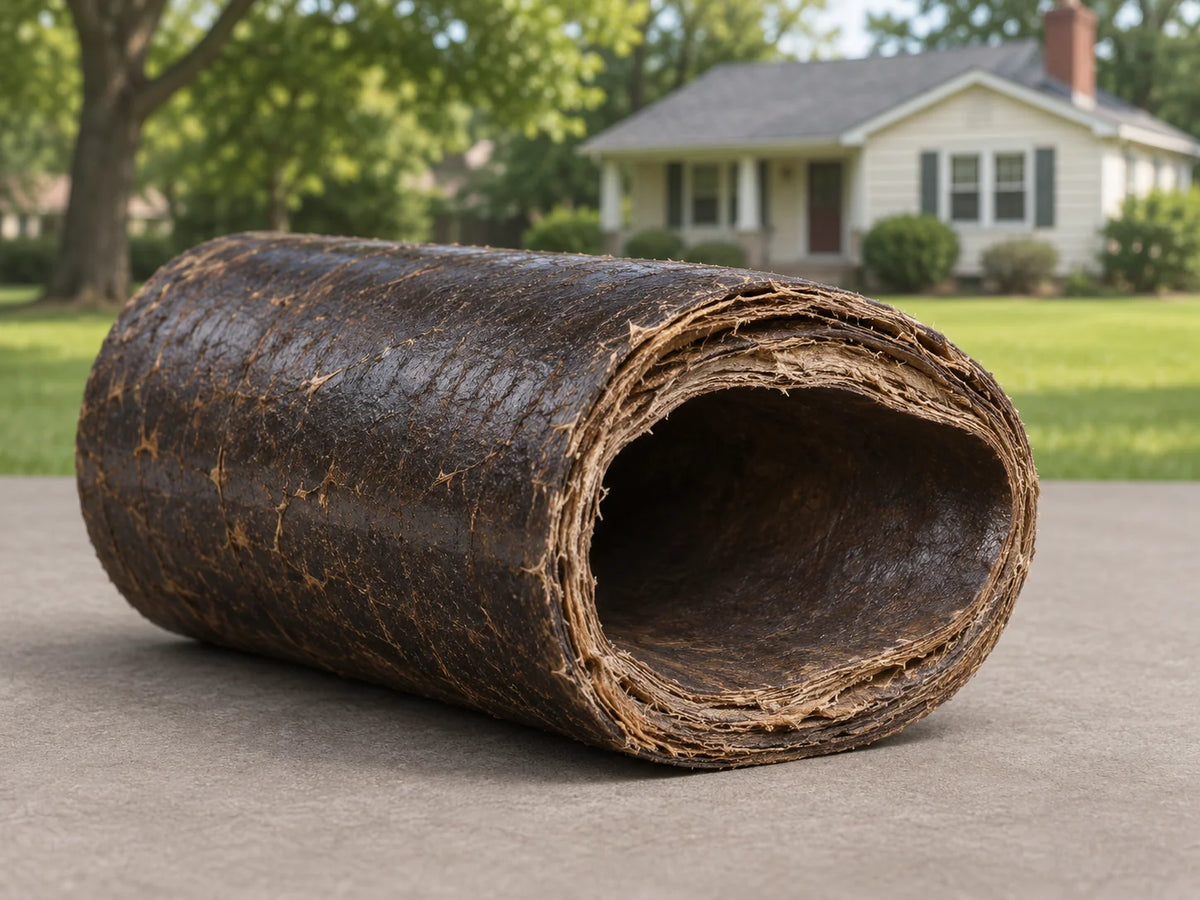
Orangeburg pipe is a type of bituminous fiber pipe, and a sewer camera can document visible conditions that help a professional assess it. The recording may offer material clues, but it is not a guaranteed identification test or a prediction of remaining life. Ask for the full video, the basis for the material identification, and a clear account of anything the inspector could not see. Use those records to discuss the next step before approving repairs.
Cover: AI-generated conceptual illustration of a bituminous fiber pipe sample; not to scale and not real inspection evidence.
↑ Back to topWhat is Orangeburg pipe?
Orangeburg is a name associated with bituminous fiber sewer pipe. The City of Ann Arbor's material guide describes its fiber construction and bituminous binder, including solid and layered wall forms. Its discussion of installation history is local information, not a nationwide rule for deciding what is under your house.
Start your investigation with the property's records rather than a construction-year shortcut. Ask for sewer replacement invoices, available permits, previous inspection reports, and any drawing that identifies the section involved. If a document simply says “sewer replaced,” ask what work that phrase covered. Keep a copy of the actual scope rather than relying on a remembered conversation.
For example, an invoice might describe work between two named access points without addressing the rest of the route. Treat that as a question for the next inspection: which sections does this record describe, and which remain unconfirmed? This is a suggested way to organize evidence, not a claim about the pipe at your property.
Our pipe materials guide provides broader terminology. For this investigation, keep the focus on whether Orangeburg is confirmed, suspected, or still unknown in a specific section.
↑ Back to topCan a sewer camera identify Orangeburg?
A camera may provide useful clues, but ask the inspector how confident the identification is. Ann Arbor notes that accessible video inspection can reveal damage patterns that help identify the material. That is a possibility, not a guarantee for every recording or property.
InterNACHI's sewer-scope standards say inspectors should describe pipe materials when possible, while specifically excluding a requirement to identify Orangeburg or Bermico. If confirming this material is your main concern, discuss that objective before booking and ask what the provider can reasonably establish.
Use three separate questions: “What material do you believe this is?”, “What supports that conclusion?”, and “What would resolve the remaining uncertainty?” Request that the written report use the same level of confidence as the verbal explanation. A tentative comment during filming should not become an unqualified identification on the final invoice.
Bring the old documents to that conversation. Ask whether the video agrees with them and where it does not. If the contractor recommends another assessment, request a brief explanation of what it is intended to establish. Avoid choosing an intrusive investigation yourself simply to obtain a more definite material label.
↑ Back to topWhich visible findings deserve attention?
Ask the inspector to describe the condition separately from the material name. Ann Arbor reports flattening, internal distortion, joint movement, and root intrusion among problems associated with bituminous fiber piping. Its examples explain why the interior deserves examination; they do not diagnose an unseen residential line.
For each finding, request the relevant video segment and the operator's plain-language explanation. The following prompts are a discussion aid, not a visual scoring system or a substitute for professional interpretation:
- Shape: Which part looks distorted, and what surrounding footage helps explain that appearance?
- Wall surface: Is the operator describing visible deterioration, a suspected defect, or an area that cannot be interpreted clearly?
- Joints: What does the recording show at the connection, and which part of the conclusion remains uncertain?
- Obstructions: What was visible around the obstruction, and did it prevent inspection farther along the route?
- Changes between sections: Where does the report say the appearance or material changes, and what evidence supports that note?
Do not use a dramatic still image as the whole report. Ask to see the approach to the finding and the available surrounding view. If you cannot understand a description, request an annotated still alongside the original video so another provider can review the same evidence.
Cleaning is a separate service decision. Ann Arbor warns that mechanical cleaning can further damage bituminous fiber pipe. Tell the provider about suspected Orangeburg before authorizing work, and ask how the material concern changes their proposed approach.
↑ Back to topWhat the video cannot establish by itself
Do not turn an interior view into a promise about the entire pipe. InterNACHI describes sewer scoping as a limited inspection of observed conditions, with concealed defects and future conditions outside its assurance. An incomplete inspection needs an explicit limitation, not a reassuring guess about the unseen section.
NASSCO's assessment overview distinguishes CCTV from additional dimensional inspection techniques and emphasizes lighting, focus, and suitable equipment. For a homeowner, the practical question is whether the available image is adequate for the specific conclusion being offered. The overview is technical background, not a residential repair prescription.
If a report gives a precise deformation percentage, slope, or remaining-life estimate, ask how that value was established. Request the measurement method and its limitations. Do not assign those numbers yourself from an ordinary camera frame, and do not interpret the ability to pass a camera through a section as a certificate of structural fitness.
Likewise, ask whether a distance shown in the recording is referenced to the access point or another zero point. Keep any separate surface-location record with the video. Before approving excavation, ask the contractor to explain how the proposed location was established rather than treating a footage number as a digging instruction.
↑ Back to topA practical inspection handoff checklist
Prepare a small evidence folder that makes the next conversation specific. You do not need to diagnose the pipe; your job is to preserve the documents, questions, and findings that a qualified provider needs to review.
- Write down the purpose. State whether you are investigating a material concern, reviewing an existing finding, or arranging follow-up after earlier work.
- Collect property records. Include dated invoices, available drawings, prior reports, and the names of the contractors who performed documented work.
- List your observations. Record dates and what you noticed in ordinary use. Keep your notes descriptive rather than labeling the cause as Orangeburg failure.
- Agree on the inspection scope. Ask which access point and route are planned, what may prevent completion, and which deliverables are included.
- Request the full evidence package. Ask for the recording, written findings, relevant still images, and an explanation of the material identification.
- Record the limits. Note the actual endpoint reached, sections not inspected, uncertain findings, and any proposed next assessment.
- Confirm the next contact. Identify who will review the findings and what information they need before recommending work.
For a property manager, add the property identifier and the person responsible for arranging access. For repeat-use inspection professionals, use consistent filenames and keep each report with its matching recording. These simple administrative choices make the handoff easier to follow without implying that the file itself proves a diagnosis.
Our older-home sewer inspection guide offers additional context for the inspection discussion.
↑ Back to topHow to discuss repair or further assessment
Ask for a recommendation tied to the documented condition and the unanswered questions. “Orangeburg” is a material label; a useful proposal explains what the contractor believes needs attention at your property and why.
Before comparing quotes, send each provider the same report and recording. Ask them to identify the section covered by their proposal, the intended result, and anything that could change the scope. Request separate explanations for further investigation, maintenance, repair, or replacement when those options are being discussed.
Useful questions include: What evidence supports this scope? What remains unconfirmed? How will the proposed method address the documented condition? What access and restoration are included? Who will confirm applicable local requirements? What records will show the result after work? Avoid selecting a technique solely because its name sounds less disruptive.
Illustrative example: A homeowner receives a report saying “suspected Orangeburg; inspection incomplete.” They ask for the full video and a written description of the stopping point. A second provider reviews that package and explains what additional information is needed before offering a repair recommendation. This example illustrates a clearer handoff; it does not predict what any particular inspection will find.
If a provider recommends monitoring, ask for a written follow-up plan and the changes that should prompt earlier contact. Do not translate a monitoring recommendation into a guarantee of remaining life. If the explanation is unclear, request clarification before making the decision.
↑ Back to topFive things to remember
- Use property records and the inspector's explanation together when investigating suspected Orangeburg.
- Ask whether the material identification is confirmed, suspected, or unknown.
- Keep the full recording with written findings and inspection limitations.
- Ask how measurements and repair recommendations were established.
- Use the camera to document conditions and support qualified assessment before repair.
Frequently asked questions
Does an older house definitely have Orangeburg pipe?
No. Do not use the age of the house as proof of a particular material. Ask for property-specific records and an assessment of the actual line, including any documented replacement sections.
Can a camera confirm Orangeburg every time?
No. Video may provide clues, but identification can remain uncertain. Discuss that objective with the inspector before booking and ask for the evidence behind any material label in the report.
Can footage tell me how many years the pipe has left?
Do not treat footage as a remaining-life forecast. Ask the professional to distinguish today's documented condition from any prediction, and to explain the basis and limitations of the recommendation.
Does suspected Orangeburg automatically mean the whole yard must be dug up?
The material label alone does not specify a repair scope. Request a property-specific assessment explaining the affected section, suitable options, and evidence needed before choosing a method.
Can a Powerwill camera fix a damaged pipe?
No. A pipe camera is an inspection and documentation tool; it does not clear a blockage or repair damage. For a one-time material assessment, seek a qualified provider. Repeat-use equipment selection should follow the actual access and inspection requirements.
Make the next decision from the evidence
Powerwill's Inspect Before Repair approach starts with a clear record of what was observed, what remains uncertain, and what the next assessment should establish. Put those three items at the top of your discussion with the provider.
Save the video and report together, ask for explanations you can understand, and compare recommendations against the same evidence. That is a practical next step whether Orangeburg is confirmed or remains a question.
↑ Back to topSources
Technical references checked November 4, 2026. Ann Arbor's local history and experience are not nationwide rules. These sources provide background, not a diagnosis of your property.
Comments
No comments