
What Is a Sewer Scope Inspection? A Homebuyer's Complete Guide
 Michael Carter
0 comments
Michael Carter
0 comments
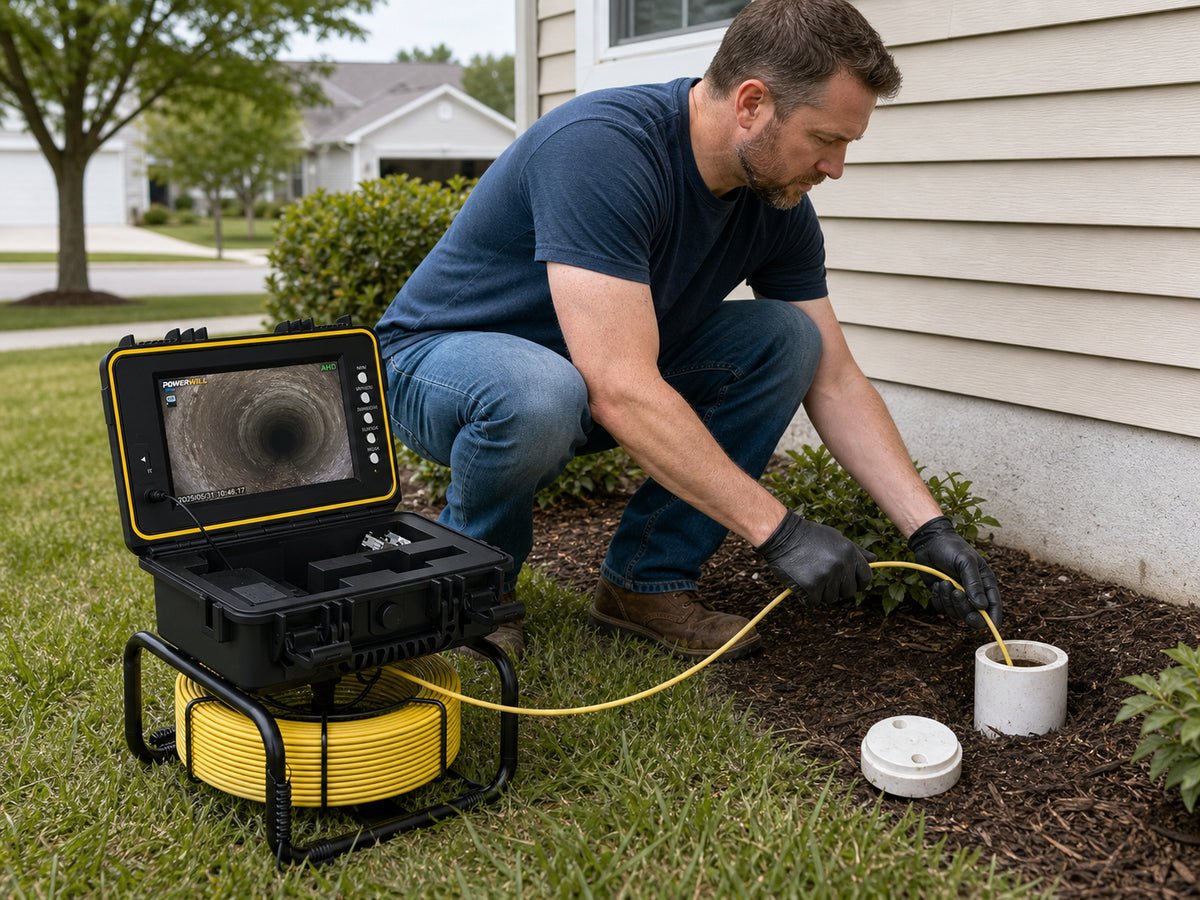
A sewer scope inspection is a video inspection of the private lateral sewer line that runs from the house to the city tap, HOA connection, or septic tank. InterNACHI's standards say the purpose is to discover and report visible material defects, while Angi's 2026 pricing guide says the service often adds only $100 to $250 to a home inspection when done as a real-estate sewer scope. For buyers, that usually makes it one of the cheapest ways to uncover a hidden five-figure risk before closing.

Sewer Scope Definition in Plain English
A sewer scope is a camera run through the buried line that carries wastewater away from the house. In real-estate language, it is the inspection you order when you want visual proof of the lateral line's condition before you own the property.
InterNACHI's sewer scope overview explains why this matters for buyers: the service can reveal blockages, pipe damage, and other issues that standard visual home inspections may not catch because the defects are underground.
That is why “sewer scope” and “sewer camera inspection” are usually the same underlying service. The phrase sewer scope is simply the term buyers hear more often in home-purchase conversations.
Back to topWhat the Inspection Includes and What It Does Not
A good sewer scope includes more than only live footage. InterNACHI says the inspector should inspect and video-record the main or exterior lateral line from a proper cleanout or roof vent stack, record the entire video, and document observed defects. When possible, the inspector should also describe the pipe material.
Just as important are the limitations. InterNACHI says a sewer scope is not technically exhaustive, does not reveal every latent defect, and is based only on what was visible on the date of inspection. The inspector is not required to pull toilets, move unsafe obstructions, locate defects above ground, or provide repair cost estimates.
How the Appointment Usually Works
The appointment is usually simple. The inspector or plumber locates the access point, checks the camera equipment, starts recording, and advances the camera through the line while monitoring the footage in real time. InterNACHI's sewer scope procedures article recommends pausing at defects for several seconds and not forcing the camera through obstructions.
Cost is usually modest compared with repair exposure. Angi says a sewer scope added to a home inspection commonly costs about $100 to $250, while HomeGuide puts general sewer camera inspection pricing around $125 to $500 depending on access, line length, and scope complexity.
| Inspection context | Typical price signal |
|---|---|
| Sewer scope add-on during a home inspection | About $100 to $250 according to Angi |
| Standalone sewer camera inspection | About $125 to $500 according to HomeGuide |
| Harder access or specialist work | Higher due to added labor, locating, or blockage clearing |
Common Findings and Why They Matter
The value of a sewer scope is not that it finds every possible future problem. Its value is that it turns hidden conditions into visible facts. InterNACHI says inspectors should report visible cracks, root intrusion, offsets over one-quarter inch, standing water over one inch, blockages, separated pipe, excessive rust or scale, and collapse.
Those findings matter because the cost consequences are not small. This Old House says average sewer line replacement cost is about $3,320, and HomeGuide says replacement often runs $50 to $250 per linear foot. A camera scope helps the buyer separate a maintenance problem from a structural budget problem.
It also helps buyers avoid approving the wrong solution. A line with roots at a joint is different from a line that is fully collapsed. A belly with standing water is different from a separated connection near the tap. The video makes those conversations more precise.
Back to topWhen a Homebuyer Should Order One
Homebuyers should strongly consider a sewer scope whenever the property has an unknown line history, an older buried lateral, mature trees near the likely sewer path, repeated drain symptoms, or any recommendation from the home inspector that suggests more investigation. It is also a smart move when the property will be a rental or when the buyer needs cleaner documentation for negotiation.
After the scope, ask for three things: the full video, a written summary, and the exact reason if the inspection was incomplete. Then decide whether you need a credit, a cleaning and re-scope, or a repair estimate.
If the house becomes yours and you later want your own follow-up capability, the current Powerwill PW9D1 offers a homeowner-friendly setup with a 9-inch screen, IP68 self-leveling camera head, 100-foot meter-marked cable, and DVR recording at a listed price of $595.80. That is the kind of tool that makes sense after closing when recurring verification becomes your problem to manage.
Back to topKey Takeaways
- A sewer scope is a camera inspection of the private lateral line. It gives buyers visibility into an underground system that standard home inspections often do not cover in detail.
- The report is only as useful as its stated coverage. You need to know where the inspection started, how far it reached, and what could not be inspected.
- The cost is small compared with the risk it can uncover. A modest add-on inspection can reveal defects tied to repair or replacement costs far above the inspection fee.
- InterNACHI's defect list gives buyers a practical reading guide. Roots, offsets, standing water, cracks, separation, and collapse should all trigger closer budgeting and negotiation review.
- Powerwill fits best as a follow-up ownership tool. A buyer usually hires the scope first and considers owning a camera later if repeat inspections become likely.
FAQ
Is a sewer scope the same thing as a sewer camera inspection?
Usually, yes. The service is the same basic camera inspection of the lateral line. “Sewer scope” is simply the phrase more commonly used in real-estate transactions.
Does a sewer scope inspect the drains inside the house too?
Not necessarily. InterNACHI's standards focus on the exterior lateral sewer line from a proper access point. The report should tell you what part of the system was inspected and what was outside the scope.
Can the inspector always locate the exact defect from above ground?
No. InterNACHI says inspectors are not required to locate and mark defects above ground. Some plumbers can do that with locator equipment, but it should be confirmed before the inspection starts.
Is a sewer scope worth it on a house that looks well maintained?
Often, yes, because buried line condition is not visible from a clean interior or fresh landscaping. Sewer scopes are most valuable precisely when surface clues are weak and the buyer still needs proof.
What if the property has no accessible cleanout?
The inspection may be limited, postponed, or require a different access plan. That is why buyers should ask about access before assuming the sewer scope will deliver full end-to-end footage.
Conclusion
A sewer scope inspection is one of the clearest examples of practical due diligence. It does not predict the future, but it does show whether today's buried line already contains visible defects that should affect your budget or your negotiation strategy.
If you want follow-up visibility after the purchase, Powerwill's homeowner-friendly systems are built around the same inspect-before-repair idea. Explore Powerwill Sewer Cameras.
Back to topSources
- InterNACHI Sewer Scope Standards of Practice
- InterNACHI Sewer Scope Inspections for Home Inspectors
- Angi Sewer Camera Inspection Cost (2026)
- HomeGuide Sewer Camera Inspection Cost
- This Old House Sewer Line Replacement Cost (2026)
- HomeGuide Sewer Line Repair Cost
- Powerwill PW9D1 Sewer Inspection Camera
Comments
No comments