
Slow Draining Toilet: When to DIY and When to Call a Professional
 Michael Carter
0 comments
Michael Carter
0 comments
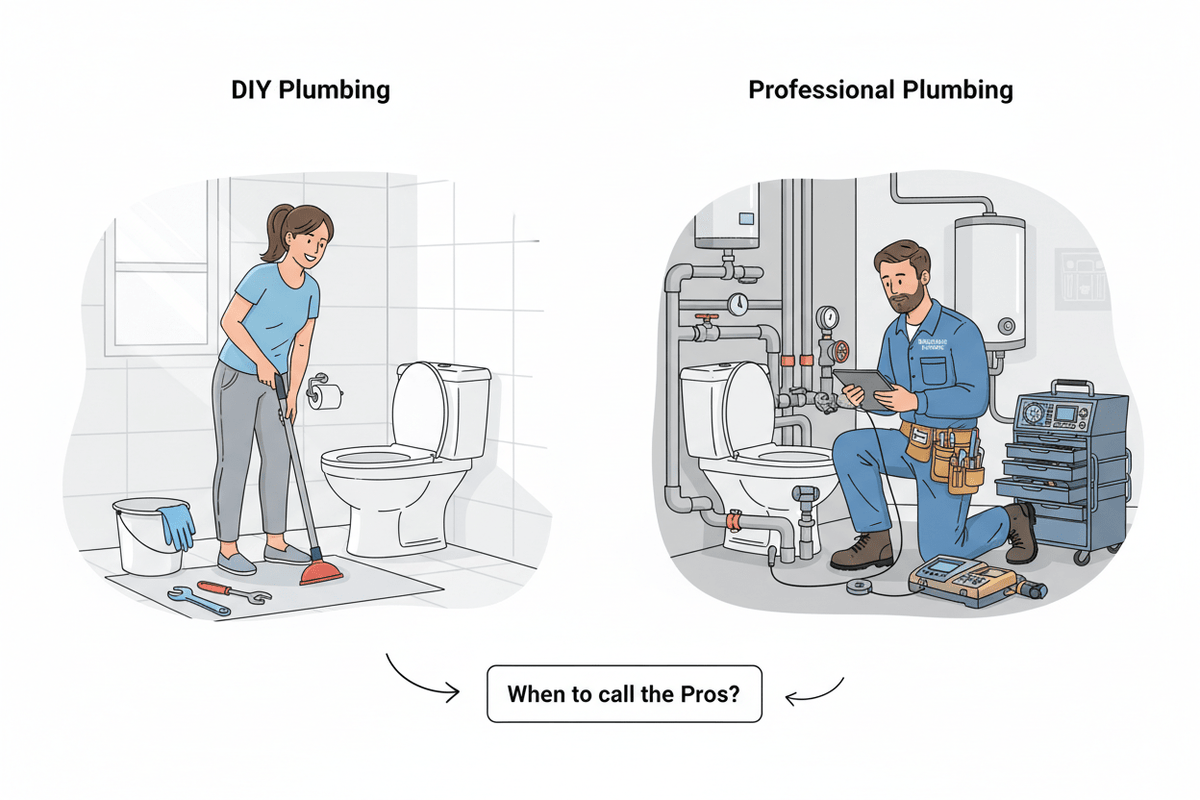
Table of Contents:
- Slow Draining Toilet: When to DIY and When to Call a Professional
- When DIY Is Usually Enough
- Warning Signs It May Be More Than a Minor Issue
- When Professional Evaluation Makes Sense
- Final Thought
- FAQ
Slow Draining Toilet: When to DIY and When to Call a Professional
A toilet that drains slowly isn’t automatically an emergency.
But it is a signal.
The real question isn’t just how to fix it.
It’s:
Is this something I can handle—or is it pointing to something bigger?
Let’s walk through it calmly.
When DIY Is Usually Enough
You can likely handle the issue yourself if:
- It’s the first time it’s happened
- No other fixtures are affected
- There’s no odor
- The problem improves after plunging
In many cases, a partial blockage in the trap is all it is.
A one-time event doesn’t automatically mean major pipe trouble.
Warning Signs It May Be More Than a Minor Issue
Consider further inspection if you notice:
1. The Problem Keeps Coming Back
If your toilet drains slowly every few weeks, that’s not random.
Recurring symptoms often suggest buildup deeper in the drain line.
2. Multiple Fixtures Drain Slowly
If:
- The sink gurgles
- The shower backs up slightly
- The toilet struggles
You may be dealing with a shared line restriction.
That moves beyond simple DIY territory.
3. Sewer Odors Appear
Unusual smells can indicate:
- Venting problems
- Sewer line issues
- Improper drainage flow
That’s not something to ignore.
When Professional Evaluation Makes Sense
You don’t need to panic.
But you may want professional help when:
- Symptoms are recurring
- DIY methods fail repeatedly
- You suspect something inside the main drain line
Modern inspection methods allow plumbers to evaluate pipes without guesswork or unnecessary digging.
And clarity is often cheaper than repeated trial-and-error fixes.
Final Thought
A slow draining toilet is rarely about the toilet alone.
Sometimes it is.
Sometimes it isn’t.
If the situation feels manageable but you’re worried it might happen again, the next step isn’t another fix—it’s prevention.
Here’s a practical guide on how to keep the problem from coming back without turning routine maintenance into guesswork.
FAQ
When is a slow draining toilet safe to handle with DIY?
DIY is usually fine when it’s a first-time issue, only the toilet is affected, there’s no odor, and the problem improves after basic steps like proper plunging.
What warning signs suggest a bigger drainage problem?
Recurring slow drainage, multiple fixtures acting up, gurgling, sewage-like odors, or any backflow are signals the issue may involve a branch line or the main drain—not just the toilet.
When should I call a professional for a toilet that drains slowly?
If basic fixes don’t work, symptoms keep returning, or more than one drain is affected, it’s time to consider professional evaluation. It helps identify whether it’s buildup, venting, alignment, or something else—without endless trial and error.
When you need clarity before making the next call.
Explore professional inspection tools
Comments
No comments