
First-Time Homebuyer? Here's Why a Sewer Inspection Could Save You $15,000
 Michael Carter
0 comments
Michael Carter
0 comments
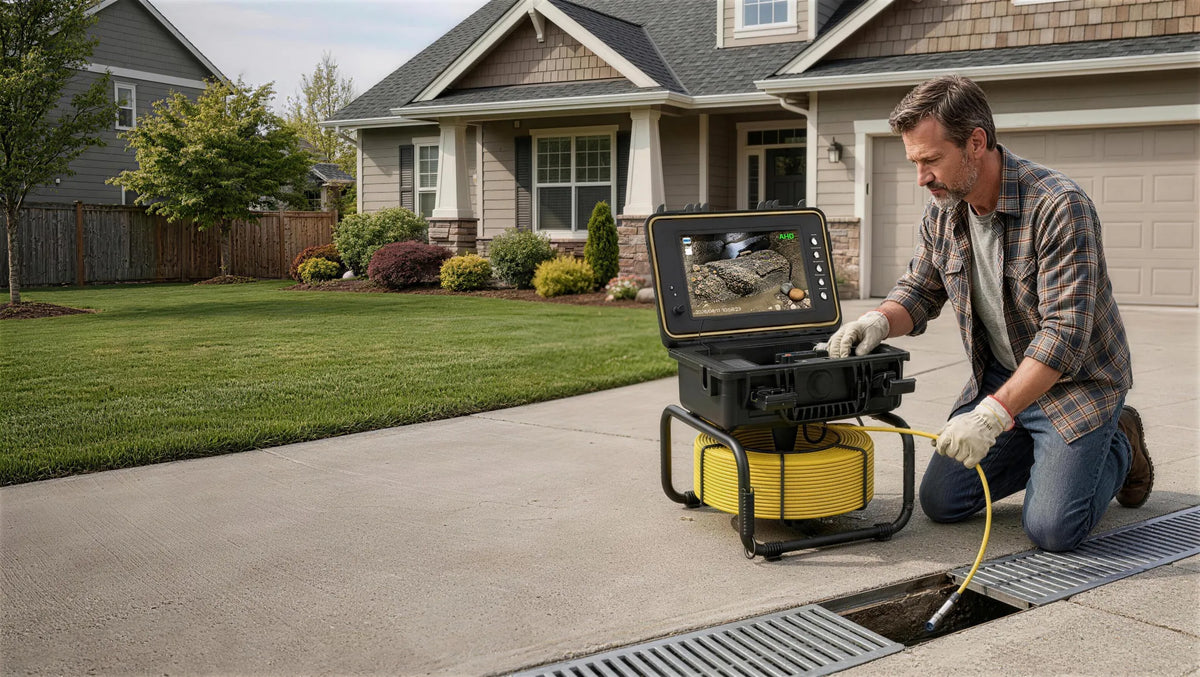
Before you close on a house, one $150–$350 inspection could protect you from a repair bill that runs anywhere from $3,000 to $15,000 or more — and it’s not the home inspection you already know about. A sewer scope inspection uses a small camera pushed through your home’s drain lines to show the inside of the underground sewer pipe, something a standard home inspector simply cannot see. About 20% of homes scoped before purchase reveal a complete sewer failure that requires immediate work, and nearly half show at least some issue worth negotiating over. This guide explains exactly what a sewer inspection covers, when to schedule it, and how to use the results to protect your money.
What a Standard Home Inspection Doesn’t Cover (And Why It Matters)
Your general home inspector does a thorough job checking hundreds of items — roof, electrical, HVAC, windows, foundation — but there’s one major system they skip entirely: the underground sewer line.
A standard inspection checks what’s visible. Drain lines inside the walls, faucets, toilets, and water pressure all get tested. But the 4-inch pipe running from your foundation to the city main (or your septic tank) is completely invisible. It can be cracked, partially collapsed, filled with roots, or made of a material that was known to fail decades ago — and your inspector will never see any of it.
According to a large-scale analysis of sewer scope data published by inspection industry groups, only about 51% of sewer lines inspected before a home sale come back completely clean. The remaining 49% show some level of issue, ranging from minor buildup that needs cleaning to full pipe collapse requiring immediate replacement.
The kicker: sellers and their agents are often unaware of the problem too. This isn’t deception — it’s just a system that’s buried underground and hasn’t failed visibly yet. Which means you, the buyer, are the one who inherits the repair cost the moment you sign the deed.
↑ Back to topHow Much Can a Sewer Problem Actually Cost You?
The range varies significantly depending on what’s found and where you live, but the numbers are large enough to matter on any home purchase budget.
Cleaning and minor repairs (tree root clearing, spot patch): $300–$1,500. These are common, and sellers often agree to cover them as a condition of closing.
Partial pipe repair (trenchless lining or spot excavation): $2,000–$6,000. This is the range where negotiating a price credit or seller repair becomes a serious conversation.
Full sewer line replacement: $3,000–$15,000+. According to HomeGuide’s 2026 pricing data, the national average for a complete sewer line replacement is $3,319, but in urban areas with deep pipes or difficult terrain, costs can easily exceed $10,000. In the Northeast, homeowners pay up to 83% more than the national average for identical work.
The cost of the scope inspection itself? Typically $150–$450 for a standard residential lateral inspection, according to Angi’s 2026 data. That’s an insurance policy against a potential five-figure repair.
What a Sewer Camera Inspection Actually Looks For
A sewer scope operator feeds a flexible waterproof camera through your home’s main cleanout — usually a 4-inch capped pipe in the basement, crawlspace, or near the exterior foundation. The camera travels the full length of the lateral (typically 50–150 feet) while transmitting live video to a monitor.
Here’s what it reveals:
Root intrusion. Tree roots are the most common finding. They infiltrate pipe joints and grow over years, eventually causing blockages or splitting the pipe. Common with clay or cast iron pipes more than 20 years old.
Pipe material condition. Orangeburg pipe (a tar-based material used through the 1970s) deteriorates into a soft, corrugated mess. Cast iron corrodes from the inside out. Clay tile separates at joints. The camera tells you immediately what you’re dealing with.
Belly or sag. A low spot in the line where waste collects and doesn’t drain. This is usually caused by ground settling and requires excavation to fix.
Cracks and offsets. Ground movement, tree roots, or frost can crack pipes or shift joints out of alignment. Both cause slow drains and can become full blockages.
Buildup. Grease and scale accumulation that restricts flow. Often cleanable, but a sign of what’s coming if not addressed.
The inspection takes 30–60 minutes, and a good operator will provide you with a video recording and written report. That report becomes your negotiating document.
↑ Back to topWhen to Schedule Your Sewer Scope — Timing Is Everything
The single most important rule: schedule your sewer scope at the same time as your general home inspection. Don’t wait.
Most real estate contracts give buyers a 7–15 day inspection contingency window. Once that window closes, your ability to negotiate based on inspection findings typically disappears. If you schedule the general inspection on day 3 and only think to call a sewer scope company on day 9, you may not get results back in time to act.
Practical steps:
- The day your offer is accepted, call a sewer scope company (or ask your realtor to refer one).
- Schedule it the same day or the day after your general home inspection.
- If possible, be present at the scope so you can watch the live feed and ask questions.
- Request the video file and written report — both are needed if you’re going to negotiate.
Using Your Results to Negotiate Like a Pro
This is where buyers consistently leave money on the table — not from finding problems, but from not knowing how to act on them.
Know the difference between problems and dealbreakers. Minor root intrusion, some scale buildup, or an older but functional pipe isn’t a reason to walk away. It’s a reason to negotiate. Major issues — Orangeburg pipe throughout, a collapsed section, or a full-belly requiring excavation — are potentially dealbreakers depending on the price and your risk tolerance.
Get an independent plumbing estimate. Before asking the seller for anything, get a licensed plumber to give you a written repair estimate. Don’t accept a number from the seller’s contractor — sellers often get the cheapest bid, not the most reliable one. Your estimate is your negotiating ammunition.
Ask for a repair credit, not seller-managed repairs. Real estate attorneys consistently advise buyers to take a cash credit at closing rather than letting sellers manage repairs. Sellers are incentivized to use the cheapest contractor. If you take a credit, you control the quality of the work.
Frame your ask around the estimate. "The sewer scope found a 12-foot section of Orangeburg pipe that will need replacement. We got an estimate of $4,200 from a licensed plumber. We’re asking for a $4,000 credit at closing." This is a specific, documented ask — much stronger than a vague "please fix the sewer."
Know when to walk. If the damage is severe, the seller won’t negotiate, and the repair would genuinely wipe out your contingency reserve — your inspection contingency gives you the legal right to exit the contract without penalty. Use it.
↑ Back to topWhy the Age of the House Changes Everything
Not all sewer systems age the same way. The biggest risk factor isn’t how bad the current symptoms are — it’s the pipe material, which is almost entirely determined by when the house was built.
| Era | Common Pipe Material | Typical Lifespan | Risk Level |
|---|---|---|---|
| Pre-1950 | Cast iron, clay tile | 50–100 years | Very high if not already replaced |
| 1950–1979 | Orangeburg, cast iron, clay | 40–60 years | High — Orangeburg especially problematic |
| 1980–2000 | ABS plastic, PVC | 60–100 years | Low–Medium |
| 2000–present | PVC (schedule 40) | 100+ years | Low |
If you’re buying a house built before 1980, a sewer scope isn’t optional — it’s mandatory. Large trees near the house (within 30 feet of the sewer line path) add risk regardless of era.
Your sewer scope report will note the pipe material. If it says "Orangeburg" or "deteriorated cast iron," you know exactly what you’re dealing with and can price a full replacement into your offer.
↑ Back to topShould You Get Your Own Sewer Camera After You Close?
Once you’re a homeowner, the calculation changes. You’re no longer buying one-time inspection protection — you’re managing a property for years.
Professional sewer scopes cost $150–$450 every time you call. If you’re managing a home with mature trees, an older lateral, or recurring drain slowdowns, you could easily call twice a year. That’s $300–$900 per year, every year.
A homeowner-grade sewer inspection camera like the Powerwill PW9D1 runs $595.80 — less than the cost of two professional inspections in most markets. You get a 9" HD IPS monitor, 100ft of fiberglass push cable, an IP68-rated self-leveling camera head, DVR recording, and a 5100mAh battery for all-day use. No more guessing when a drain slows. No more calling a plumber to tell you what you can see for yourself.
This is exactly the tool experienced DIY homeowners and property managers use to stay ahead of problems — and it pays for itself the first time it shows you a root that you clear yourself instead of calling a plumber.
Key Takeaways
- Your standard home inspection doesn’t cover the sewer line. The underground lateral from foundation to city main is invisible to a general inspector — only a camera scope reveals its condition. Nearly half of all homes scoped show at least some issue.
- A $150–$350 scope can protect you from a $3,000–$15,000 repair bill. Sewer line replacement averages $3,319 nationally but frequently exceeds $10,000 in urban areas — a scope before closing is the cheapest insurance you can buy on a home.
- Schedule the scope during your inspection contingency window — same day as your general inspection. Once the contingency period closes, your negotiating leverage disappears. Never wait until the end of the window.
- Ask for a repair credit at closing, not seller-managed repairs. Sellers use the cheapest contractor. If you take the credit, you control the quality of work and the contractor you hire.
- Homes built before 1980 face the highest sewer risk. Clay tile, cast iron, and Orangeburg pipe degrade on predictable timelines — a pre-1980 purchase without a sewer scope is a known, avoidable risk.
FAQ — Sewer Inspection Questions First-Time Buyers Ask
Does a standard home inspection include the sewer line?
No. A general home inspector checks visible plumbing inside the house — fixtures, drains, water pressure — but does not scope the underground sewer lateral. You need to separately hire a sewer scope specialist or ask your home inspector if they offer it as an add-on.
How much does a sewer scope inspection cost in 2026?
Most residential lateral scopes cost $150–$450, with the national average around $250–$300. In high-cost metro areas (New York, San Francisco, Boston), prices can reach $500–$700. The inspection typically takes 30–60 minutes and includes a video recording and written report.
What happens if the sewer scope finds problems?
You have four options: ask the seller to make repairs before closing, negotiate a credit at closing, reduce the purchase price, or exit the contract using your inspection contingency. Most real estate attorneys recommend a closing credit rather than seller-managed repairs.
Is it worth getting a sewer scope on a newer home?
Yes, though the risk is lower. PVC pipe installed after 2000 is durable and rarely fails, but the inspection still catches installation defects, root intrusion from nearby trees, or a belly caused by ground settling — issues that can affect any home.
Can I do my own sewer inspection as a homeowner?
Yes. After you close, you can use a homeowner-grade push camera like the Powerwill PW9D1 to inspect your own lines anytime. It’s especially useful for monitoring known issues (a slow drain, an old lateral, a large tree nearby) without paying $250+ per professional scope. The camera pays for itself in two to three inspections.
What is Orangeburg pipe and why is it a problem?
Orangeburg is a type of pipe made from compressed wood pulp and tar, widely used from the 1940s through the 1970s. It absorbs moisture over time, loses its round shape, and eventually collapses. If a sewer scope shows Orangeburg throughout the lateral, budget $5,000–$10,000 for a full replacement — and negotiate accordingly before closing.
How do I find the cleanout to access the sewer line?
Most homes have a 4-inch capped pipe somewhere accessible — basement floor, crawlspace near the foundation wall, or on the exterior of the house near ground level. In older homes without a dedicated cleanout, the scope operator may access through a toilet or cleanout installed during the inspection itself.
Ready to Stop Paying for Inspections You Could Do Yourself?
The sewer scope before purchase is one of the smartest $200–$350 you’ll spend in the entire homebuying process. It gives you leverage to negotiate, clarity on what you’re buying, and the confidence to proceed — or walk away.
Once you’re in the house, that same logic applies to ongoing maintenance. Instead of calling a plumber every time a drain slows down, the Powerwill PW9D1 puts a professional-grade camera in your hands for less than the cost of two service calls. With a 9" IPS monitor, 100ft of reach, self-leveling 1080P camera head, and full DVR recording, it’s the tool that turns drain mysteries into five-minute answers.
Ready to upgrade? Shop the Powerwill PW9D1 Sewer Inspection Camera — from $595.80 | Free shipping | 1-year warranty | Houston-based US support.
Comments
No comments