
Sewer Camera Inspection for Homebuyers: What to Check Before Closing
 Michael Carter
0 comments
Michael Carter
0 comments
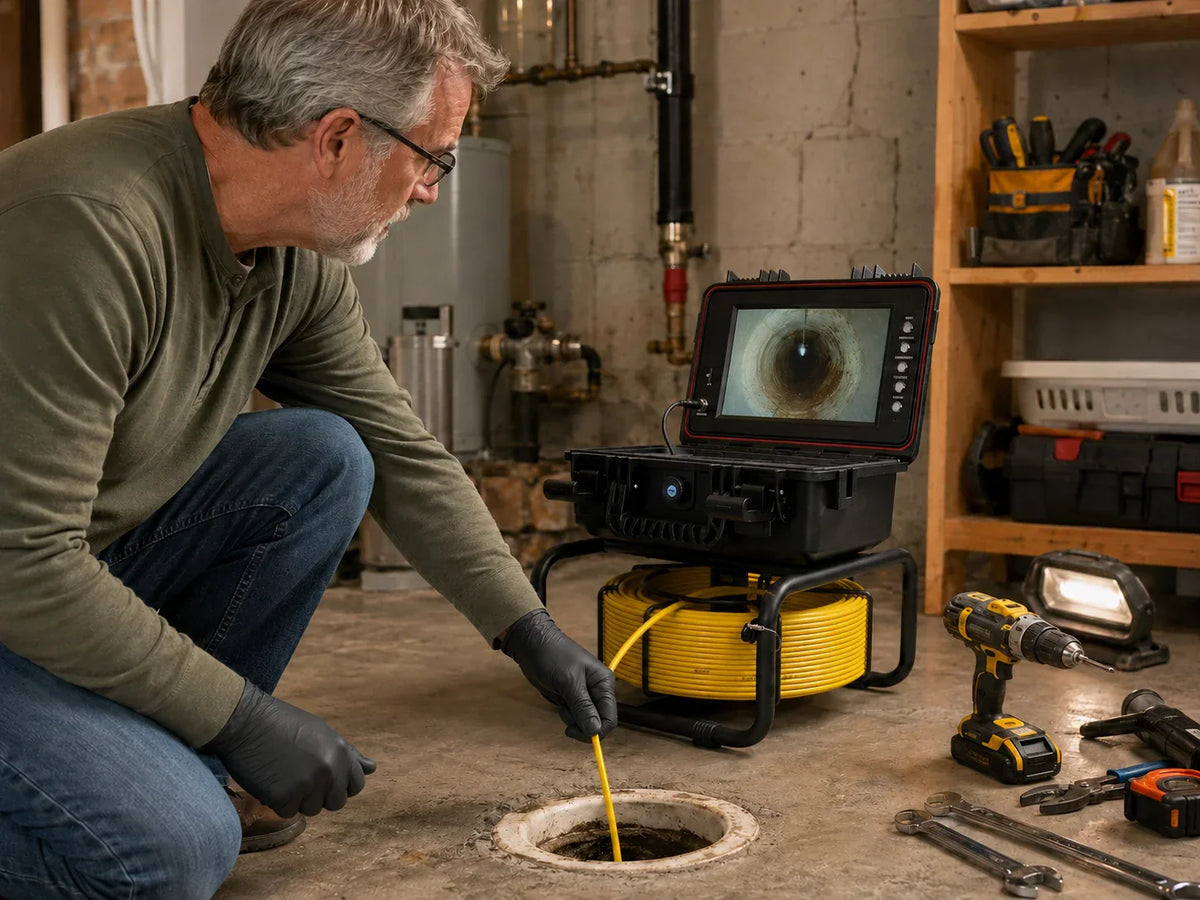
Sewer Camera Inspection for Homebuyers: When to Order a Sewer Scope Before Closing
If you are buying an older home, a home with mature trees, or a property with slow drains or past backups, order a sewer scope before your inspection contingency expires. A standard home inspection usually does not show the inside of the buried sewer lateral. A camera inspection can.
For buyers, the goal is simple: find hidden roots, cracks, offsets, bellies, standing water, or broken pipe before the sewer line becomes your problem. A clean scope can reduce uncertainty. A bad scope can support a repair request, seller credit, second opinion, or walk-away decision.
Quick Answer: Is a Sewer Scope Worth It Before Closing?
Yes, when the sewer risk is hidden and expensive. HomeGuide puts many sewer camera inspections around $125 to $500, and sewer scopes added to home inspections often land around $100 to $250. That is small compared with a sewer line replacement, which HomeGuide lists around $2,000 to $10,000 for a 40-foot replacement.
| Buyer situation | Recommendation | Why |
|---|---|---|
| Older home or unclear sewer records | Order the scope | The buried lateral may be the most expensive unseen system. |
| Mature trees near the sewer path | Order the scope | Roots can enter joints and create repeat blockage risk. |
| Past backups, slow drains, or sewer odor | Order the scope | Symptoms may point to a recurring issue, not a one-time clog. |
| Brand-new home with recent sewer documentation | Consider skipping | Risk is lower if records are current and there are no warning signs. |
ASHI notes that sewer lateral inspection is outside a standard home inspection. That is the key misunderstanding: paying for a home inspection does not usually mean the underground sewer line has been checked.
When Homebuyers Should Strongly Order a Sewer Scope
Use the scope when several risk signals point in the same direction. One red flag does not prove the line is bad, but several together are enough to inspect before closing.
- The home is more than 20 years old and sewer records are unclear.
- Large trees sit near the likely sewer route.
- The seller disclosed slow drains, backups, drain cleaning, or sewer repairs.
- The lowest fixture has shown gurgling, odor, or backup.
- The yard has a damp, sunken, or unusually green strip near the lateral.
- No recent video, repair invoice, or cleanout information is available.
Realtor.com warns that sewer scopes are not requested enough by first-time buyers and can reveal clogs, root intrusion, broken pipe, or offset pipe before failure happens. That is exactly the point: the buyer gets evidence while there is still room to negotiate.
What the Camera Can Find and What Buyers Should Do Next
A sewer scope is useful only if the result changes a decision. Ask for footage and plain-language findings, not just a quick verbal pass or fail.
| Camera finding | What it may mean | Buyer action before closing |
|---|---|---|
| Clean line or light buildup | Lower near-term risk | Keep the report and ask whether routine cleaning is enough. |
| Light roots | Possible maintenance issue | Ask for cleaning history and whether a re-scope is needed. |
| Heavy roots or repeat blockage pattern | Recurring service risk | Request a plumber estimate before removing contingency. |
| Offset joint, belly, or standing water | Flow problem or pipe movement | Ask whether repair, monitoring, or replacement is recommended. |
| Crack, separated pipe, or collapse | Structural defect | Treat it as a repair request, credit request, or walk-away risk. |
InterNACHI's sewer scope standards include reportable conditions such as cracks, root intrusion, offsets, standing water, blockages, crushed pipe, broken pipe, separated pipe, heavy scale, and collapse. Those categories matter because they turn a vague concern into something a buyer, agent, seller, or contractor can act on.
When to Schedule the Sewer Scope
Schedule it early enough to use the result. The best window is during inspection due diligence, before the inspection contingency expires and before repair-negotiation deadlines get tight.
Ask the provider to confirm the access point, expected line length, whether a written report is included, and whether they can locate a defect from above ground if a repair estimate is needed. If no cleanout exists, ask how they will access the line and whether that changes the cost.
Should a Homebuyer Hire the Inspection or Buy a Camera?
Most one-time homebuyers should hire the sewer scope. You are paying for the camera, the operator, interpretation, and a result you can use during negotiation. Buying equipment makes more sense when sewer footage becomes repeated workflow.
| User type | Better choice | Reason |
|---|---|---|
| One-time homebuyer | Hire a sewer scope provider | You need interpretation and transaction-ready findings. |
| Homeowner with one symptom | Hire first | A camera does not clear the clog or replace diagnosis. |
| Landlord or flipper | Consider ownership | Multiple properties can justify repeat footage. |
| Home inspector or drain professional | Consider ownership | Camera footage can support paid reports, quotes, and customer documentation. |
For repeat users, Powerwill systems fit different levels of work. PW9D1 and 7DVE fit lighter residential or crossover inspection. PW9D2 is stronger for routine residential service. 10DX1 and 10DZ fit longer professional workflows where distance documentation and 512Hz locating matter.
Questions to Ask Before You Book
Before scheduling, make sure the result will be useful in the transaction.
- Is this a standalone sewer scope or a home-inspection add-on?
- Will I receive video, still images, and written findings?
- What access point will you use, and what happens if there is no cleanout?
- How many feet of line are included?
- If you find roots, a belly, crack, or offset, can you recommend the next specialist?
- Can you mark or locate the problem from above ground if repair is likely?
Key Takeaways
- A sewer scope is most useful before closing on older homes, tree-heavy lots, and properties with drain history.
- A standard home inspection usually does not include the buried sewer lateral.
- The most important findings are the ones that change negotiation: heavy roots, offsets, standing water, cracks, separation, or collapse.
- Schedule early enough to get repair estimates before your inspection contingency expires.
- Most homebuyers should hire the inspection once. Repeat users have the stronger case for owning a Powerwill camera.
FAQ: Sewer Camera Inspection for Homebuyers
Is a sewer scope necessary when buying a house?
It is not mandatory on every purchase, but it is usually worth ordering when the home is older, has mature trees, has slow-drain or backup history, or has no recent sewer records.
Is sewer camera inspection included in a standard home inspection?
Usually no. Sewer lateral inspection is normally a separate service or add-on because it requires specialized camera equipment.
What defects can a sewer scope find before closing?
It can show roots, cracks, offsets, bellies, standing water, broken or separated pipe, heavy scale, blockages, and collapse.
When should I schedule the sewer scope?
Schedule it before the inspection contingency expires, with enough time to get a plumber estimate or seller response if the footage shows a major defect.
Should a buyer rent or buy a sewer camera instead?
For one purchase, usually no. Hiring a provider is simpler because the buyer needs interpretation and transaction-ready findings. Buying is better for landlords, inspectors, plumbers, and contractors who inspect repeatedly.
Sources
Related Powerwill guides
Use these Powerwill pages to move from research to the right model, locator workflow, or product comparison.
Comments
No comments