
Best Sewer Camera with Locator in 2026: What to Buy Before You Dig
 Michael Carter
0 comments
Michael Carter
0 comments
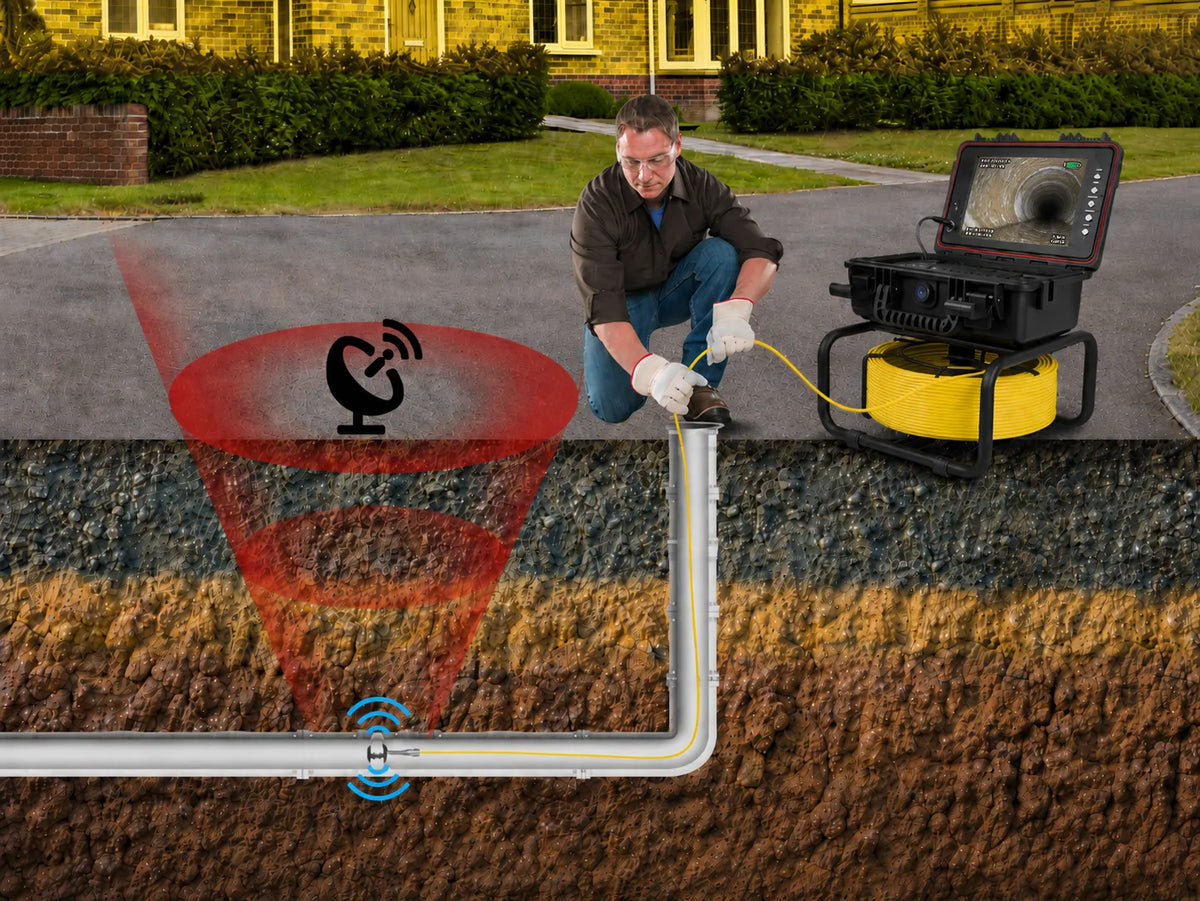
The best sewer camera with locator is the one that lets you answer two questions in the same job: what is wrong inside the line, and where do I put the shovel if repair is next. That matters because 811 Before You Dig still requires everyone planning to dig to contact 811 a few business days before excavation, which means a private locator workflow is there to narrow the repair zone, not replace the public-utility marking process. Powerwill's current product pages make the buyer tiers unusually clear. The PW9D1 includes locator support even in its homeowner-friendly packages, the PW9D2 expands the workflow with longer cable options and a 512Hz locator in the package, and the 10DX1 pushes that same logic into a longer-run professional platform. The buying question is not whether locator matters. It is how much locating power your normal jobs really require.
What “With Locator” Actually Means
Many buyers think "with locator" just means the camera head has a sonde transmitter. In real use, that is only half the story. A sewer camera with locator becomes practical when you can push the camera to the defect, sweep the surface with the locator, and mark the likely repair point before the job turns into a trench.
The distinction matters because the purchase can look complete on a spec sheet while still leaving you without a working locating workflow. Powerwill's PW9D2 page helps here by showing the 512Hz locator inside the included package, while its accessories also list the locator and sonde separately. That tells you what many buyers learn too late: transmitter, receiver, and cable length all matter together.
If you want the locator feature because you may dig after diagnosis, then the right question is not "does it say 512Hz?" The right question is "can I actually inspect, trace, and mark the line with what is in the box?"
Back to topWhy Locator Matters Before the First Cut
A locator matters because distance on a push cable is not the same thing as a marked repair point. A camera can show you a root intrusion 47 feet into the run. It cannot, by itself, tell a dig crew exactly which patch of lawn or driveway is the most likely access point.
This is why Powerwill's existing education stack already splits the workflow across multiple articles. Locator versus pipe camera explains why diagnosis and surface tracing solve different parts of the same problem, and the 512Hz sonde guide explains why being a few feet off can turn a small repair into a much bigger cut.
811 still comes first whenever digging is planned. But once the public utility marks are on the ground, a locator-ready sewer camera is what helps you connect internal footage to the likely private-line dig zone instead of trenching on guesswork.
Which Powerwill Tier Fits Which Buyer
| Buyer type | Best fit | Why it fits |
|---|---|---|
| Homeowner or landlord who wants a real inspect-before-repair setup | PW9D1 | Powerwill lists locator support across the PW9D1 lengths while keeping the package easier to own and justify. |
| Mixed residential plumber or serious DIY buyer needing longer reach | PW9D2 | The PW9D2 adds longer cable options, self-leveling, recording, and a clearer locator-ready workflow in one package. |
| Professional team handling longer mains and heavier jobs | 10DX1 | The 246-foot platform gives more reach, a larger monitor, and a more jobsite-oriented setup for demanding service calls. |
The PW9D1 is the smartest first buy when the inspection is mostly residential and you want a locator without jumping straight into a large pro reel. Its 100-foot option is explicitly positioned for most homes, which is why it serves homeowners, landlords, and light-duty contractors well.
The PW9D2 is the more balanced ownership value when you expect longer laterals, more repeat jobs, and a stronger need to connect diagnosis to a marked repair zone. The 10DX1 is what you buy when 100 feet is regularly too short and the jobsite is no longer forgiving about compromises.
Back to topWhen You Do Not Need to Pay Up for Locator
You do not need to pay up for locator if your use case stops at visual confirmation. If you mainly want to check recurring backups, confirm whether a line is clear after cleaning, or inspect from a short access point before calling a plumber, the locator may be useful later but it is not always the reason to buy.
This is where buyers should be honest with themselves. If you are not going to dig, mark, or hand repair work to another crew, the locator feature can remain underused. In that situation, a buyer may be better served by choosing the right cable length and image stability first, then upgrading to a locator-centered system when excavation planning becomes part of the normal workflow.
The best sewer camera with locator is not the best sewer camera for every buyer. It is the best option for buyers whose footage routinely turns into repair-zone marking. That is a narrower and more useful definition than "more features is better."
Back to topKey Takeaways
- A real sewer camera with locator workflow depends on the full package: camera, signal, receiver, and enough reach to get to the defect in the first place.
- Locator matters most when the inspection is likely to turn into repair planning, trenching, or handoff to another crew that needs a marked access point.
- Powerwill's PW9D1, PW9D2, and 10DX1 represent three honest buyer tiers: residential value, longer-run all-around ownership, and heavier professional reach.
- You do not need to pay extra for locator just because the feature sounds advanced if your inspections stop at visual confirmation and not repair-zone marking.
- For buyers in this keyword, the PW9D2 is usually the strongest middle-ground answer, while PW9D1 and 10DX1 make more sense at the lighter and heavier ends.
FAQ
What is the best sewer camera with locator for most buyers?
For most mixed residential buyers, the PW9D2 is the strongest middle-ground answer because it balances locator-ready workflow, self-leveling video, and longer cable options without jumping straight to the heaviest reel.
Do I still need to call 811 if I have a sewer camera with locator?
Yes. 811 is still required before digging because your sewer locator does not replace public utility marking for gas, electric, telecom, and other buried lines.
Is a locator necessary for homeowners?
Not always. It becomes much more useful when the homeowner wants to narrow the dig zone or hand clear evidence to a repair crew instead of stopping at diagnosis.
What is the difference between PW9D1 and PW9D2 for locator buyers?
The PW9D1 is the easier homeowner and landlord entry point, while the PW9D2 is a stronger all-around option when you want more reach and a fuller professional-style workflow.
When should I choose the 10DX1 instead of the PW9D2?
Choose the 10DX1 when your normal jobs are longer, heavier, and less forgiving about reel length, monitor size, and jobsite efficiency than a lighter mid-tier setup can handle.
Conclusion
The best sewer camera with locator is the one that helps you move from footage to a smarter repair decision without adding unnecessary bulk or unused features. That usually means buying by workflow, not by hype.
If you want the strongest starting point for this keyword, compare the PW9D1, PW9D2, and 10DX1 inside the Powerwill sewer camera lineup and buy the shortest system that still completes your normal locating jobs cleanly.
Back to top
Comments
No comments