
Who to Call for Yard Drainage Problems: A Homeowner Decision Guide
 Michael Carter
0 comments
Michael Carter
0 comments
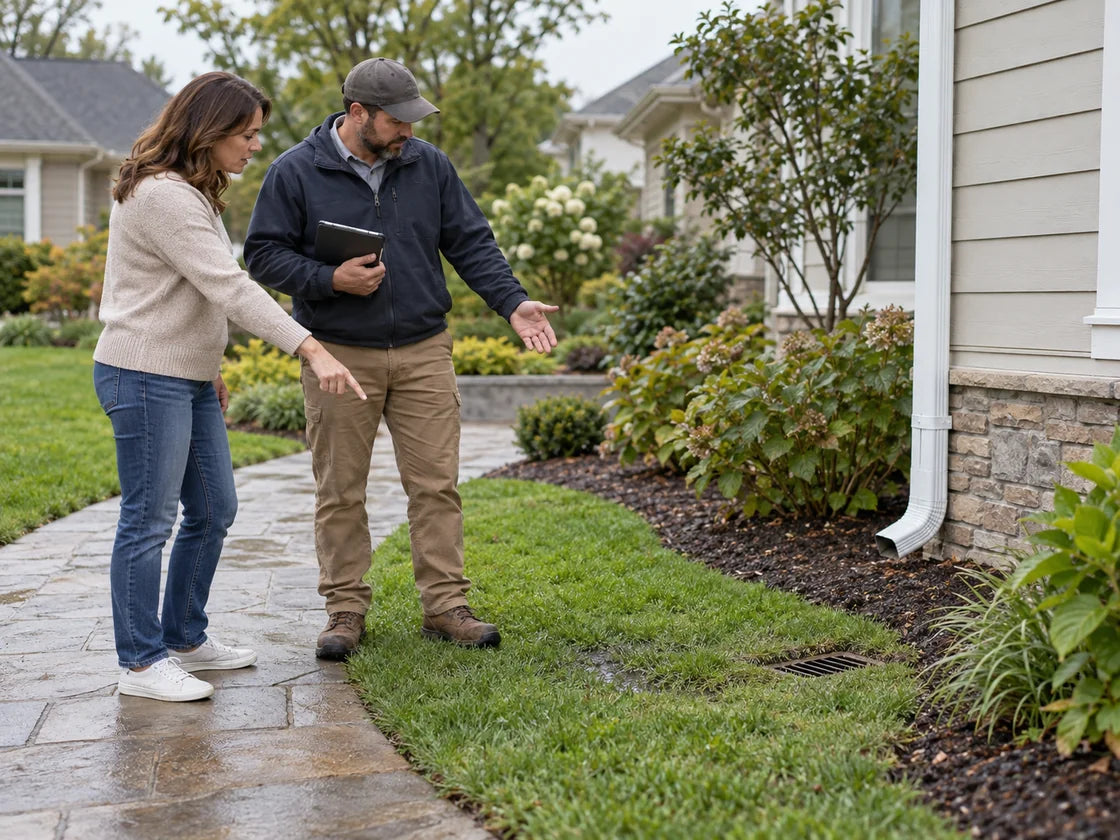
If you are deciding who to call for yard drainage problems, start with the part of the property that needs evaluation. Ask a residential drainage contractor or landscape architect about surface-water planning; ask a pipe-inspection service whether it handles your private buried rainwater line. Suspected septic trouble belongs with a septic service provider. Describe what you observed before requesting a particular repair.
Choose your first call by the question you need answered
Book an assessment that matches the problem, then confirm the provider's actual scope. The following table is a starting point for screening companies, not a diagnosis or a rule about which trade may perform work in your area.
| Your main question | A useful first contact | Ask before booking |
|---|---|---|
| How should water move across this private yard? | A residential drainage contractor or landscape architect with drainage experience | Will you evaluate the yard and discharge options before proposing construction? |
| What is happening inside an existing buried rainwater pipe? | A drainage or plumbing service that explicitly inspects private stormwater piping | Do you inspect this pipe type, and will I receive the recording and limitations? |
| Could a wet area involve my septic system? | A local septic service provider, health department, or onsite wastewater agency | Who should evaluate the system and advise on safe access? |
| I do not know who owns or maintains the affected drain | The relevant property manager, association, or local office | Can you confirm responsibility and the correct contact before I commission work? |
These categories can overlap. A company may offer both site drainage work and pipe inspection, or it may refer one portion to another provider. Ask who will attend, what that person will inspect, and what remains outside the visit. A clear answer is more useful than a broad advertisement promising to solve every drainage problem.
For help describing the visible issue, use Powerwill's seven yard drainage observations after heavy rain. Bring your observations to the appointment as questions, rather than treating a matching photograph as proof of the cause.
↑ Back to topFor surface-water planning, ask about residential drainage experience
When the question concerns the yard as a whole, seek someone who can explain the proposed water route. ASLA describes landscape architects' work with stormwater and approaches such as rain gardens and permeable paving. That makes landscape architecture a relevant field to consider when you need a coordinated landscape plan, rather than a single equipment visit.
When calling a residential drainage contractor, describe the area: a side yard, patio edge, lawn, or several connected spaces. Ask whether the first visit includes an assessment or is primarily an estimate for a system you have already selected. If you have not selected a solution, say so explicitly. You want the professional to explain the reasoning behind the recommendation.
Useful interview questions include: What will you measure or document? How will you explain where the proposed system sends water? Which site details must be confirmed before a design is final? Can you show comparable residential work and explain what your company was responsible for? Ask how the provider will handle any necessary review by other specialists or local authorities.
Keep your initial brief open enough to consider alternatives. Instead of requesting a specific trench along the fence, explain that you want the recurring wet area evaluated. Ask the provider to distinguish observations made on site from assumptions still needing investigation. Read more about the profession's stormwater role in ASLA's water and stormwater overview.
↑ Back to topFor an existing buried pipe, confirm inspection capability
Ask specifically about private rainwater piping; do not assume every drain service covers it. Your booking description should identify the known connection, such as a downspout or yard inlet, while clearly labeling any unknown destination. Ask the provider whether its equipment and procedures suit the pipe and access available.
Before accepting an inspection appointment, request a description of the deliverables. You might ask for the entry point, the portion inspected, a recording with useful narration, and a list of areas the operator could not evaluate. Ask whether identifying a surface location is part of the service or a separate task. Do not assume that the word “inspection” includes every follow-up you need.
Make the distinction between inspection and clearing explicit. A camera is not a blockage-removal tool. SeeSnake's manufacturer guidance warns against using a camera to clear obstructions because equipment can be damaged or become unretrievable. Let the qualified service provider explain any separate cleaning or repair proposal; do not ask an operator to force the camera through a suspected obstruction.
Powerwill's homeowner guide to storm drain camera evidence can help you prepare questions. The purpose is to understand what was actually observed before choosing a repair. Equipment ownership, a short video, or a confident explanation should not substitute for a clearly documented inspection scope. The equipment warning is supported by SeeSnake's camera reel best practices.
↑ Back to topSeparate septic concerns and active flooding from routine appointments
Get the appropriate help before treating every wet patch as a landscaping project. EPA lists damp areas near a septic tank or drainfield, sewage odors, and household plumbing backups among possible signs of septic trouble. For septic assistance, it directs homeowners to a local service provider, health department, or onsite wastewater regulatory agency.
If your home uses a septic system, mention that when describing the location. If sewage has backed up into the home, EPA advises avoiding contact and contacting the local health department or regulatory agency for guidance. Use EPA's septic malfunction guidance to find the relevant contact category; do not diagnose a system from a yard photo.
Active flooding is also outside a routine inspection visit. The National Weather Service advises avoiding floodwater, following evacuation orders, and staying out of water that may be electrified. If trapped by moving water, it advises reaching the highest possible point and calling 911 if possible. Follow NWS flood safety guidance before collecting observations or arranging access to a drain.
↑ Back to topPrepare a short evidence packet for the first call
Give the provider a factual account that is easy to review. Our suggested packet is a small set of labeled photos, a simple property sketch, and a brief timeline. Collect observations only from a safe location after conditions permit; the packet should never require entering floodwater.
- Location: name the side of the house and nearby landmarks.
- Timing: record when you noticed the problem and whether it followed rain.
- Known connections: distinguish documented pipe routes from guesses.
- Previous work: include available invoices, plans, or inspection recordings.
- Your question: state what you want the visit to establish before deciding on repairs.
Here is a sample call, not a customer case study: “After the last rain, I photographed water beside the rear patio. A nearby downspout enters the ground, but I do not have a record of its outlet. Can you evaluate whether I need a yard assessment, a pipe inspection, or both? What information will you provide after the visit?”
Ask the booking staff to repeat the scope back to you. If they describe a different service, clarify before arranging access. Keep the original photos alongside any annotations, and share only information relevant to the job. A simple list of unanswered questions can make a second opinion easier to request.
↑ Back to topCompare the proposed work, not just the headline price
Make sure you are comparing the same service and deliverables. FTC recommends checking contractor licensing with the appropriate state or county authority, requesting insurance evidence, and obtaining multiple written estimates that describe the work, materials, completion date, and price. It cautions against automatically choosing the lowest bid.
For this appointment, ask each provider to identify what is included, what would trigger an additional charge, and which decisions require your approval. For example, separate an initial assessment from a camera inspection, any proposed clearing, and a later construction proposal. These are suggested comparison categories, not a claim that every job needs all four services.
Create a one-page comparison with the same headings for each company: question addressed, evidence delivered, exclusions, next decision, and quoted total. Leave a blank where a provider has not answered. Follow up on that blank rather than filling it with an assumption. If two proposals differ greatly, ask each company to explain its scope in plain language before you decide.
Retain the agreed written description with your inspection records. For general contractor screening and estimate guidance, see the FTC's home improvement advice.
↑ Back to topUse heavy rain as an inspection trigger
Use seasonal observations to prepare a better conversation, not to predict a specific storm's impact. NHC identifies September 10 as the climatological peak of the Atlantic hurricane season, with most activity from mid-August to mid-October. These are historical seasonal patterns, not a forecast for your address. See the official NHC climatology page.
Once safe access is possible, organize observations and arrange the appropriate assessment. Ask what should be documented at a follow-up and what result the proposed work is intended to achieve. Keep the before-and-after records together. Powerwill's “Inspect Before Repair” approach means using evidence to guide that decision, while leaving professional assessment and repair with the appropriate provider.
↑ Back to topKey Takeaways
- Choose the first call around the question: yard planning, private pipe inspection, or septic assistance.
- Confirm the provider's residential scope and requested deliverables before booking.
- Bring observations and records without presenting guesses as a diagnosis.
- Compare written scopes and unanswered questions alongside quoted prices.
- Use inspection evidence to inform repair decisions; a camera does not clear a blockage.
Frequently Asked Questions
Should I call a landscaper or a plumber for yard drainage problems?
Start with the task you need evaluated. Ask about residential drainage planning for a yard-wide assessment, or private rainwater-pipe inspection for an existing line. Confirm the company's actual capabilities rather than relying on its trade label.
What should I say when I book the first visit?
Describe where and when you observed water, identify known drainage connections, and explain what remains unknown. Ask what the visit includes and what written or recorded findings you will receive.
Can I use a Powerwill camera instead of hiring someone?
A camera is an inspection tool, not a substitute for drainage design or professional repair. Before considering a Powerwill system, identify the inspection question and confirm safe access and equipment suitability. Ask a qualified provider when the task or conditions are unclear.
Does Powerwill recommend pushing a camera through a clog?
No. Powerwill's inspect-before-repair approach separates documenting a condition from clearing it. Do not use a camera to clear an obstruction. Discuss the appropriate next step with the service provider and follow the equipment's instructions.
What if I do not know where the drain ends?
Tell the provider that the destination is unknown. Ask whether identifying the route or outlet is included in the proposed assessment, what methods it would use, and how it will document any remaining uncertainty.
Comments
No comments