Skip to content
Father's Day | 8% OFF

Sewer Camera Inspection for Homebuyers: What to Check Before Closing

0 comments

Sewer Camera Inspection for Homebuyers: What to Check Before Closing

Last updated: May 20, 2026 | Reading time: 10 minutes

Sewer Camera Inspection for Homebuyers: When to Order a Sewer Scope Before Closing

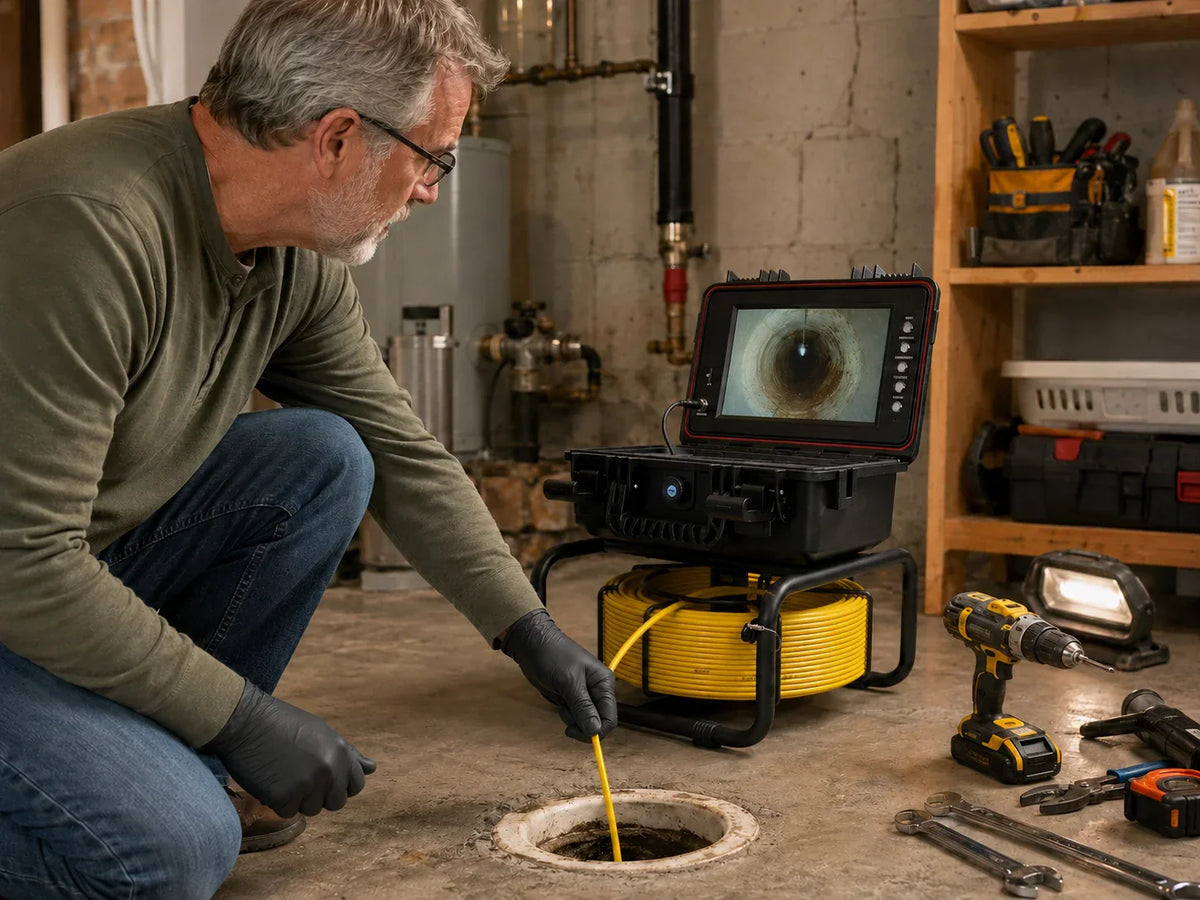
If you are buying a house, order a sewer scope before closing when the home is older, has mature trees, shows slow-drain history, has past sewer repairs, or lacks recent sewer documentation. A standard home inspection usually does not show the inside of the buried sewer lateral. A sewer camera inspection can.

The goal is not to inspect everything twice. The goal is to find hidden roots, cracks, offsets, bellies, standing water, or broken pipe before the inspection contingency expires. If the footage shows a major defect, you can ask for repair, negotiate credit, get a plumber's estimate, or walk away before the sewer line becomes your problem.

Before Closing: When the Sewer Scope Should Move From Optional to Priority

Order the scope before your inspection contingency expires if any of these are true:

Trigger Why it matters before closing
Home is more than 20 years old Older laterals are more likely to have clay, cast iron, offsets, roots, or past repairs.
Mature trees are near the sewer path Roots can enter joints and create recurring blockage risk.
Seller reports past backups or drain cleaning The issue may have been treated, not solved.
No recent sewer footage exists You are buying an invisible buried system without current condition evidence.
Yard has damp, sunken, or unusually green areas It may point to line leakage, belly, or saturation near the lateral.
You are near contingency deadline Major findings need time for repair estimates and negotiation.

What to Do With the Result

Camera finding Buyer action before closing
Clean line or minor buildup Keep the report, ask whether cleaning or monitoring is enough.
Light roots Ask for cleaning and re-scope terms if symptoms have been recurring.
Heavy roots, offset, or standing water Request a plumber estimate before removing contingency.
Crack, separated pipe, or collapse Treat it as a negotiation item, repair request, credit request, or walk-away risk.
No cleanout / incomplete scope Do not treat the result as a full pass; ask what portion was actually inspected.
If you need repeat sewer scopes: Most homebuyers should hire the inspection once. If you are a landlord, flipper, home inspector, or drain professional who needs repeated footage, compare Powerwill sewer cameras by reach, pipe size, locator need, and reporting workflow. Compare Powerwill sewer cameras.

A Sewer Scope Before Closing Is Usually Worth It When the Risk Is Hidden

A sewer scope before closing is usually worth it when the potential repair cost is large and the line condition is still unknown.

Realtor.com says experts warn sewer scope inspections are not requested enough by first-time homebuyers and notes they can detect clogs, root intrusion, broken pipe, or offset pipe conditions that buyers would otherwise not know about until a failure happens. That matters because buried sewer defects often stay invisible during showings, disclosures, and standard walk-throughs.

The math is not complicated. HomeGuide says a sewer camera inspection typically costs $125 to $500, while a sewer scope added to a home inspection often costs about $100 to $250. By contrast, HomeGuide's sewer line repair guide says sewer line replacement commonly runs $50 to $250 per linear foot, or about $2,000 to $10,000 for a 40-foot replacement. For buyers, that gap is the reason the inspection exists.

Question Short answer
Should I get a sewer scope before buying a house? Usually yes when the home is older, has trees, has drainage history, or lacks sewer records.
Is it part of a standard home inspection? Usually no. It is normally a separate service or add-on.
What does it help me avoid? Surprise roots, cracks, offsets, standing water, and expensive repair negotiations after closing.
What does it usually cost? Roughly $100 to $250 as an add-on, or $125 to $500 as a standalone inspection.
Who benefits most? Homebuyers, home inspectors, plumbers, landlords, flippers, and drain contractors.

B2C vs. B2B Take

For B2C buyers, the question is whether a hidden sewer problem could disrupt move-in plans or create a fast four-figure repair. For B2B users, the question is whether footage can support a report, a quote, or a negotiation document that is specific enough to act on.

Back to top

A Standard Home Inspection Usually Does Not Include the Sewer Lateral

A standard home inspection usually does not include the buried sewer lateral because the pipe cannot be visually inspected without specialized camera equipment.

ASHI states that a sewer lateral inspection is outside the scope of a home inspection and explains that the line is inspected with a waterproof fiber-optic camera pushed through the sewer lateral. Realtor.com likewise says most home inspectors do not include this inspection by default.

That distinction matters for buyers who assume "I paid for the home inspection, so the sewer must be covered." Usually it is not. A general inspection can tell you about visible plumbing fixtures, drainage behavior, and related warning signs, but it does not normally show the inside of the buried line from the house to the city tap or septic connection.

What a Sewer Scope Covers Better Than a General Inspection

  • The inside condition of the buried sewer lateral
  • Visible roots, cracks, offsets, breaks, scale, and standing water
  • Where a blockage starts and how severe it appears
  • Whether the issue looks like cleaning, repair, or replacement territory
  • Video evidence that can be shared with agents, sellers, contractors, or follow-up specialists
Honest fit guidance: A sewer scope is usually a strong fit when the home has unknown sewer history or when the buyer wants a lower-risk negotiation. It is usually not the first extra inspection to order on a brand-new property with recent sewer documentation, no symptom history, and no site conditions that suggest line stress.
Back to top

Older Homes, Trees, and Drain History Are the Main Red Flags for Buyers

Older homes, mature trees, and recurring drain history are the main reasons buyers should strongly consider a sewer scope.

HomeGuide says a sewer scope is recommended for homes older than 20 years. Realtor.com's old-house guidance warns that older houses often come with older trees whose roots can grow toward underground plumbing systems. InterNACHI also notes that a sewer scope can be critical when there is backflow into the home or a damp depression in the lawn above the sewer line.

These are not abstract warnings. They are practical filters buyers can use before closing.

Homebuyer Red Flags Checklist

  1. The home is more than 20 years old and the sewer history is unclear.
  2. The lot has mature trees near the probable sewer path.
  3. There are disclosures about slow drains, backups, or past drain cleaning.
  4. The yard has a damp, sunken, or unusually green strip near the lateral route.
  5. The lowest fixture has shown backup, gurgling, or sewer odor.
  6. The seller cannot provide recent sewer footage or repair records.

What Homebuyers Should Infer From These Triggers

One trigger does not prove the line is failing. Several triggers together are enough to justify spending inspection money before closing rather than repair money after closing. That is the main decision rule.

Back to top

The Findings That Matter Most Are the Ones That Change Negotiation

The findings that matter most are the ones that change whether you proceed, renegotiate, request repair, or budget for work immediately after closing.

InterNACHI's Sewer Scope Standards of Practice say inspectors should report visible cracks, tree-root intrusion, offsets greater than 1/4 inch, standing water greater than 1 inch, blockages, crushed pipe, broken pipe, separated pipe, excessive rust or scale, and collapsed pipe. Those findings matter because they convert a vague worry into a visible defect category.

For buyers, the most useful question is not "Did the camera find anything?" The better question is "Did the camera find something that changes ownership cost, timing, or negotiation leverage?" That is why clear footage and plain-language reporting matter.

Finding What it can mean for a buyer
Light root intrusion Ask whether cleaning plus reinspection is enough before closing.
Heavy roots or repeat blockage pattern Budget for regular maintenance or negotiate for corrective work.
Offset joint or separated pipe Ask for a repair estimate and consider seller credit or repair request.
Standing water or belly Plan for possible drainage performance issues and follow-up evaluation.
Crack, break, or collapse Escalate quickly with a plumber or sewer specialist before contingency deadlines.
Heavy rust or scale in old pipe Expect shorter remaining life and more maintenance risk than a clean PVC line.

Direct Buyer Answer

If the footage shows a major structural defect, the inspection has already paid for itself by changing the transaction conversation before closing. If the footage shows only minor buildup in an otherwise sound line, it can reduce uncertainty and narrow the next step to cleaning or monitoring.

Back to top

The Best Time to Order the Scope Is Before Your Inspection Contingency Expires

The best time to order the scope is before your inspection contingency expires and while you still have time to act on the result.

HUD advises buyers to get a home inspection, and that general due-diligence logic applies even more strongly to systems with hidden failure risk. In practice, sewer scope timing works best when the result can still support a seller repair request, a credit request, a second opinion, or a choice to walk away under contract terms.

Waiting until after closing defeats most of the leverage. Waiting until the last day of contingency also creates pressure if the footage shows a defect and you still need quotes or locating.

Homebuyer Scheduling Checklist

  1. Ask your agent whether sewer scope timing fits your inspection window.
  2. Confirm whether the property has an exterior cleanout.
  3. Ask whether video, stills, and written findings are included.
  4. Ask whether the provider can locate a defect from above ground if needed.
  5. Leave time for a plumber's estimate if the footage shows a structural defect.

B2B Workflow Note

For inspectors and plumbers, the best scheduling window is also the one that reduces rework. Camera footage taken before contingency deadlines is easier to turn into a buyer-facing summary, a repair quote, or a locating visit while decisions are still active.

Back to top

Most Homebuyers Should Hire the Inspection, but Repeat Users May Prefer Ownership

Most homebuyers should hire a sewer scope inspection, but repeat users such as inspectors, landlords, and contractors may prefer owning the equipment.

For a one-time home purchase, hiring a qualified sewer-scope provider is usually the cleaner choice. The buyer gets interpretation, footage, and a documented result without learning cable handling, cleanout access, or defect language under deadline pressure.

Ownership makes more sense when sewer footage is part of regular work. Powerwill's lineup gives B2B users clear fit tiers. The L09D1 starts around $799 and is positioned as an affordable homeowner-to-plumber crossover unit with self-leveling footage and 65 to 164 ft cable choices for about 1 to 4 inch residential pipe. The L09D2 starts around $899 and adds a stronger routine-service profile with up to 230 ft class reach for about 1.5 to 6 inch drains. The 7DVE starts around $855.99 as a compact locator-ready field kit. For longer professional runs, the 10DX1 starts around $1399 with a 10-inch monitor, distance counter, and 512Hz locator workflow, while the 10DZ starts around $1499 as a longer-reach pro setup.

Model Usually fits Usually does not fit
L09D1 Landlords, repeat DIY users, smaller residential plumbing work One-time buyers who only need one pre-closing answer
L09D2 Home inspectors, routine residential service, mixed homeowner/pro use Buyers who do not need recurring footage or longer runs
7DVE Compact pro kits, smaller service companies, locator-ready field work Long-run specialty inspection jobs
10DX1 Longer runs, distance-based quoting, 512Hz locating, daily pro workflow Tight-budget occasional use
10DZ Frequent professional inspection work with longer reach Casual one-property due diligence

Direct Recommendation

If you are a homebuyer buying one house, hire the scope. If you are an inspector, drain company, contractor, or landlord who will use footage repeatedly, ownership is easier to justify.

Back to top

What to Ask the Inspector or Plumber Before You Book

What to ask the inspector or plumber before you book is mainly about deliverables, access, and whether the result will be useful in a real transaction.

ASHI says sewer lateral inspectors typically provide a written report and a narrated video recording. InterNACHI notes that the provider should determine the access point and that owners should avoid running sinks, tubs, showers, washing machines, dishwashers, or toilets during the scope.

Those details matter because buyers need something actionable, not just a live camera feed that disappears after the truck leaves.

  • Is this a standalone sewer scope or an add-on to the home inspection?
  • Will I receive video, stills, and written findings?
  • If there is no cleanout, can you still access the line, and what extra labor does that add?
  • If you find roots, an offset, or standing water, can you recommend the right next specialist?
  • Can you locate the issue from above ground if excavation might be needed?
Back to top

Key Takeaways

  • A sewer camera inspection is usually worth ordering before closing when the home is older, has mature trees, shows drainage history, or lacks recent sewer documentation.
  • Standard home inspections usually do not include the buried sewer lateral, so buyers should not assume this risk has already been checked.
  • The most important sewer-scope findings are the ones that change negotiation, such as cracks, offsets, heavy roots, standing water, or collapse.
  • Buyers should schedule the scope early enough to use the result during inspection contingency, not after leverage is gone.
  • One-time homebuyers usually get the best value by hiring the inspection, while inspectors, landlords, plumbers, and contractors have the stronger case for owning Powerwill camera systems.
Back to top

FAQ: Sewer Camera Inspection for Homebuyers

Is a sewer scope really necessary when buying a house?

It is not mandatory on every purchase, but it is usually worth it when the home is older, has mature trees, has backup or slow-drain history, or has no recent sewer records. The inspection is most valuable when the hidden risk is large enough to affect negotiation or move-in budgeting.

Is a sewer camera inspection included in a standard home inspection?

Usually no. ASHI states sewer lateral inspection is outside the scope of a standard home inspection because the buried line cannot be visually inspected without specialized equipment. Buyers should ask for it specifically as a separate service or add-on instead of assuming it is already covered.

What defects can a sewer scope find before closing?

A sewer scope can reveal roots, cracks, offsets, standing water, broken or separated pipe, blockages, and heavy scale or rust. Those findings matter because they help a buyer decide whether to ask for cleaning, request repair credit, obtain a plumber quote, or reconsider the transaction entirely.

When should I schedule the sewer scope during escrow?

Schedule it early enough that you can still react before the inspection contingency expires. The best timing is after the general inspection is underway but before your deadline pressure gets tight, because major findings may require repair estimates, seller discussion, or a second opinion.

Should a home inspector or plumber buy a sewer camera instead of outsourcing every scope?

If sewer footage is part of frequent workflow, ownership can make sense. Powerwill's L09D2, 7DVE, 10DX1, and 10DZ are better fits for repeat inspection, locating, and documentation work, while a one-time homebuyer usually gets more value from hiring a qualified provider instead of buying equipment for one transaction.

Back to top
Back to top

Sources

Comments

No comments

Leave a comment
Your Email Address Will Not Be Published. Required Fields Are Marked *

Subscribe Us
Subscribe to our newsletter and receive a selection of cool articles every weeks

Compare products

{"one"=>"Select 2 or 3 items to compare", "other"=>"{{ count }} of 3 items selected"}

Select first item to compare

Select second item to compare

Select third item to compare

Compare