
Underground Downspout Drain Clogged? Find the Problem Before You Dig
 Michael Carter
0 comments
Michael Carter
0 comments
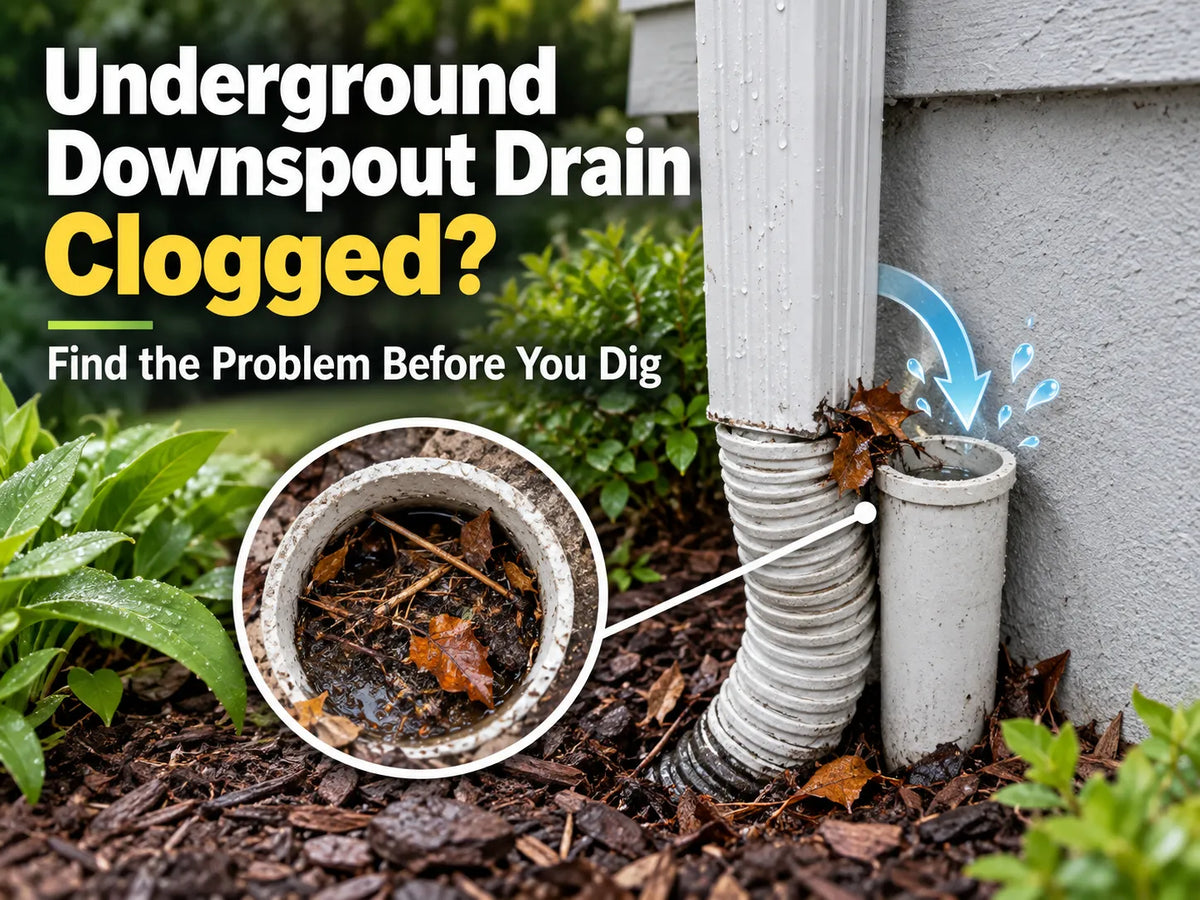
If your underground downspout drain seems clogged, first separate what you can see from what still needs inspection: the gutter and downspout, the buried pipe, and its discharge point. Overflow at the ground connection is a reason to investigate, not proof that the entire underground line needs replacement. A suitable pipe camera can document reachable conditions, but it cannot clear a blockage or guarantee a complete diagnosis. Use the observations below to decide what to ask a drainage professional before authorizing cleaning or digging.
1. Decide whether this is a safe inspection task
Start with safety and urgency, then collect evidence once conditions permit. If flooding is active, water is entering the home, or electrical hazards are possible, stop the inspection and seek appropriate help. The National Weather Service's flood guidance warns against entering floodwater and advises following local emergency instructions. Do not walk into water to reach a downspout or open a public drain.
Heavy rain makes a useful maintenance trigger, but the calendar does not diagnose a pipe. The National Hurricane Center identifies September 10 as the climatological peak of Atlantic hurricane activity, with most activity occurring from mid-August through mid-October. That describes long-term patterns, not a forecast for your yard. Plan an inspection for safe conditions rather than trying to work during a storm.
This guide addresses private residential roof-drainage lines. If you are unsure who owns the pipe or where it connects, put that question on your service request. Do not assume a buried downspout pipe is a sanitary sewer, and do not treat a public drainage structure as a homeowner access point.
↑ Back to top2. Separate a suspected clog from the symptoms
Describe where water appears and what you actually observed before calling the problem a buried-pipe blockage. Building America's gutters and downspouts guide explains that roof drainage should carry runoff away from the foundation. Its system-level approach is useful here: look at the collection point, conveyance route, and discharge destination rather than considering one opening in isolation.
The table below is an observation checklist, not a diagnostic test. Use it to organize photographs and questions. More than one problem may need assessment, and a photograph of an overflowing connection does not show the condition of the full pipe.
| What you observed | What to ask next |
|---|---|
| Water spilled over the gutter | Has the gutter and above-ground downspout been assessed separately? |
| Water rose at the ground connection | What is known about the buried line and its outlet? |
| You could not see water at an outlet | Is that outlet actually connected to this downspout? |
| A wet patch returned after rain | What evidence links that location to this pipe? |
| Trouble returned after earlier cleaning | Is there a before-and-after inspection record? |
For example, “water rose at the rear downspout adapter; outlet not identified” is a stronger service description than “the underground pipe collapsed.” The first statement preserves the evidence and the uncertainty. The second names a repair problem that has not yet been demonstrated.
If you have not mapped the accessible parts of the system, start with our underground downspout inspection guide. Then use this article to organize the decision about the suspected blockage.
↑ Back to top3. Check accessible openings before assuming excavation
A ground-level look at accessible connections and the known outlet can provide useful evidence without opening the yard. In its underground drainage care sheet, installer Todd's Services recommends inspecting downspout connections and keeping outlets free of debris. It also directs customers with persistent blockage problems to contact the company for further help.
Follow the installed system's own maintenance instructions. From a safe position, photograph the connection, any visible loose debris, and the outlet if you know where it is. Avoid dismantling glued joints, reaching blindly into openings, or introducing tools simply because an online example used them. This article does not prescribe a flushing pressure or a drain-cleaning method.
Make a short record with these fields:
- Location: Which side of the house and which downspout?
- Timing: When did you notice the issue, and had the rain stopped?
- Visible condition: What was present at the connection or outlet?
- History: Has this happened before, and what work was done?
- Unknowns: Which parts of the route or discharge arrangement are unconfirmed?
Keep photographs from before any permitted maintenance as well as after it. If you have an installation drawing, attach a copy and mark which details you have verified. Label guessed pipe routes as guesses. For broader symptoms beyond this downspout, our yard drainage problems checklist can help keep unrelated observations separate.
↑ Back to top4. Give the camera inspection a specific question
Ask for an inspection that answers a defined question, such as whether visible material is obstructing the reachable section or whether the operator can document a damaged joint. Do not order a camera visit on the assumption that it will automatically reveal the entire route. Discuss the access opening, bends, pipe condition, and what happens if the view or travel is blocked.
Manufacturer RIDGID SeeSnake's operating guidance states that obstructions can damage a camera or prevent its retrieval, and that the camera must not be used to clear them. Follow the manual for the actual system being used. An inspection should stop at a limitation rather than turn into an attempt to ram through an unknown obstruction.
Use three labels when reviewing the findings: observed, suspected, and not inspected. For an illustrative report, “material visible ahead; camera stopped; downstream section not inspected” is an honest result. It should not become “the rest of the line is clear” or “the entire line needs replacement” without further evidence.
Before hiring or buying, ask how the operator will record the entry point, direction of travel, footage, and areas that could not be assessed. Request the original recording as well as selected still images. A short clip without its starting point may be difficult to relate to your yard.
For homeowners comparing equipment, the current Powerwill PW9D1 product page lists a 9-inch IPS monitor and self-leveling camera. Those features do not establish compatibility with every downspout drain. Confirm the actual access and pipe geometry against the manual, and verify the selected bundle before purchasing.
↑ Back to top5. Ask what supports the proposed cleaning or repair
Request a recommendation that connects the evidence to the work being proposed. You do not need to select a cleaning tool or design a replacement pipe yourself. You do need to understand what the contractor has established, what remains uncertain, and how the result will be checked.
Use these questions to compare proposals on the same basis:
- What was actually found? Ask to see the relevant images or recording, with a plain-language explanation.
- What was not inspected? Have the contractor identify any unreachable or obscured section.
- Why this work? Ask how the proposed cleaning, access work, or repair addresses the documented finding.
- What could change the scope? Ask how additional work will be explained and approved.
- How will completion be demonstrated? Request a description of the post-work inspection or drainage check appropriate to the system.
For example, if a proposal says “replace underground drain,” ask which section is included and what evidence supports that extent. If it says “clear blockage,” ask what happens if the inspection reveals a damaged section afterward. These are scope questions, not a reason to reject professional advice. They help you distinguish a confirmed finding from a working assumption.
If excavation is proposed, contact 811 and follow the requirements for your location before digging. Alabama 811's explanation of public and private utilities highlights that privately owned facilities are a separate locating responsibility. Check with your local service about what will be marked and what requires a private locator. Do not treat an inspection video as utility clearance.
↑ Back to topKey Takeaways
- Wait for safe conditions, and treat active flooding or water entering the home as a reason to seek help rather than continue inspecting.
- Describe the symptom and its location before assuming the buried drain is clogged or damaged.
- Photograph accessible connections and the known outlet, and keep unknown route details clearly labeled.
- Ask a camera inspection to answer a specific question and identify every section that was not inspected.
- Before approving cleaning or excavation, request the evidence, the proposed scope, and the plan for checking the result.
Frequently Asked Questions
Does overflow at the downspout prove the underground drain is clogged?
No. It documents a symptom, while the cause still needs assessment. Record where the water appeared and whether the outlet and route are known; ask the contractor to explain what evidence establishes the diagnosis.
Can a Powerwill camera clear a clogged downspout drain?
No. A Powerwill pipe camera is for inspection and documentation, not blockage removal. Do not use the head or push cable as a drain-cleaning tool; follow the actual equipment manual and arrange appropriate professional help for an obstruction.
Should I buy a camera before calling a contractor?
First establish the question you need answered and whether the access is suitable. When comparing a Powerwill system, confirm compatibility and the selected configuration before buying. If the route or condition is uncertain, discuss an inspection service before committing to equipment.
What if the camera cannot reach the suspected blockage?
Record the limitation and ask the operator what further assessment is appropriate. Do not interpret an incomplete inspection as proof that the unseen section is clear. Request that the report distinguish what was visible from what is only suspected.
What should I send when requesting service?
Send the location, symptom photos, timing, known outlet, and previous work history. State that this is a private roof-drainage line if confirmed. Ask whether the contractor can assess the whole drainage question and explain any access limitations before work begins.
Inspect Before Repair
A suspected underground downspout clog is a good reason to gather evidence before selecting a repair. Keep the initial brief simple: what happened, where it happened, what was inspected, and what remains unknown. Let those findings guide the next decision.
If an accessible pipe inspection fits your situation, compare current Powerwill PW9D1 configurations and review the manual before use. If access or the diagnosis remains uncertain, take your observation record to a qualified drainage professional.
↑ Back to topSources
- National Weather Service — During a Flood
- National Hurricane Center — Tropical Cyclone Climatology
- Building America Solution Center — Gutters and Downspouts
- Todd's Services — Underground Downspout Drainage System Care Sheet
- RIDGID SeeSnake — Camera Reel Best Practices
- Alabama 811 — Public and Private Utilities
- Powerwill — PW9D1 Product Details and Manual
Comments
No comments