
Cámara de inspección con luz: la herramienta indispensable para los fontaneros profesionales
 MichaelCarter
0 comments
MichaelCarter
0 comments
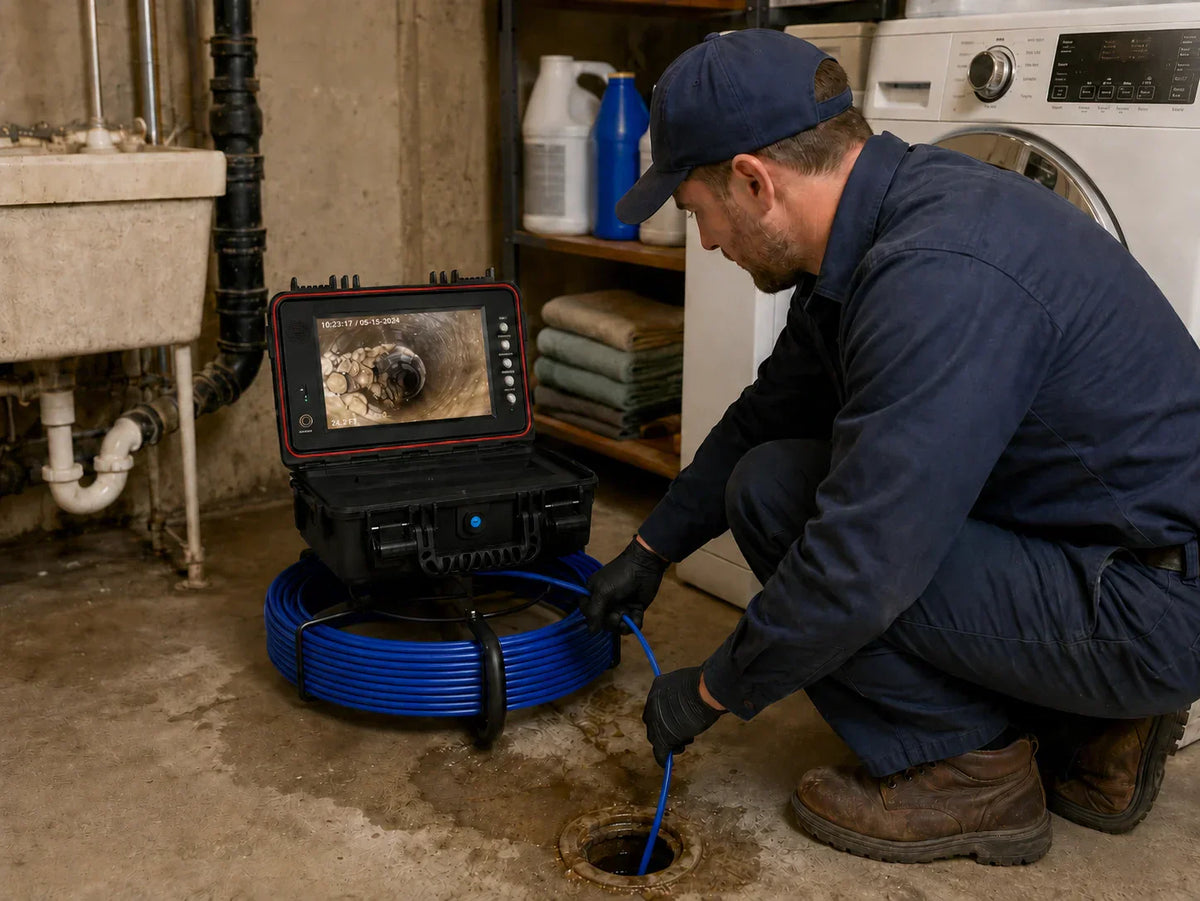
Una cámara serpiente con luz es innegociable para la fontanería profesional porque la visibilidad determina si el metraje es evidencia útil o simplemente un costoso desenfoque de movimiento. La guía de costos de limpieza de alcantarillado de HomeGuide de 2026 indica que el desatasco de una línea principal generalmente cuesta entre $200 y $500, mientras que el hidrojetting promedia entre $600 y $1,400, por lo que el diagnóstico que ocurre antes de esas recomendaciones es financieramente importante. Las especificaciones actuales del producto también muestran que la iluminación está diseñada en torno al trabajo: la micro CA-150 de RIDGID utiliza 4 LED ajustables para inspecciones de corto alcance, mientras que la L09D2 de Powerwill utiliza 12 LED regulables en un cabezal de cámara de tubería autonivelante para tramos largos y húmedos. Esa brecha honesta es la historia completa. Los fontaneros profesionales se niegan a trabajar sin iluminación controlada porque la recomendación de reparación es tan creíble como la imagen que la respalda.

Por qué la iluminación es una herramienta de diagnóstico, no un bonito extra
La razón profesional para insistir en una cámara serpiente con luz es sencilla: el metraje oscuro oculta distinciones costosas. La línea puede contener grasa, raíces, incrustaciones, juntas desplazadas, agua estancada o un colapso que comienza en la parte inferior. Esos no son el mismo problema y no justifican la misma recomendación.
Ahí es donde la iluminación deja de ser una característica de confort y se convierte en una de diagnóstico. Si la imagen está subexpuesta, una masa de raíces puede parecer un bloqueo completo, una curva pronunciada puede desaparecer en el agua negra y las incrustaciones pesadas pueden parecer una falla estructural. Si la imagen está sobreexpuesta, el PVC reflectante y las paredes mojadas pueden deslumbrar tanto que las grietas y las juntas desplazadas desaparecen en el brillo.
Los profesionales saben que la conversación con el cliente cambia cuando el monitor muestra un defecto con claridad. En lugar de discutir si se necesita limpieza, parcheo, revestimiento o excavación, puede señalar el metraje y explicar el siguiente paso. La cámara no reemplaza el juicio, pero la luz adecuada es lo que permite que el juicio comience a partir de hechos visibles.
Por qué las hojas de especificaciones demuestran que el trabajo dicta la iluminación
Las páginas de productos reales demuestran el punto mejor que los lemas de marketing. La micro CA-150 de RIDGID es una herramienta de inspección de corto alcance con 4 LED ajustables porque está diseñada para trabajos visuales más ajustados y cortos, no para empujar profundamente a través de laterales de alcantarillado inundados. El endoscopio de doble lente DS300 de DEPSTECH utiliza 7 LED en un cable más corto porque su trabajo sigue siendo la inspección de campo cercano.
La inspección de tuberías cambia el problema. La guía de diámetro de cámaras de alcantarillado de Powerwill dice que un cabezal de 17 mm generalmente usa 6 LED para aplicaciones de aproximadamente 1 a 3 pulgadas, mientras que un cabezal de 23 mm comúnmente usa 12 LED para líneas residenciales de 2 a 4 pulgadas. Esa misma guía pasa a 18 LED en un cabezal de 29 mm para tuberías de 3 a 8 pulgadas porque el cabezal es más grande y la cámara puede necesitar iluminar una cavidad más ancha más lejos de la pared.
El cabezal de reemplazo de 23 mm de Powerwill incluye 12 LED blancos, un cuerpo de acero inoxidable, impermeabilización IP68 y un campo de visión de 140 grados. Estos detalles existen porque el trabajo en alcantarillados residenciales no se realiza en cavidades limpias y secas. Se realiza en líneas húmedas, reflectantes y con muchos escombros, donde el operador necesita suficiente luz para ver los defectos sin quemar cada fotograma.
La conclusión para los profesionales es que la iluminación debe coincidir con el tamaño del cabezal, la distancia de trabajo y el entorno. Comprar solo por el número de LED es una pereza. Comprar por la forma en que se comporta la iluminación dentro de la tubería es lo que separa un equipo utilizable de un trofeo de hoja de especificaciones.
Volver arribaDónde los fontaneros profesionales notan la diferencia primero
El primer lugar donde los profesionales notan la calidad de la iluminación es en los trabajos de respaldo repetidos. Una línea que se ha desatascado dos veces aún puede ocultar un estante de grasa, una intrusión de raíces o un desplazamiento parcial. Con una iluminación plana, la tubería puede parecer "lo suficientemente abierta" en un paso rápido, aunque la causa real permanezca. Con luz ajustable, el operador puede atenuar el resplandor y leer la textura en lugar de solo el brillo.
El segundo lugar es la documentación. El metraje grabado solo ayuda si el cliente puede entender lo que muestra la pantalla. La iluminación clara revela la textura de la pared de la tubería, los cambios en la línea de flotación y los bordes de los defectos de una manera que facilita la defensa del presupuesto. Esto es importante porque cada presupuesto vinculado al metraje de la cámara es también un ejercicio de confianza.
El tercer lugar son las tiradas largas y húmedas. El L09D2 de Powerwill combina 12 LED regulables con autonivelación y un flujo de trabajo de localizador de 512 Hz, que es exactamente el tipo de integración que un profesional valora cuando el trabajo pasa del diagnóstico a la marcación del defecto para su reparación. El brillo sin control de orientación aún puede dejar el metraje confuso. El brillo controlado más la orientación estable es lo que hace que el clip sea útil.
Finalmente, la iluminación importa cuando la línea no es uniforme. El hierro fundido, la arcilla, el PVC y las secciones parcialmente inundadas reflejan de manera diferente. Una cámara profesional debe hacer frente a ese cambio en tiempo real. Por eso, los fontaneros que utilizan cámaras todas las semanas se preocupan tanto por la atenuación, no solo por la salida máxima.
Volver arribaCómo la iluminación protege el margen, no solo la calidad de la imagen
Una buena iluminación mejora el margen porque reduce las visitas de seguimiento evitables y las recomendaciones débiles. Si su primera pasada no puede mostrar si la línea necesita desatascarse, limpiarse con chorro de agua, desincrustarse o excavarse, o bien subestima, sobrestima o pierde tiempo volviendo con más equipo.
Los datos de costos de HomeGuide hacen que esto sea rápidamente costoso. Cuando una limpieza básica cuesta unos cientos de dólares y el hidrojetting puede superar los mil, el cliente espera una razón real para el aumento. El metraje capturado con poca luz deja demasiado espacio para la duda. El metraje capturado con luz controlada le da una base visual para la diferencia de precios.
Esta es también la razón por la que los fontaneros profesionales se resisten a las cámaras que son técnicamente brillantes pero operativamente torpes. Si la luz es fija, el cabezal florece en PVC liso o la pantalla pierde la orientación en movimiento, la cámara crea fricción en lugar de reducirla. En el campo, una característica solo importa si acelera el diagnóstico, protege el presupuesto y acorta el camino hacia la reparación correcta.
Qué comprar si desea iluminación de grado profesional
Para la mayoría de los fontaneros residenciales y de pequeños comercios, la mejor configuración de iluminación es una cámara de alcantarillado de clase 23 mm con LED ajustables, construcción impermeable y orientación estable. Por eso, la guía de selección de Powerwill sigue dirigiendo a los compradores hacia las familias L09D1, L09D2, 7DA y 10DX1, según la longitud de la línea y las necesidades de localización.
Si su trabajo consiste principalmente en laterales residenciales estándar, la guía de selección muestra que el L09D1 comienza en $799 con una varilla de empuje delgada de 5 mm y un alcance de 65 a 164 pies. Si su trabajo implica rutinariamente tramos más largos o una planificación de reparación basada en localizadores, el L09D2 y el 10DX1 mejoran el flujo de trabajo con 12 LED regulables, autonivelación, grabación y localización de 512 Hz.
La regla de compra más inteligente es esta: elija la iluminación para el metraje que necesita defender, no para la tubería que espera no ver nunca. Si la cámara tiene que ayudarle a ganarse la confianza, presupuestar reparaciones y marcar defectos con precisión, una verdadera cámara serpiente con luz controlada no es opcional. Es el estándar mínimo.
Volver arribaConclusiones clave
- Los fontaneros profesionales necesitan una iluminación controlada porque la calidad del diagnóstico depende de ver claramente la textura, los bordes de los defectos y las condiciones del agua dentro de la línea.
- Las especificaciones actuales del producto muestran que la cantidad de LED cambia con el tamaño del cabezal de la cámara y la distancia de inspección, lo que demuestra que el trabajo debe dictar el diseño de la iluminación.
- Los respaldos repetidos, la documentación del cliente, los tramos largos y húmedos, y los materiales de tuberías mixtos son las situaciones en las que los profesionales perciben primero el valor de la luz ajustable.
- Una mejor iluminación protege el margen al reducir las recomendaciones débiles, las visitas de seguimiento evitables y las discusiones sobre por qué un método de reparación cuesta más que otro.
- Para la mayoría de los trabajos profesionales de alcantarillado, un sistema Powerwill de clase 23 mm con LED regulables, autonivelación y flujo de trabajo listo para localizador es la opción más sólida para inspeccionar antes de reparar.
Preguntas frecuentes
¿Por qué los fontaneros profesionales se preocupan tanto por la iluminación en una cámara serpiente?
Porque la iluminación determina si el metraje es lo suficientemente claro como para diagnosticar, documentar y presupuestar la reparación con confianza. Una mala iluminación convierte la cámara en una herramienta de confirmación de suposiciones en lugar de una herramienta de diagnóstico real.
¿Más LEDs siempre es mejor en una cámara de alcantarillado?
No. Más LEDs sin control pueden generar deslumbramiento en interiores de tuberías húmedas o lisas. Lo que importa es una luz utilizable que coincida con el tamaño del cabezal, la distancia y el material de la tubería.
¿Cuál es la ventaja práctica de los LED regulables?
La atenuación le permite controlar el deslumbramiento, especialmente en tuberías de PVC, agua estancada y secciones reflectantes. Esto facilita la separación de defectos reales de los puntos brillantes borrosos.
¿Necesito autonivelación si ya tengo LED brillantes?
Sí, si desea que los clientes y los equipos puedan leer rápidamente el metraje. Las imágenes brillantes aún pierden valor cuando el operador no puede mantener la orientación correcta mientras se mueve por la línea.
¿Qué modelos de Powerwill tienen más sentido para los profesionales que se preocupan por la iluminación?El L09D1 es un punto de partida de valor sólido, mientras que el L09D2, 7DA y 10DX1 son opciones más potentes si desea LED regulables, autonivelación, grabación y localización en un mismo flujo de trabajo.
Conclusión
La razón profesional para exigir una cámara serpiente con luz no es la comodidad visual. Es la claridad operativa. Cuando el metraje es legible, el diagnóstico es más sólido, el presupuesto es más fácil de defender y el plan de reparación se vuelve más inteligente más rápido.
Si desea una cámara que le ayude a inspeccionar antes de reparar en lugar de simplemente añadir otra pantalla al camión, comience con la colección de cámaras de alcantarillado de Powerwill y elija el modelo cuya iluminación, orientación y alcance se adapten a los trabajos que realmente vende.
Volver arribaFuentes
- Costo de limpieza de la línea principal de alcantarillado de HomeGuide (2026)
- Cámara de inspección RIDGID micro CA-150
- Endoscopio de doble lente DEPSTECH DS300
- Guía de compra de cámaras para tuberías Powerwill por diámetro de cámara
- Cámara de inspección de alcantarillado Powerwill L09D2
- Cabezal de cámara de alcantarillado Powerwill de 23 mm
- Guía de selección de cámaras de alcantarillado Powerwill
Comments
No comments