
Cámara de inspección de conductos: ¿Se puede usar una cámara de alcantarillado en el sistema de climatización?
 MichaelCarter
0 comments
MichaelCarter
0 comments
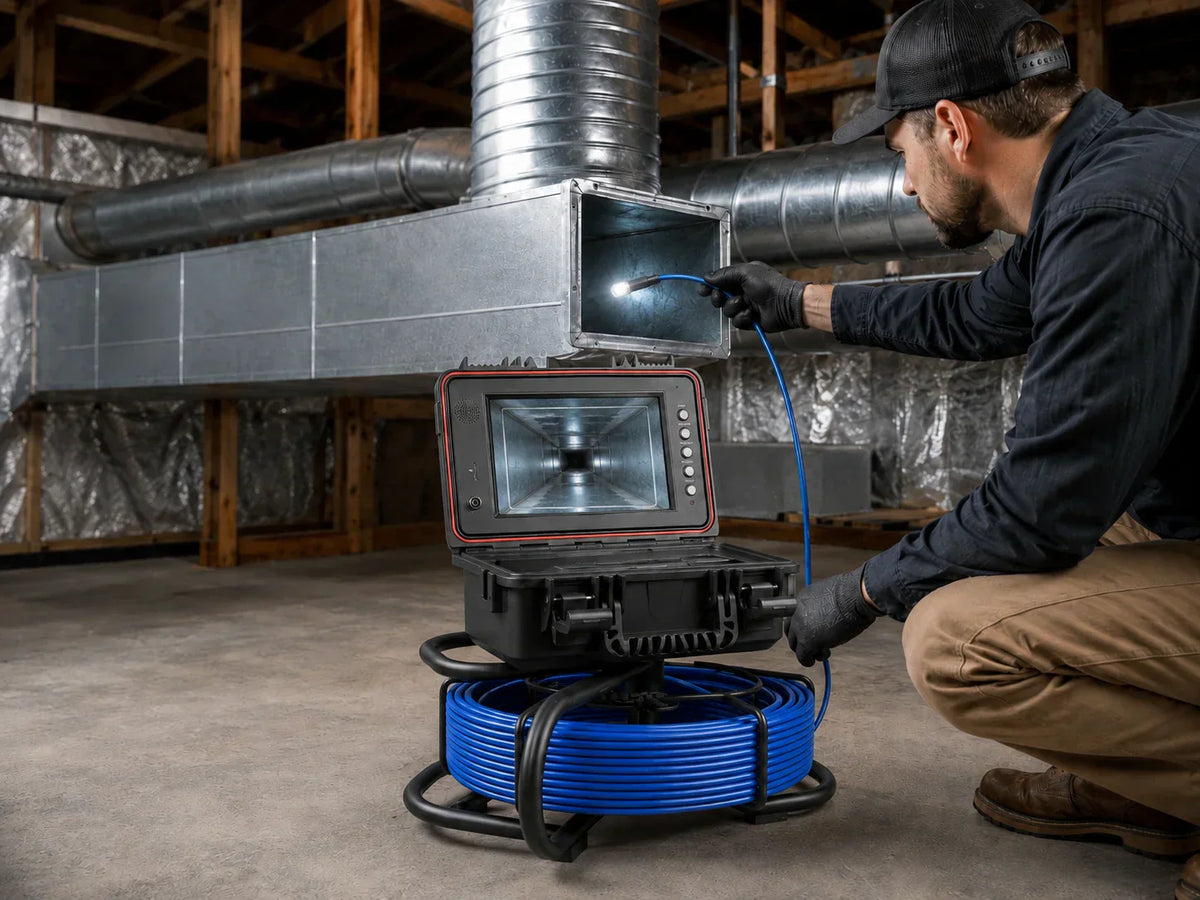
Una cámara de alcantarillado a veces puede funcionar como cámara de inspección de conductos, pero solo en la situación correcta de HVAC. La guía actual de la EPA sobre conductos de aire dice que no se puede ofrecer una recomendación general para la limpieza de conductos y aconseja tomar medidas principalmente cuando hay moho visible, alimañas o escombros excesivos, por lo que la inspección en sí debe ser práctica y basada en evidencia. Las propias páginas de productos de Powerwill también muestran claramente el límite: el sistema de doble cámara 7DH2 se comercializa para trabajos de tuberías y desagües con un cable delgado de 6 mm, mientras que un cabezal Powerwill autonivelante de 22-23 mm se describe como útil en alcantarillas, desagües, chimeneas y líneas de HVAC solo cuando el espacio puede aceptarlo físicamente. Eso significa que la respuesta honesta no es "nunca" ni "siempre". Es "solo cuando el conducto, el punto de acceso y los requisitos de higiene se ajustan a la cámara".


La respuesta honesta no es sí o no. Se trata de si el tamaño del conducto, el punto de acceso y los estándares de limpieza se ajustan realmente a la cámara que planeas usar.
Cuando una cámara de alcantarillado puede funcionar en conductos de HVAC
Una cámara de alcantarillado puede funcionar en la inspección de HVAC cuando el conducto es lo suficientemente ancho, la ruta de acceso es razonablemente recta y la cámara se puede limpiar a un estándar que aceptarías en un sistema de distribución de aire. Los conductos troncales de suministro más grandes, los conductos troncales de retorno, los conductos mecánicos, las chimeneas y algunas secciones de conductos comerciales son los casos de cruce más realistas.
La página del cabezal autonivelante de 22-23 mm de Powerwill dice explícitamente que la cámara puede diagnosticar problemas dentro de alcantarillas, desagües, chimeneas y líneas de HVAC. Esa afirmación es creíble porque el producto combina protección IP68, 12 LED regulables y un flujo de trabajo de inspección rígido que se adapta a tramos rectos más largos. En otras palabras, la cámara puede sobrevivir físicamente en el entorno y proporcionar imágenes estables cuando la trayectoria está lo suficientemente abierta.
La mayor ventaja de usar un carrete estilo alcantarillado en un conducto es el alcance. Los sistemas HVAC pueden tener líneas troncales largas que los pequeños boroscopios de mano tienen dificultades para cubrir. Un sistema basado en carrete le brinda distancia, grabación y una orientación más sólida durante recorridos más largos.
Pero el alcance es una ventaja solo si el cabezal encaja y el cable puede moverse sin dañar los conductos flexibles, el aislamiento o las paletas directrices. El hecho de que una cámara pueda ingresar técnicamente a un conducto no significa que sea la mejor herramienta para cada ramal o cada registro.
Volver arribaPor qué las cámaras de conductos dedicadas siguen ganando muchos trabajos
Las cámaras dedicadas para conductos y boroscopios ganan cuando la ruta de inspección es estrecha, delicada o sensible a la limpieza. Muchos trabajos residenciales de HVAC implican aberturas de registro, conductos de ramal más estrechos, transiciones suaves, conductos flexibles o giros que recompensan un cabezal más pequeño y un cable más limpio y liviano más que un carrete de alcantarillado robusto.

El 7DH2 de Powerwill muestra por qué las herramientas cruzadas pueden tener sentido. Su cable semirrígido de 6 mm, la configuración de doble cámara giratoria de 360 grados y el alcance de 66 pies se acercan mucho más a lo que un inspector de conductos desea que un cabezal de tubería más grande de 23 mm. Ese formato más pequeño es más fácil de enrutar a través de paneles de acceso y cambios direccionales sin tratar el sistema HVAC como una línea de alcantarillado.
La guía de la EPA también refuerza el valor de la moderación. Si el objetivo es confirmar la evidencia de moho, escombros o alimañas antes de recomendar la limpieza, entonces una ruta de inspección más pequeña y limpia suele ser la medida más inteligente. Se necesita suficiente cámara para ver la evidencia, no tanta cámara que la inspección en sí se convierta en un riesgo.
Las cuatro cosas que deciden un sí o un no
| Factor de decisión | Favorece la cámara de alcantarillado | Favorece la cámara de conductos dedicada |
|---|---|---|
| Diámetro del conducto | Tronco grande o conducto mecánico | Pequeños ramales, registros, conductos flexibles |
| Ruta de acceso | Ruta recta o suavemente curvada | Curvas cerradas, desviaciones, álabes |
| Estándar de limpieza | La cámara se puede limpiar y aislar completamente | El riesgo de contaminación cruzada es difícil de controlar |
| Objetivo de la inspección | Inspección visual y grabación de larga duración | Comprobaciones puntuales y detalles de primer plano |
El primer factor de decisión es la simple geometría. La guía de selección de Powerwill muestra que los cabezales de cámara de alcantarillado comunes para trabajos de tuberías residenciales se encuentran en el rango de 17 mm a 23 mm, lo cual está bien para algunos conductos, pero claramente sobredimensionado para muchos puntos de acceso de HVAC a nivel de ramal.
El segundo factor es cómo se comporta el cable. Una varilla de empuje diseñada para desagües está pensada para avanzar a través de la resistencia, el agua y los escombros. Esto puede ser útil en un conducto rígido grande. También puede ser incómodo en conductos delicados o con muchas curvas donde una línea semirrígida más pequeña le da más control.
El tercer factor es la higiene. Si el mismo carrete se acaba de usar en una línea de alcantarillado, la carga de limpieza antes de que entre en un sistema de aire es extremadamente alta. Ese es uno de los argumentos más sólidos para mantener el equipo de inspección dedicado a HVAC separado, incluso si una cámara de alcantarillado pudiera hacer el trabajo físicamente.
El cuarto factor es la pregunta real que intentas responder. Si solo necesitas inspeccionar una sección sospechosa de suciedad cerca del pleno del horno, una herramienta de conductos dedicada suele ser la respuesta más limpia. Si necesitas una inspección visual larga por un conducto grande y accesible, un sistema de carrete puede tener más sentido.
Volver arribaDónde encajan las herramientas Powerwill con mayor honestidad
La gama de Powerwill cubre ambos lados de esta decisión. El L09D1 y el L09D2 son sistemas reales de inspección de tuberías con gran alcance, cabezales autonivelantes y una lógica de diseño centrada en el alcantarillado. Tienen más sentido cuando la ruta de inspección de HVAC está físicamente lo suficientemente abierta como para beneficiarse de un carrete y cuando el operador está preparado para mantener la herramienta limpia para el trabajo en el sistema de aire.
El 7DH2 es la opción de crossover más honesta porque su cable de 6 mm y su configuración de doble cámara giratoria se acercan mucho más a las necesidades de inspección de conductos, cavidades de paredes y caminos estrechos. Aún le brinda grabación y alcance, pero sin forzar un cabezal de alcantarillado de 23 mm en cada decisión.
Si eres un contratista de HVAC o un inspector de propiedades que solo ocasionalmente revisa conductos más grandes, una configuración de Powerwill de uso mixto puede ser práctica. Si la inspección de conductos es un servicio principal, un equipo de inspección limpio y dedicado es el estándar más seguro a largo plazo.
Volver arribaLa respuesta de compra más segura para la mayoría de las personas
Para la mayoría de los compradores, la respuesta más segura es comprar para el sistema que inspeccionan con mayor frecuencia. Si su trabajo principal es la inspección de alcantarillados y desagües, una cámara de alcantarillado puede servir ocasionalmente para casos de HVAC más grandes, pero no debe comercializarse como una herramienta universal para conductos. Si su trabajo principal es la inspección de HVAC, comience con una cámara dedicada más pequeña y solo pase a un carrete cuando el tamaño del conducto y la longitud del recorrido lo exijan.
Esa lógica de compra se alinea con la postura más amplia de la EPA sobre los conductos: inspeccionar y limpiar basándose en las condiciones visibles y la evidencia real, no en suposiciones generales. Una cámara que le ayude a recopilar pruebas limpias sin crear riesgos adicionales es la herramienta adecuada. Una cámara que técnicamente encaja pero es incómoda, sobredimensionada o difícil de desinfectar es la incorrecta.
La conclusión honesta es que las cámaras de alcantarillado pueden superponerse con la inspección de conductos, pero la superposición es parcial. Cuanto más específico y sensible a la limpieza se vuelva el trabajo de HVAC, más valiosa se vuelve una cámara de inspección de conductos diseñada específicamente.
Volver arribaPuntos clave
- Una cámara de alcantarillado puede funcionar en la inspección de HVAC cuando el conducto es lo suficientemente grande, la ruta está lo suficientemente abierta y la cámara se puede limpiar a un estándar en el que confiaría en un sistema de aire.
- Las cámaras de conductos dedicadas aún ganan muchos trabajos porque los cabezales más pequeños y los cables más livianos manejan mejor las ramificaciones estrechas, los conductos flexibles y las inspecciones más limpias.
- El diámetro, la ruta de acceso, el saneamiento y el objetivo de la inspección son los cuatro factores que deben decidir si es razonable utilizar una cámara de alcantarillado en los conductos.
- Los equipos más grandes L09D1 y L09D2 de Powerwill son adecuados para trabajos ocasionales en conductos grandes, mientras que el 7DH2 es la opción más honesta para inspecciones mixtas en rutas estrechas.
- La opción de compra más segura es elegir la herramienta para el sistema que inspecciona con mayor frecuencia en lugar de forzar a una sola cámara a realizar mal todos los trabajos de HVAC y alcantarillado.
Preguntas frecuentes
¿Puedo usar una cámara de alcantarillado como cámara de inspección de conductos?
A veces, sí. Puede funcionar en conductos grandes y accesibles, pero suele ser la herramienta equivocada para ramas pequeñas, conductos flexibles o trabajos de HVAC sensibles a la limpieza.
¿Cuál es la razón principal para no usar una cámara de alcantarillado en HVAC?
La contaminación cruzada y el ajuste inadecuado son las principales razones. Una cámara utilizada en desagües debe limpiarse a fondo antes de entrar en un sistema de aire, y los cabezales de alcantarillado más grandes pueden no pasar de forma segura por conductos más pequeños.
¿Recomienda la EPA la limpieza rutinaria de conductos de aire para cada hogar?
No. La EPA afirma que no se puede ofrecer una recomendación general y sugiere tomar medidas principalmente cuando hay moho visible, alimañas o escombros excesivos.
¿Cuál es la mejor herramienta de Powerwill para la inspección de conductos?
La 7DH2 es la opción de cruce más limpia porque su cable semirrígido de 6 mm y su configuración de doble cámara giratoria se adaptan mejor a trabajos de inspección más estrechos que un cabezal de carrete de alcantarillado de tamaño completo.
¿Cuándo tiene sentido un carrete de alcantarillado completo en el trabajo de HVAC?
Tiene sentido cuando necesita un gran alcance en conductos rígidos grandes y accesibles o en conductos mecánicos, y puede mantener la herramienta lo suficientemente limpia para ese entorno.
Conclusión
Una cámara de alcantarillado puede ser una cámara de inspección de conductos útil en la situación adecuada de HVAC, pero solo cuando el ajuste físico y los estándares de limpieza son honestos. Tan pronto como el conducto se vuelve más estrecho, más blando o más sensible a la limpieza, la herramienta especializada para conductos se convierte en la mejor respuesta.
Si necesita una configuración de inspección cruzada, comience con la línea de cámaras de inspección Powerwill y elija la herramienta más pequeña que aún cubra su ruta de inspección real en lugar de optar por el carrete de alcantarillado más grande que pueda comprar.
Volver arribaFuentes
- EPA - ¿Deberías limpiar los conductos de aire de tu casa?
- Cámara dual giratoria Powerwill 7DH2
- Cabezal de cámara autonivelante Powerwill con transmisor de sonda de 512 Hz
- Guía de selección de cámaras de alcantarillado Powerwill
- Cámara de alcantarillado Powerwill L09D1
- Cámara de alcantarillado Powerwill L09D2
Comments
No comments