
Pipe Camera Buying Guide: Choosing the Right Camera Diameter
 Michael Carter
0 comments
Michael Carter
0 comments
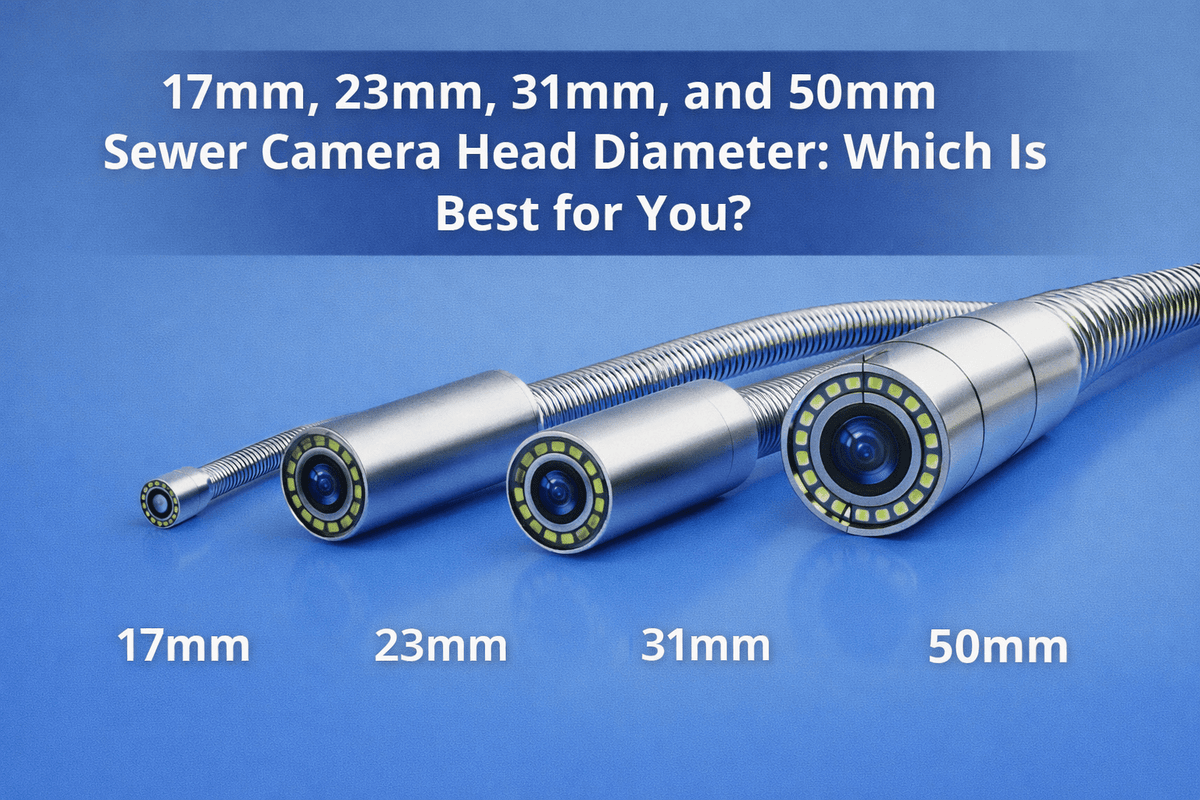
Table of Contents:
- 17mm Camera Head (For 1–3 Inch Pipes)
- 23mm Camera Head (For 2–4 Inch Pipes)
- 31mm Camera Head (For 3–8 Inch Pipes)
- 50mm Camera Head (For 8–15 Inch Pipes)
- Choosing the Right Pipe Camera: Key Takeaways
1. 17mm Camera Head (For 1–3 Inch Pipes)
Core Features:
- 8 adjustable LEDs
- IP68 waterproof rating
- 720p/1080p HD resolution
Advantages:
- Small and flexible, can navigate 90° bends
- High-definition imaging for clear inspections
- Cost-effective and ideal for residential use
Disadvantages:
- Limited lighting due to fewer LEDs
- Not suitable for pipes larger than 3 inches
Typical Applications:
- Kitchen and bathroom drainage pipes
- Laundry machine drains
- Small residential branch pipes
The 17mm camera head is perfect for homeowners who need a compact and affordable solution for inspecting smaller pipes. Its flexibility allows it to navigate tight corners, but it’s not suited for larger pipes.
2. 23mm Camera Head (For 2–4 Inch Pipes)
Core Features:
- 12 built-in LEDs
- IP68 waterproof rating
- Some models come with 512Hz transmitter and auto-leveling
Advantages:
- Versatile and suitable for most residential pipes
- Durable with reinforced housing
- High-definition imaging for better inspection clarity
Disadvantages:
- Less flexibility than the 17mm camera
- Cannot enter pipes smaller than 2 inches
Typical Applications:
- Main sewer lines for residential homes
- Outdoor drainage pipes
- Basement/garage floor drainage
- Rental property inspections
The 23mm camera head is the go-to option for most residential sewer lines. It strikes a good balance between flexibility and durability, making it the best choice for standard household pipe inspections.
3. 31mm Camera Head (For 3–8 Inch Pipes)
Core Features:
- 24 built-in LEDs
- IP68 waterproof rating
- Auto-focus, meter counter, and location transmitter
Advantages:
- Superior lighting and high-definition imaging
- Professional-grade functionality with enhanced durability
- Ideal for larger pipe systems and commercial use
Disadvantages:
- Not suitable for smaller pipes
- Limited maneuverability in tight spaces
Typical Applications:
- Main sewer lines for larger residential homes
- Small commercial pipe systems
- Outdoor drainage pipes
- Property inspections for larger buildings
If you need to inspect larger pipes or commercial systems, the 31mm camera head is a professional choice. It offers excellent lighting and imaging, but it’s too large for smaller residential pipes.
4. 50mm Camera Head (For 8–15 Inch Pipes)
Core Features:
- Wide-angle lens
- 5 adjustable LED brightness levels
- Industrial-grade, heavy-duty design
Advantages:
- Exceptional lighting for large pipes
- Professional-grade imaging and high durability
- Designed for high-frequency, heavy-use environments
Disadvantages:
- Large and heavy, requiring professional equipment
- Expensive and best suited for industrial applications
Typical Applications:
- Municipal sewer main lines
- Industrial drainage systems
- Large commercial buildings and infrastructure inspections
The 50mm camera head is tailored for large-scale industrial and municipal pipe inspections. While it offers the best lighting and imaging quality, it’s designed for more extensive, professional setups and not suitable for residential use.
Choosing the Right Pipe Camera: Key Takeaways
- For small residential pipes (1–3 inches), a 17mm camera is ideal due to its flexibility and compact size.
- For most standard residential pipes (2–4 inches), a 23mm camera is the best option, offering a great balance between performance and versatility.
- For larger pipes or smaller commercial systems (3–8 inches), the 31mm camera will provide the necessary lighting and imaging quality.
- For industrial and municipal pipes (8–15 inches), opt for the 50mm camera, as it’s built for heavy-duty, professional use.
In conclusion, when selecting a pipe camera, always match the camera’s diameter to the pipe size you need to inspect. Balancing flexibility, image quality, and compatibility will ensure that your pipe inspections are efficient and thorough.
Comments
No comments