Plan the sewer scope
Define the agreed scope, access point and deliverables before a pre-purchase inspection.
Review the scope checklist →
From the first access check to the client handoff. A practical resource for planning, recording and explaining a sewer scope.
Review the scope checklist↗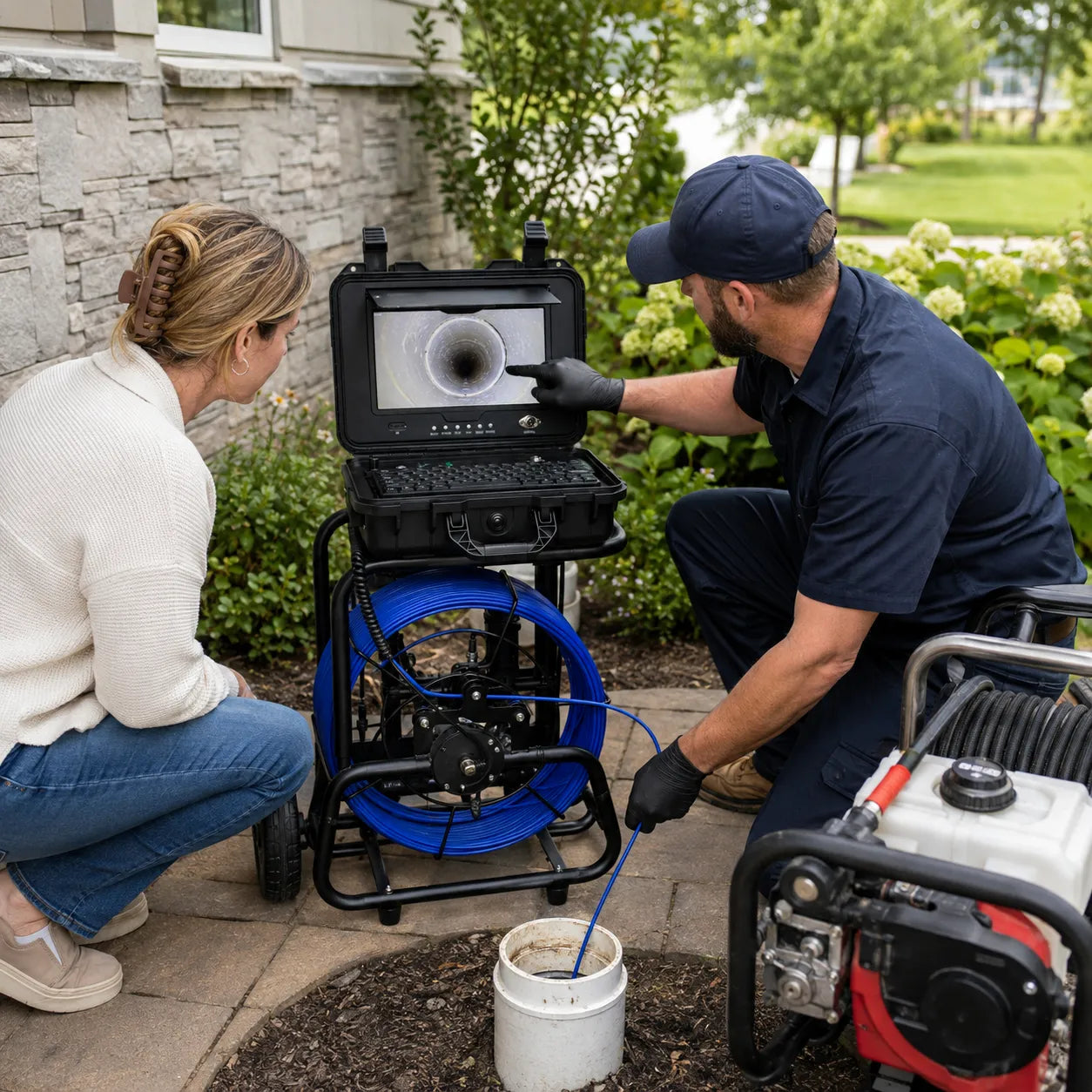
Define the agreed scope, access point and deliverables before a pre-purchase inspection.
Review the scope checklist →Connect visible observations to their location in the recording and describe the limits of the inspection.
Read the report guide →Check access, head and cable fit, recording controls and playback needs against the homes you inspect.
Compare inspection equipment →A sewer scope is a visual assessment of accessible areas. It does not establish watertightness, hidden wall condition or remaining service life. Follow the applicable inspection agreement and local requirements.
Keep the original video and an index of notable timestamps. Include the access point, direction of travel, visible condition, inspection limitations and recommended follow-up.
“Standing water obscured the lower portion of the pipe in this recorded section. The submerged surface was not visible; the cause and pipe slope were not established by this view.”
Illustrative reporting language, not a finding from a customer inspection.
Use this field list alongside your agreed inspection scope. It is a working record, not a certification or a completed inspection report.
Equipment does not provide professional qualifications. Confirm the requirements applicable to the service you offer. Repair pricing and underground utility clearance are separate from a visual scope.
Compare camera access and reach first, then recording, file handoff and any locating requirement. Confirm the contents of the selected variant before ordering.
For inspection scope and limitations, see InterNACHI’s sewer-scope standard →.
Have your model or inspection requirements ready.
{"one"=>"Seleccione 2 o 3 artículos para comparar", "other"=>"{{ count }} de 3 artículos seleccionados"}
Seleccione el primer artículo para comparar
Seleccione el segundo artículo para comparar
Seleccione el tercer elemento para comparar