
Underground Pipe Locator: How to Find Your Sewer Line Before You Dig
 Michael Carter
0 comments
Michael Carter
0 comments
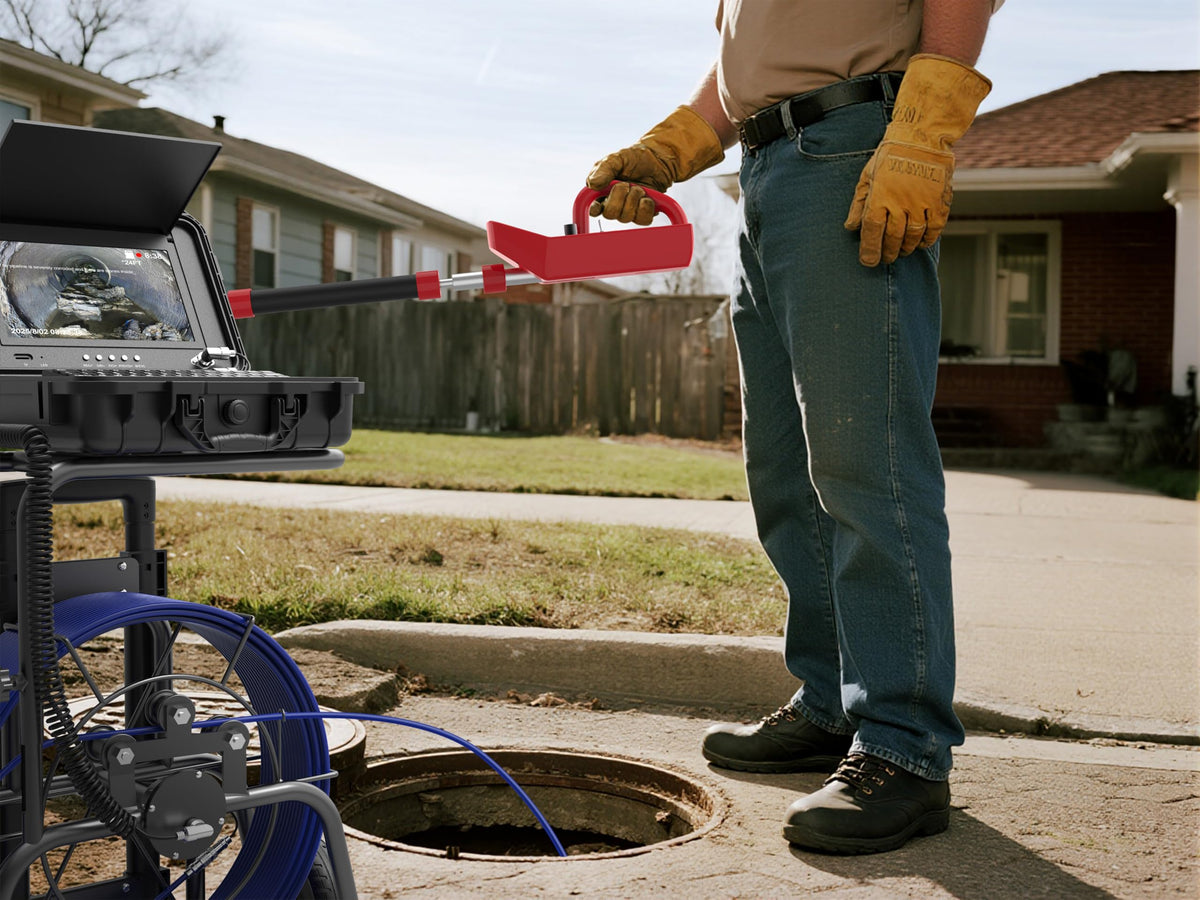
An underground pipe locator helps you trace a buried sewer or drain line from the surface, but it does not replace 811 marking or physical verification before digging. The national 811 Before You Dig program says you should contact 811 a few business days before any digging project, and OSHA says one common industry practice is to call 811 and then use multiple verification methods, including potholing, before drilling. A locator is what helps you find your camera head or target line. It is not permission to skip the rest of the safety process.

A locator only becomes valuable when it helps you mark the real dig spot before concrete, grass, or trenching money gets wasted.
What an Underground Pipe Locator Actually Does
An underground pipe locator does not usually "see" the pipe itself. It detects a signal associated with the pipe path or the camera head traveling through that path. In sewer-camera workflows, that usually means a built-in sonde transmitting at 512 Hz and a handheld receiver tracing that signal from the surface.
Powerwill's locator guide describes the workflow clearly: the 512 Hz sonde lets you track the camera head from the surface and mark the exact location before you cut. Powerwill also notes that if the locator is not set to 512 Hz, it will not detect their camera head properly.
That is why an underground pipe locator is best understood as part of a system. The camera finds the defect inside the line, and the locator helps you mark where that defect sits from above ground.
Why 811 Still Comes First
Before any digging starts, 811 comes first. The 811 program says anyone planning to dig should call 811 or use the state 811 website a few business days ahead so buried utility lines can be marked with paint or flags. That includes projects as small as mailboxes, fences, and landscaping beds.
The same 811 guidance warns that erosion, root growth, and later utility work can change the depth or location of buried lines, which is why you must contact 811 every time you dig, not just once for the property. This is where homeowners often get overconfident after one old sketch or one past trench.
A sewer locator helps you trace your drain line. It does not tell you where gas, electric, cable, or water utilities are. That is why 811 and a line locator are partners, not substitutes.
Back to topWhat Locators Can and Cannot Confirm
A locator can help you confirm the approximate surface position of a camera head, blockage, or junction. It can also help narrow the dig zone before you start tearing up concrete, asphalt, or landscaping. That alone can save hours and prevent a lot of unnecessary repair work.
But locators have limits. OSHA says underground service locators typically cannot provide depth information for utility lines and recommends multiple verification methods before drilling. Powerwill adds another real-world limitation in its 512 Hz guide: signal quality weakens with depth and can be distorted by wet clay, rebar, power lines, and other electromagnetic interference.
The Best Workflow for Finding a Sewer Line Before Digging
The most reliable workflow starts with 811, then moves to visible site clues, then to camera-and-locator tracing, and finally to physical verification if digging is truly planned. OSHA says crews should visually inspect the planned path, review drawings, compare findings with surface markings, and use potholing to verify utility locations before drilling.
For a homeowner or contractor dealing with a suspected sewer defect, that usually means: locate the cleanout, run the camera, note the distance counter reading where the defect appears, sweep the locator over the path, and mark the likely spot on the ground. If excavation is next, verify before full trenching starts.
That process is slower than blind digging, but it is much faster than repairing the wrong square of concrete or striking another buried utility because you trusted one signal alone.
Back to topWhich Powerwill Locator-Ready System Makes Sense
If your jobs are mainly residential and you want a portable locator-ready setup, the Powerwill PW9D2 is a strong middle-ground choice. It offers 64-foot to 230-foot cable options, self-leveling, a distance counter, and built-in 512 Hz locating in a package that still makes sense for household and contractor use.
If you need a more complete workstation for longer mains or heavier pro work, the 10DX1 adds a 10-inch monitor, 246-foot reach, and a more jobsite-ready platform for larger or longer sewer runs.
The real buying question is not "do I want a locator?" It is "how often do I need to mark buried pipe before approving excavation?" If that answer is more than occasional, locator-ready inspection equipment pays for itself quickly in avoided digging mistakes.
Back to topKey Takeaways
- An underground pipe locator usually tracks a signal source such as a 512 Hz camera head, not the pipe material itself.
- Calling 811 before every digging project is still mandatory because a sewer locator does not protect you from unknown gas, electric, or water lines.
- Locators are useful for marking the likely repair zone, but depth limits and signal interference mean they should never be the only verification method.
- The safest workflow combines 811 markings, visible site clues, camera footage, locator tracing, and physical verification before major digging begins.
- Powerwill's PW9D2 and 10DX1 are the better fits when you need both inside-the-pipe diagnostics and surface locating before repair approval.
FAQ
Is an underground pipe locator the same as calling 811?
No. An underground pipe locator helps you trace your target line, while 811 is the official utility-marking process you still need before digging.
Can a 512Hz locator tell me exact pipe depth?
Not reliably in every case. OSHA notes that underground service locators typically cannot provide dependable depth information for utility lines, so you still need verification methods such as potholing.
Why would I need a sewer camera and a locator together?
The camera tells you what the defect is inside the line. The locator helps you mark where that defect sits from the surface before you break concrete or dig up the yard.
Can a homeowner use a locator-ready sewer camera?
Yes, especially if the property has a cleanout and the goal is to narrow a repair zone before hiring excavation. A portable system like the Powerwill PW9D2 is easier to manage for that kind of residential workflow.
What is the biggest mistake people make with underground locators?
They treat the signal as the final answer and start digging immediately. The safer approach is to combine 811 markings, camera evidence, and physical verification before excavation.
Conclusion
A good underground pipe locator saves money only when it leads to a better dig decision, not when it encourages overconfidence. The safest and cheapest workflow is still inspect first, locate second, verify before cutting.
If you want to trace the line and diagnose the defect in one workflow, start with a Powerwill 512 Hz locator-ready camera system so you can mark smarter before repair money leaves the job.
Back to top
Comments
No comments