
Señales de advertencia de que necesitas una inspección de tuberías con cámara
 Michael Carter
0 comments
Michael Carter
0 comments
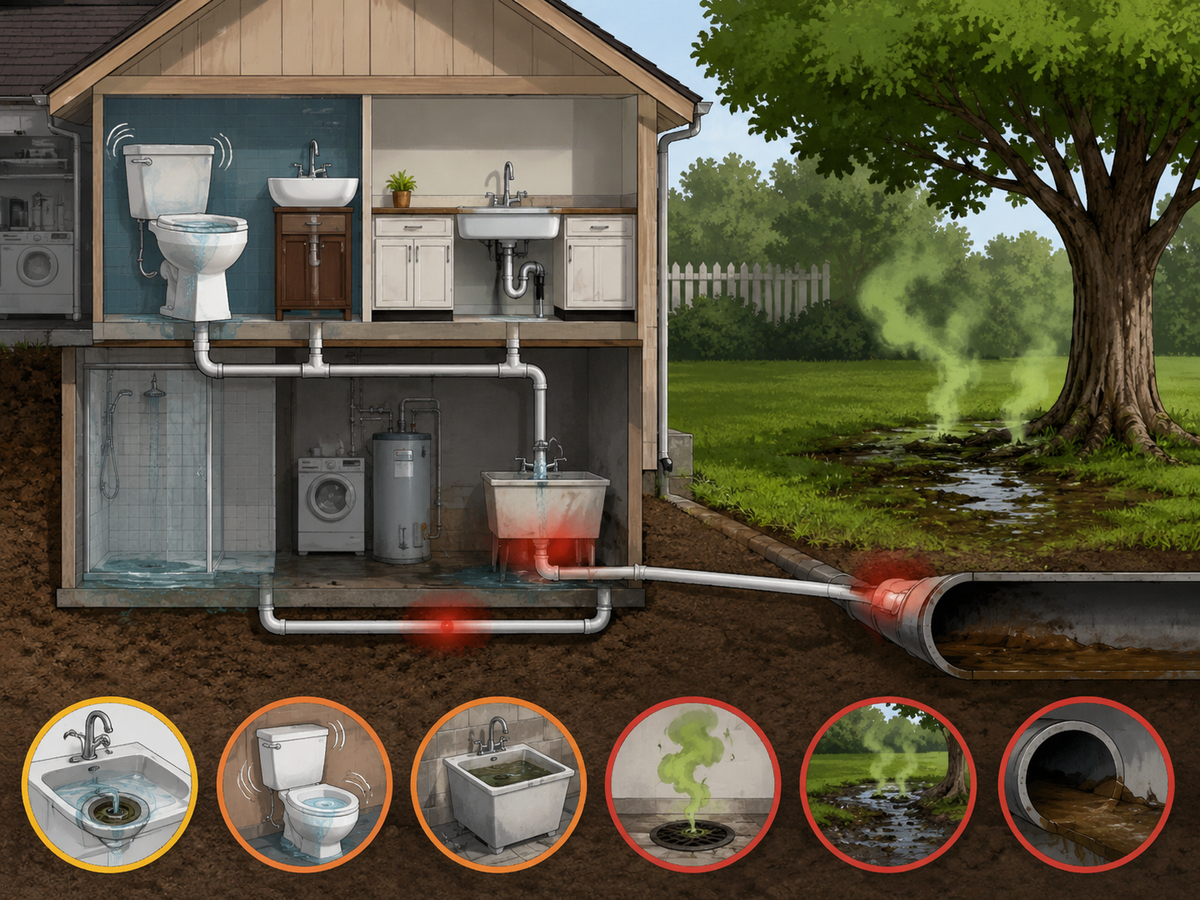
Señales de advertencia de que necesita una inspección de alcantarillado con cámara en 2026
Si tiene varios desagües lentos, olor a alcantarillado, inodoros que gorgotean, manchas húmedas en el jardín o agua que se acumula en el accesorio más bajo, una inspección de alcantarillado con cámara suele ser la forma más rápida de confirmar si la línea principal tiene raíces, agua estancada, una grieta, una junta desplazada o una obstrucción. Es muy útil antes de excavar o aprobar reparaciones.
El objetivo de una inspección de alcantarillado con cámara no es añadir una llamada de servicio más. El objetivo es dejar de adivinar. Para los propietarios, eso significa confirmar si el problema es una simple obstrucción del accesorio o un defecto de alcantarillado enterrado antes de pagar la excavación. Para los fontaneros, limpiadores de desagües, inspectores de viviendas y contratistas, eso significa documentar el defecto, localizarlo más rápidamente y presupuestar la reparación correcta sin depender del ensayo y error.
Las principales señales de advertencia suelen aparecer en más de un lugar
Las principales señales de advertencia de un problema en la línea de alcantarillado suelen ser a nivel de todo el sistema, no aisladas en un solo fregadero o un solo inodoro.
Esa distinción es importante. Un solo desagüe lento de un lavabo puede ser una obstrucción local. Un inodoro que burbujea cuando la lavadora desagua, una ducha del sótano que se atasca cuando otro accesorio está en uso, o varios desagües que se ralentizan al mismo tiempo, apuntan mucho más a un problema de la línea principal. This Old House enumera los malos olores, los sonidos de gorgoteo, la obstrucción simultánea de varios desagües, el reflujo de agua en duchas o bañeras y las manchas húmedas en el patio como señales de advertencia comunes de respaldo del alcantarillado.
Para los propietarios de viviendas y los usuarios de bricolaje, la pregunta práctica es sencilla: ¿los síntomas se están extendiendo por toda la casa? Si es así, una inspección con cámara suele decir más que los desatascos repetidos en un solo accesorio. Para los fontaneros y contratistas, el mismo patrón importa porque los síntomas en todo el sistema justifican un diagnóstico a nivel de línea, evidencia en video y, a menudo, la localización en superficie antes de la reparación.

| Señal de advertencia | Lo que suele sugerir | Cuando una cámara ayuda más |
|---|---|---|
| Múltiples desagües lentos | Restricción en la línea principal en lugar de un atasco local | Antes de una limpieza de desagües repetida |
| El inodoro gorgotea o el nivel del agua se mueve | Problema de ventilación o flujo de línea | Cuando los síntomas se repiten en varios accesorios |
| El agua se acumula en el accesorio más bajo | El alcantarillado principal no puede descargar normalmente | Inmediatamente, antes de usar más agua |
| Olor a alcantarillado en el interior o cerca del jardín | Las aguas residuales o el gas de alcantarillado no se mueven correctamente | Cuando el olor es persistente, no ocasional |
| Área del jardín húmeda, hundida o inusualmente verde | Fuga subterránea o filtración de alcantarillado | Antes de excavar o abrir zanjas |
| Acumulaciones recurrentes después de la limpieza | Intrusión de raíces, desplazamiento, comba o rotura | Para confirmar por qué el problema sigue regresando |
Lectura B2C vs. B2B de los mismos síntomas
Los propietarios de viviendas suelen preocuparse por si el síntoma significa "llamar ahora" o "esperar". La respuesta es que múltiples accesorios, respaldos repetidos, cambios en el jardín y olor a alcantarillado suelen justificar una inspección con cámara pronto, en lugar de tarde.
Los fontaneros, los limpiadores de desagües y los inspectores de viviendas suelen preocuparse por si el síntoma justifica la documentación. La respuesta es sí cuando el problema puede afectar a un presupuesto de reparación, una decisión de compra, una discusión sobre la garantía o un plan de excavación.
Volver arribaLas copias de seguridad recurrentes y los atascos repetidos suelen significar que la línea debe ser vista
Las copias de seguridad recurrentes y los atascos repetidos suelen significar que es hora de inspeccionar la línea misma, no solo de limpiarla de nuevo.
Angi afirma que las señales que indican que es hora de una inspección con cámara de la línea de alcantarillado incluyen atascos repetidos, obstrucciones persistentes o puntos húmedos en el patio. Esto es útil porque traza la línea entre las obstrucciones molestas comunes y una condición que sigue reapareciendo. Si un desagüe funciona durante una semana después de desatascarlo y luego falla de nuevo, la pregunta restante suele ser qué no resolvió el cable: raíces, una junta desplazada, incrustaciones de grasa, agua estancada o un colapso parcial.
Aquí también es donde la inspección con cámara evita un camino de reparación equivocado. Si el metraje muestra una obstrucción blanda y una tubería por lo demás sana, el siguiente paso puede ser la limpieza más el mantenimiento. Si el metraje muestra una junta separada, una intrusión masiva de raíces o agua estancada, repetir el mismo método de limpieza solo puede retrasar una reparación mayor.
Cambios en el patio, olor y copias de seguridad de nivel más bajo son señales más fuertes que un fregadero lento
Los cambios en el patio, el olor a alcantarillado y los atascos en el nivel más bajo son indicadores más fuertes de problemas subterráneos en el alcantarillado que un solo fregadero lento.

InterNACHI señala que un endoscopio de alcantarillado puede ser crítico cuando hay una depresión húmeda en el césped sobre la línea de alcantarillado o un reflujo hacia la casa. This Old House también señala los malos olores, las manchas húmedas en el patio y las aguas residuales que aparecen en los accesorios inferiores, como los desagües del sótano, las bañeras o los inodoros. Estos son los síntomas que con mayor frecuencia hacen que el problema pase de "molesto" a "confirmar el estado de la línea ahora".
Para los propietarios de viviendas, la regla más práctica es la siguiente: si el accesorio más bajo de la casa muestra el síntoma, asuma que el problema puede estar en la línea principal hasta que se demuestre lo contrario. Para los fontaneros y contratistas de restauración, la misma regla es importante porque los atascos de nivel inferior crean riesgo de contaminación y pueden convertir un retraso en el diagnóstico en un trabajo de limpieza.
Por qué importan los accesorios más bajos
Los accesorios más bajos suelen mostrar el primer atasco visible porque las aguas residuales se mueven por gravedad. Cuando la línea principal no puede transportar el flujo, el atasco a menudo aparece en los desagües del sótano, duchas inferiores, desagües de lavandería o inodoros del primer piso antes de aparecer arriba.
Volver arribaUna inspección de alcantarillado con cámara es valiosa porque confirma el tipo de defecto
Una inspección de alcantarillado con cámara es valiosa porque muestra si el problema son raíces, una grieta, agua estancada, un desplazamiento, grasa o un colapso.
Los estándares de inspección de alcantarillado de InterNACHI exigen que los inspectores informen sobre grietas visibles, intrusión de raíces de árboles observada, desplazamientos de más de un cuarto de pulgada, más de 1 pulgada de agua estancada, obstrucciones o restricciones, tuberías aplastadas, tuberías rotas, tuberías separadas, óxido o incrustaciones excesivas y tuberías colapsadas. Esa lista es útil porque relaciona los síntomas con las categorías de defectos reales que afectan la planificación de la reparación.
Para un propietario, eso significa que la inspección puede separar "limpiar y monitorear" de "reparar y localizar". Para un fontanero o contratista de desagües, significa que el metraje puede respaldar un alcance de trabajo más específico: reparación puntual, excavación, discusión sobre revestimiento, mantenimiento de raíces o planificación de reemplazo. Para los inspectores de viviendas y los compradores de viviendas, significa que el informe está vinculado a defectos visibles en lugar de a una sospecha generalizada.
- Las obstrucciones repetidas pueden deberse a raíces, acumulación de grasa o una comba que atrapa los residuos.
- El gorgoteo más un flujo lento puede deberse a una restricción o agua estancada.
- Las manchas húmedas en el jardín pueden deberse a una grieta, separación o sección colapsada.
- Las llamadas frecuentes después de la limpieza pueden deberse a un defecto estructural no resuelto.
Compradores de viviendas, inspectores y contratistas a menudo necesitan una cámara antes de tomar grandes decisiones

Los compradores de viviendas, inspectores y contratistas a menudo necesitan una inspección con cámara porque la tubería lateral del alcantarillado puede cambiar una decisión de compra, una oferta de reparación o una decisión de responsabilidad.
InterNACHI afirma que la información de una inspección con cámara de alcantarillado puede ser muy útil para los propietarios de viviendas, así como para los posibles compradores de viviendas, y afirma que una inspección de alcantarillado puede revelar obstrucciones, daños en las tuberías y otros problemas. También señala que, según la zona, las tarifas de inspección de alcantarillado para los inspectores pueden oscilar entre $100 y $250. Esto hace que la inspección de alcantarillado sea relevante no solo como un diagnóstico de reparación, sino también como un flujo de trabajo de diligencia debida e informes.
Para los lectores B2C, la conclusión es que una inspección de alcantarillado con cámara puede valer la pena encargarla antes de comprar una casa antigua, después de atascos recurrentes o antes de aprobar una reparación importante del alcantarillado. Para los lectores B2B, la conclusión es que el trabajo con cámara se vuelve más valioso cuando se necesita documentación repetible, metraje visible para el cliente y una entrega más limpia para la localización o excavación.
- Antes de comprar una casa antigua o una propiedad con un historial de alcantarillado poco claro
- Después del segundo o tercer atasco repetido, no el sexto
- Antes de aprobar la excavación o el reemplazo completo
- Después de la limpieza de raíces, para confirmar si la línea sigue siendo estructuralmente sólida
- Antes de emitir una cotización de reparación que dependa del metraje y la ubicación del metraje
Elegir entre contratar a un profesional, alquilar una cámara o poseer una depende de la frecuencia
La elección entre contratar a un profesional, alquilar una cámara o poseer una depende principalmente de la frecuencia con la que necesite el metraje y de si también necesita un diagnóstico.
La mayoría de los propietarios de viviendas aún obtienen el mejor resultado contratando a un fontanero calificado o a un inspector de alcantarillado para un diagnóstico único. El valor no es solo la cámara; es la interpretación, el metraje y la recomendación para el siguiente paso. Los usuarios de bricolaje repetidos, los propietarios, los inversores inmobiliarios y los inspectores de viviendas tienen un argumento más sólido para la propiedad porque usan la herramienta con la suficiente frecuencia como para beneficiarse de tenerla disponible bajo demanda.
La línea actual de Powerwill cubre ambos casos de uso. El L09D1 comienza alrededor de $799 y se posiciona como una opción de cruce de propietario a fontanero con metraje autonivelante y opciones de cable de 65 a 164 pies para tuberías residenciales de aproximadamente 1 a 4 pulgadas. El L09D2 comienza alrededor de $899 y se posiciona para trabajos de servicio más frecuentes, con metraje autonivelante y opciones de clase de hasta 230 pies para desagües domésticos de aproximadamente 1.5 a 6 pulgadas. El 7DVE comienza alrededor de $855.99 como un kit de servicio compacto. Para tiradas más largas y profesionales, el 10DX1 comienza alrededor de $1399 con un monitor de 10 pulgadas, contador de distancia y flujo de trabajo de localizador de 512Hz, mientras que el 10DZ comienza alrededor de $1499 como un sistema de inspección profesional de mayor alcance.
| Modelo | Suele encajar con | Normalmente no encaja con |
|---|---|---|
| L09D1 | Propietarios, usuarios de bricolaje recurrentes, fontaneros residenciales que trabajan con líneas más pequeñas | Tramos municipales largos o equipos que necesitan la bobina más larga todos los días |
| L09D2 | Servicio de alcantarillado doméstico rutinario, uso mixto propietario/profesional, diagnóstico más frecuente | Compradores que solo necesitan una inspección este año |
| 7DVE | Kits de campo compactos, configuraciones de servicio más pequeñas, transporte diario más ligero | Trabajos especializados de largo alcance |
| 10DX1 | Tramos más largos, presupuestos con distancia de metraje, planificación de reparaciones impulsada por el localizador | Uso residencial único con presupuesto ajustado |
| 10DZ | Inspecciones profesionales detalladas con mayor alcance | Solución de problemas sencilla y puntual para el propietario |
Qué hacer antes de que llegue el técnico
Lo que hay que hacer antes de que llegue el técnico se refiere principalmente al acceso, no a la reparación.
Las preguntas y respuestas sobre la inspección de alcantarillado con cámara de Angi dicen que el profesional necesitará acceso al desagüe de limpieza del alcantarillado y señalan que algunas casas no tienen uno, en cuyo caso puede ser necesario retirar un inodoro para acceder. InterNACHI también dice que los propietarios deben evitar usar fregaderos, duchas, bañeras, lavadoras, lavavajillas o inodoros durante la inspección del alcantarillado. Estos son detalles prácticos que ayudan a que la inspección se realice de manera eficiente y segura.
- Localice el desagüe de limpieza si sabe dónde está.
- Detenga el uso intensivo de agua antes y durante la inspección.
- Dígale al técnico si los atascos afectan a un accesorio o a varios.
- Observe si los síntomas son interiores, exteriores o ambos.
- Pregunte si se incluyen metraje, fotos fijas y notas de distancia.
Puntos clave
- Múltiples desagües lentos, atascos en niveles inferiores, olor a alcantarillado, puntos húmedos en el jardín y atascos recurrentes son las señales de advertencia más claras de que la línea principal puede necesitar una inspección con cámara.
- La limpieza repetida sin imágenes a menudo retrasa la respuesta real, porque el problema subyacente pueden ser raíces, una comba, una junta desplazada o una rotura estructural.
- Una inspección de alcantarillado con cámara es más útil cuando cambia una decisión: si limpiar, reparar, localizar, negociar la compra de una vivienda o aprobar una excavación.
- Los propietarios de viviendas suelen beneficiarse más de contratar a un profesional para un diagnóstico único, mientras que los inspectores, propietarios, fontaneros y contratistas tienen un argumento más sólido para poseer una cámara.
- La línea de productos de Powerwill se divide naturalmente por caso de uso: L09D1 y L09D2 para trabajos residenciales y de uso mixto, 7DVE para uso de servicio compacto, y 10DX1 o 10DZ para flujos de trabajo profesionales de mayor alcance.
Preguntas frecuentes: Señales de advertencia de que necesita una inspección de alcantarillado con cámara
¿Cómo sé si necesito una inspección de alcantarillado con cámara o simplemente una limpieza de desagües?
Normalmente, necesita una inspección de alcantarillado con cámara cuando el síntoma afecta a varios accesorios, sigue reapareciendo después de la limpieza o se manifiesta como olor a alcantarillado, filtraciones en el jardín o atascos en el nivel inferior. Un solo atasco aislado en un fregadero puede seguir siendo local, pero los síntomas repetidos en la línea principal suelen justificar ver la tubería antes de gastar más dinero a ciegas.
¿Es suficiente el olor a alcantarillado fuera de la casa para programar una inspección con cámara?
Sí, el olor persistente a alcantarillado fuera o cerca del desagüe es una razón razonable para investigar, especialmente si viene acompañado de manchas húmedas en el jardín, desagües lentos o atascos en el interior. Un olor por sí solo no prueba una línea rota, pero es lo suficientemente fuerte como para justificar verificar si las aguas residuales se están moviendo correctamente.
¿Qué señales de advertencia son más importantes para los compradores de vivienda?
Los compradores de vivienda deben prestar especial atención a un historial recurrente de drenajes, casas antiguas con registros de alcantarillado desconocidos, áreas del patio húmedas o hundidas sobre la tubería lateral, y cualquier signo de obstrucción en los accesorios de plomería inferiores. Una inspección de alcantarillado es especialmente útil cuando la condición de la línea de alcantarillado podría afectar la negociación, el presupuesto de reparación o la decisión de cerrar la compra.
¿Puede un propietario usar una cámara de alcantarillado en lugar de llamar a un fontanero?
Sí, pero la idoneidad depende de la frecuencia y el nivel de confianza. Un propietario que realiza revisiones repetidas en propiedades de alquiler personales o propiedades antiguas puede justificar un kit combinado como el Powerwill L09D1 o L09D2, mientras que un comprador de una sola vez suele obtener un mejor valor contratando a un profesional que pueda interpretar las imágenes y recomendar el siguiente paso de reparación.
¿Cuándo necesita un fontanero o contratista la localización de 512Hz, no solo el video?
Un fontanero o contratista necesita la localización de 512Hz cuando el trabajo requiere marcar el punto de reparación desde la superficie antes de excavar, perforar o elaborar un presupuesto preciso. Ahí es donde los sistemas profesionales como el Powerwill 10DX1, 10DZ o las configuraciones de clase L09D2 listas para localizador son más útiles que una simple inspección solo con video.
Lecturas relacionadas de Powerwill
Fuentes
- This Old House, Qué hacer cuando tu alcantarillado se atasca
- Angi, 5 preguntas que hacer sobre las inspecciones con cámara de alcantarillado
- Angi, ¿Cuánto cuesta una inspección con cámara de línea de alcantarillado? [Datos de 2026]
- InterNACHI, Inspecciones con cámara de alcantarillado para inspectores de viviendas
- InterNACHI, Estándares de práctica de inspección con cámara de alcantarillado
Comments
No comments