
Inspección de la línea séptica: Cómo detectar a tiempo problemas de raíces, congelación y tuberías de salida
 MichaelCarter
0 comments
MichaelCarter
0 comments
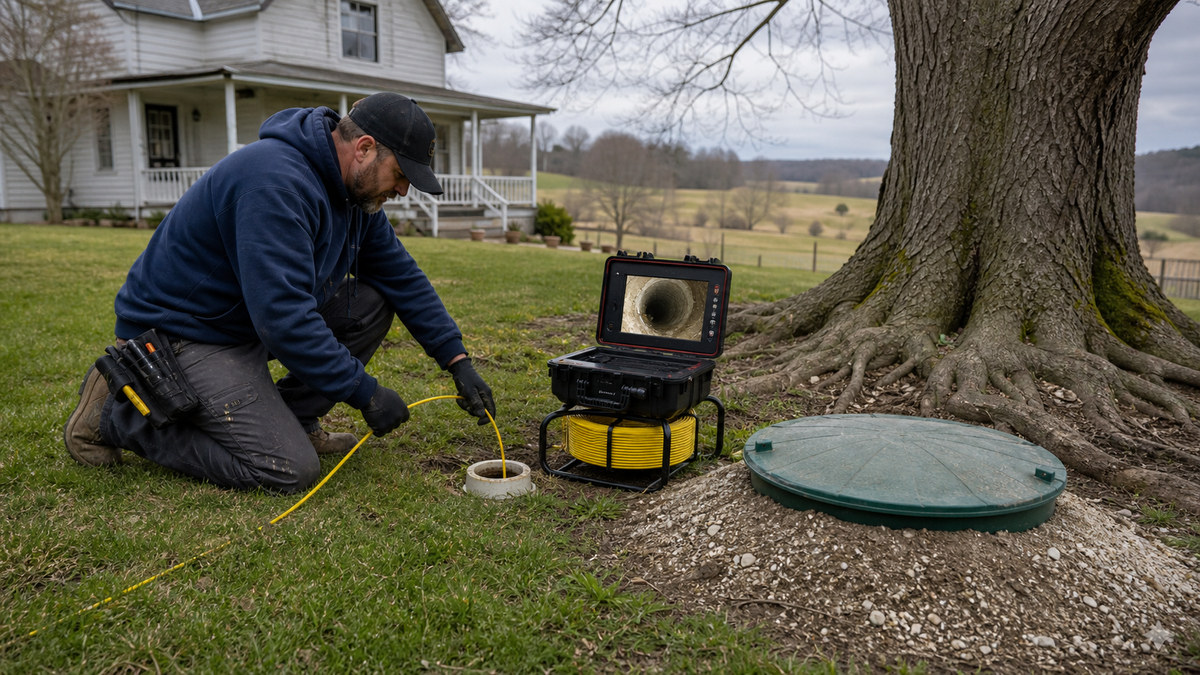
Si su hogar utiliza un sistema séptico, los desagües lentos pueden parecer más graves porque el problema podría estar fuera de la casa y bajo tierra. Puede que el tanque necesite mantenimiento, pero la línea entre la casa y el tanque también podría estar bloqueada, agrietada, congelada, combada o invadida por raíces. La guía de la EPA de EE. UU. para el cuidado de sistemas sépticos explica que un tanque séptico incluye una salida en forma de T que evita que lodos y natas salgan del tanque y lleguen al campo de drenaje. Esa protección de salida es precisamente la razón por la que el estado de la línea importa: si la entrada, la salida o el recorrido de la tubería están comprometidos, el bombeo por sí solo podría no solucionar el síntoma.

No asuma que cada respaldo séptico es un tanque lleno
Un tanque lleno o mal mantenido puede causar desagües lentos, pero no es la única explicación. La tubería desde la casa hasta el tanque puede acumular raíces, agrietarse en una unión, congelarse en una sección poco profunda o combarse lo suficiente como para retener agua. El lado de la salida también puede restringirse si sólidos o natas se mueven donde no deberían.
La guía de la EPA sobre fallas indica a propietarios y profesionales que busquen signos de respaldo, como manchas en el tanque por encima de la tubería de salida, y que evalúen el campo de drenaje en busca de agua estancada o drenaje desigual. Estas son pistas a nivel de sistema, pero las imágenes de la cámara añaden evidencia a nivel de tubería.
Para un propietario, esta distinción cambia la siguiente llamada. Si el tanque está atrasado, bombee e inspecciónelo. Si el bombeo no restaura el flujo normal, la ruta de la línea necesita atención. Una cámara le ayuda a evitar culpar al tanque cuando el defecto es en realidad una línea de entrada con raíces o una sección de salida combada.
↑ Volver arribaCómo se ven los problemas de raíces, congelamiento y salida en la cámara
Las raíces a menudo comienzan como hebras delgadas en una unión, luego se convierten en una estera que atrapa papel y sólidos. El daño por congelación puede manifestarse como separación, agrietamiento, deformación o una sección que ya no drena completamente después del deshielo. Las restricciones de salida pueden mostrar escombros cerca del área del tanque, un flujo que se estanca o sólidos donde no deberían estar.
La guía de inspección de cámaras de alcantarillado de HomeGuide enumera desagües lentos, malos olores, depresiones húmedas en el césped y césped crecido en una zona como signos que pueden justificar una inspección con cámara de alcantarillado. En una propiedad con sistema séptico, esos signos merecen una atención especial porque la ruta hacia el tanque y el campo de drenaje es parte del sistema de aguas residuales del hogar.
Un paso de cámara no necesita encontrar un colapso dramático para ser útil. Un pequeño punto de entrada recurrente de raíces a la misma distancia de la casa puede explicar por qué los síntomas siguen regresando después de la limpieza. Una pequeña zona baja que retiene agua también puede explicar por qué el papel y los sólidos se acumulan después de un uso normal.
↑ Volver arriba¿Comprando una casa con sistema séptico? Convierta esto en un paso de diligencia debida
La inspección séptica no es solo para hogares que ya tienen síntomas obvios. La Guía para Nuevos Compradores de Vivienda de la EPA para sistemas sépticos enmarca la inspección como parte de la protección de una de las mayores inversiones que un comprador realizará y advierte que los sistemas sépticos pueden ser costosos de reparar o reemplazar.
Un comprador debe saber si la plomería visible dentro de la casa está conectada a una ruta subterránea saludable. Las imágenes de la cámara de la línea desde la casa hacia el tanque pueden revelar intrusión de raíces, puntos bajos, tuberías agrietadas o una restricción sospechosa antes del cierre. Esto es especialmente útil para casas rurales con árboles maduros, tuberías viejas, registros limitados o paisajismo reciente.
Si está vendiendo, las imágenes previas a la lista también pueden reducir la incertidumbre. Brindan a los compradores un registro de cómo se veía la línea accesible en una fecha específica y pueden reducir las sorpresas de negociación de último minuto. También ayuda a separar el mantenimiento normal del tanque de un defecto en la tubería que podría convertirse en una objeción de precio.
↑ Volver arribaCómo la inspección puede reducir la incertidumbre en excavaciones y reparaciones
Excavar se vuelve costoso cuando nadie sabe dónde está el defecto. Las imágenes de la cámara pueden mostrar si el problema se encuentra cerca de la casa, cerca de la entrada del tanque, cerca de la salida o en algún punto intermedio. Si la cámara incluye una sonda y el propietario tiene un localizador compatible, el área de reparación se puede delimitar aún más.
La guía de inspección con cámara de Angi de 2026 señala que los costos de inspección dependen de la longitud de la tubería, la dificultad de acceso y la tecnología de la cámara. Esa misma lógica se aplica a la reparación de sistemas sépticos: más incertidumbre generalmente significa más mano de obra y más jardín afectado. Las imágenes no son una reparación, pero pueden evitar que la reparación comience en el lugar equivocado.
Las mejores notas de inspección incluyen el punto de acceso, la distancia estimada, el estado visible y si la cámara pudo continuar más allá del hallazgo. Esas notas ayudan a un contratista de sistemas sépticos a decidir qué equipo y mano de obra llevar.
↑ Volver arribaModelo Powerwill, ajuste y decisión del comprador
Para los propietarios que necesitan inspeccionar la línea desde una limpieza hacia el tanque, el Powerwill L09D1 es la referencia de modelo verificada más relevante. La guía de selección oficial lo enumera con una pantalla de 9 pulgadas, DVR autonivelante, contador de distancia, soporte para localizador de 512 Hz, varilla de empuje delgada de 5 mm y opciones de cable de hasta 164 pies para líneas residenciales de 2 a 6 pulgadas, con precios desde $799.
Para recorridos rurales más largos, el 10DX1 podría ser más adecuado. La guía de selección de Powerwill lo enumera como un sistema todo en uno de 264 pies para líneas de alcantarillado principales de 2 a 12 pulgadas, con precios desde $1,399; la página de colección enumera variantes del 10DX1 desde $1,304.43 hasta $1,630.77. Si ya posee una cámara compatible y principalmente necesita localización, el kit receptor de 512 Hz de Powerwill se vende por separado a $372.95.
No compre solo por el precio. Compre por longitud de línea, punto de acceso, diámetro de la tubería y si necesita datos de distancia y localización. Una ruta séptica rural a menudo recompensa un cable más largo y un mejor seguimiento de la ubicación más que una cámara corta solo para interiores.
↑ Volver arribaCuándo llamar a un profesional de sistemas sépticos
Nunca entre en un tanque séptico ni considere el trabajo en espacios confinados como un proyecto de bricolaje. Llame a un profesional de sistemas sépticos para la entrada al tanque, el bombeo, la reparación de deflectores, la evaluación del campo de drenaje, la aparición de aguas residuales o cualquier situación que implique exposición a aguas residuales o códigos locales.
Utilice sus imágenes para que esa llamada profesional sea más productiva. Un clip que muestre raíces en una unión, agua estancada en la línea o escombros cerca de la salida es mucho más útil que decir que los desagües están lentos. La guía de la EPA sobre fallas enfatiza la evaluación de los signos de respaldo y las condiciones del campo de drenaje, por lo que las imágenes de la cámara deben respaldar un diagnóstico profesional en lugar de reemplazarlo.
↑ Volver arribaPuntos clave
- El bombeo no es la única respuesta para el sistema séptico. Si los desagües lentos regresan después del bombeo, el recorrido de la línea o el área de salida pueden ser el problema real. La inspección con cámara ayuda a diferenciar el volumen del tanque de la condición de la tubería.
- Las raíces y el congelamiento pueden generar síntomas recurrentes. Pequeños puntos de entrada de raíces, juntas agrietadas y secciones dañadas por el congelamiento pueden no ser obvias desde la superficie, pero pueden mostrarse claramente en las imágenes.
- Los compradores de viviendas deben inspeccionar antes del cierre. La guía de la EPA para compradores de viviendas considera la inspección del sistema séptico como parte de la protección de una inversión importante. Las imágenes de la cámara añaden evidencia del recorrido de la tubería a la inspección del tanque.
- Las notas de distancia reducen la incertidumbre en la excavación. Saber si el problema está cerca de la casa, la entrada, la salida o a medio camino entre ellos ayuda a un contratista a planificar una reparación más pequeña e inteligente.
- Adapte el sistema Powerwill a la ruta. El L09D1 se adapta a muchas líneas residenciales; el 10DX1 es mejor para tramos rurales más largos; un receptor de 512 Hz puede soportar la localización cuando el sistema de cámara es compatible.
Preguntas frecuentes
¿Puedo inspeccionar una línea séptica yo mismo?
Puede inspeccionar desde un punto de limpieza seguro y accesible, pero nunca entre en un tanque o espacio confinado. El bombeo, el trabajo en el tanque y las reparaciones sensibles al código deben ser realizados por profesionales calificados de sistemas sépticos.
¿Pueden las raíces dañar las líneas sépticas?
Sí. Las raíces buscan humedad y pueden penetrar en uniones de tuberías viejas, agrietadas o mal selladas. Las imágenes de la cámara ayudan a mostrar si las raíces son la causa de las restricciones recurrentes.
¿Debería hacer una inspección con cámara del sistema séptico antes de comprar una casa rural?
Sí, especialmente si la propiedad tiene árboles maduros, tuberías antiguas, registros limitados o síntomas recientes de humedad en el jardín. La EPA recomienda la inspección del sistema séptico como parte de la diligencia debida del comprador.
¿Cuánto cuesta una inspección con cámara de alcantarillado?
HomeGuide reporta un promedio de $125 a $500 por una inspección con cámara de alcantarillado, mientras que Angi reporta un rango más amplio en 2026 basado en la longitud de la línea, el acceso y el tipo de cámara.
¿Qué modelo de Powerwill se ajusta a las comprobaciones de líneas sépticas?
Para muchas rutas residenciales, el L09D1 es el punto de partida porque Powerwill lo lista para líneas de 2 a 6 pulgadas con hasta 164 pies de cable. Para rutas más largas, compare el 10DX1.
¿Necesito localización de 512 Hz para la inspección séptica?
Ayuda cuando necesitas marcar la ubicación del cabezal de la cámara desde la superficie. Las configuraciones Powerwill L09D1 y 10DX1 incluyen soporte de localización para los compradores que necesitan ese flujo de trabajo.
¿Pueden las imágenes de la cámara reemplazar una inspección séptica?
No. Las imágenes ayudan a documentar el estado de las tuberías accesibles, pero una inspección séptica completa puede incluir el tanque, deflectores, campo de drenaje, registros y comprobaciones de cumplimiento local.
Un siguiente paso práctico
Si los problemas recurrentes de drenaje le están costando tiempo, dinero o confianza, compare la colección de cámaras de alcantarillado Powerwill. Comience con el diámetro de la tubería, la longitud de la línea, el punto de acceso y si necesita soporte de localización de 512 Hz, luego elija el sistema más pequeño que le brinde imágenes claras e información de distancia útil.
Comments
No comments