
Cámara de Tuberías con Luz: Por Qué los LEDs Ajustables son Cruciales para una Inspección Precisa de Tuberías
 Michael Carter
0 comments
Michael Carter
0 comments
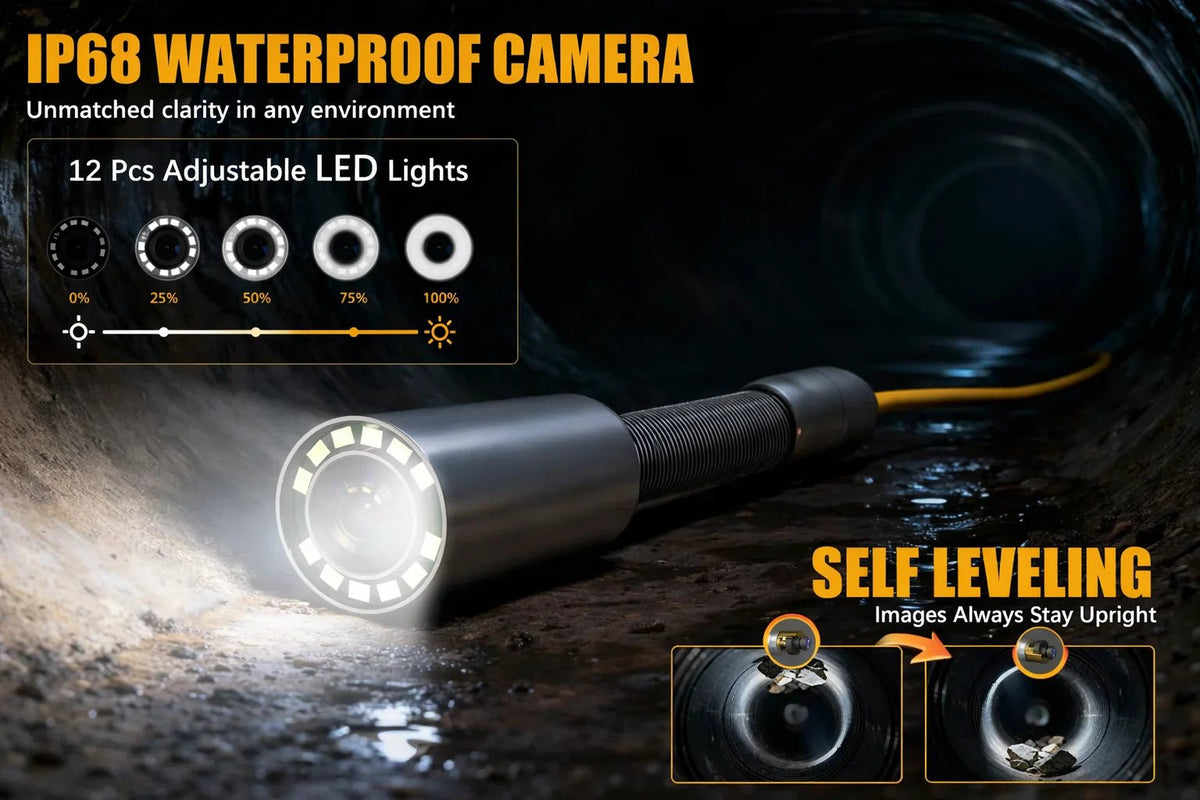
Una cámara para tuberías con luz funciona mejor cuando los LED son ajustables, no solo brillantes. Dentro de una tubería mojada y reflectante, la luz máxima fija puede borrar los mismos detalles que se intentan inspeccionar. La propia guía de diámetro de cámaras para tuberías de Powerwill explica por qué la iluminación cambia con el tamaño de la cámara: los cabezales de 17 mm se enumeran con 8 LED ajustables para tuberías de 1 a 3 pulgadas, los cabezales de 23 mm con 12 LED integrados para tuberías de 2 a 4 pulgadas y los cabezales de 31 mm con 24 LED para tuberías de 3 a 8 pulgadas. Esta no es una escalada aleatoria. Demuestra que una inspección precisa de tuberías depende de ajustar la salida de luz al diámetro de la tubería, la distancia de visualización, la humedad y la reflectividad del material de la pared.

La grabación precisa de tuberías depende de una iluminación controlada. Los LED ajustables ayudan a preservar la textura, el contraste y la visibilidad de los defectos en líneas húmedas y reflectantes.
Por qué la luz fija falla dentro de tuberías reales
El interior de una tubería es uno de los peores lugares para una iluminación incontrolada. La superficie puede estar mojada, lisa, incrustada, embarrada o parcialmente sumergida. Una cámara que proyecta la misma luminosidad todo el tiempo puede crear un resplandor blanco en el PVC, reflejar la luz en el agua estancada o aplanar los detalles en incrustaciones y grietas. El resultado es una grabación técnicamente brillante pero difícil de interpretar.
Los LED ajustables solucionan esto permitiendo al operador ajustar la luz anular a la escena real. Si la pared está cerca y es reflectante, se atenúa la luz para recuperar el contraste. Si la tubería se abre o la escena se oscurece, se recupera la luminosidad. Así es como se preserva la textura visible en lugar de difuminar todo en un brillo borroso.
Los modelos 7DVE y 7DA de Powerwill enfatizan 12 LED ajustables emparejados con una lente de 120 grados. Esta combinación es importante porque una vista más amplia abarca más pared de la tubería, pero también necesita luz controlada para mantener el encuadre legible.
Volver arribaQué indican las especificaciones actuales sobre la iluminación según el tamaño de la tubería
| Tamaño del cabezal de la cámara | Ajuste típico de la tubería | Ejemplo de iluminación | Lo que eso significa |
|---|---|---|---|
| 17 mm | Tuberías de 1-3 pulgadas | 8 LED ajustables | Cabezal compacto, salida de luz más ligera, mejor manejo de curvas para líneas más pequeñas |
| 23 mm | Tuberías de 2-4 pulgadas | 12 LED incorporados | Punto ideal residencial que equilibra brillo y maniobrabilidad |
| 31 mm | Tuberías de 3-8 pulgadas | 24 LED | Mayor iluminación para tuberías más grandes y oscuras, pero menos flexibilidad |
| 50 mm | Tuberías de 8-15 pulgadas | 5 niveles de brillo ajustables | Los sistemas de tuberías grandes necesitan un control más fuerte, no solo más luz bruta |
Estos ejemplos provienen directamente de la guía de compra por diámetro de Powerwill y explican un error común de los propietarios. La gente ve un cabezal comercial brillante de 31 mm y asume que debe ser mejor para cada trabajo. En realidad, puede ser demasiado grande para curvas residenciales más pequeñas e innecesario para líneas normales de 2 a 4 pulgadas.
La mejor interpretación es que la iluminación se ajusta al trabajo. Una línea de ramal pequeña necesita un cabezal compacto con suficiente luz, pero no tanta como para que las paredes cercanas se quemen. Una tubería principal residencial a menudo se beneficia de la clase de 23 mm, donde 12 LED y una carcasa impermeable ofrecen un punto intermedio estable. Las tuberías principales y comerciales más grandes necesitan mucha más iluminación porque la cámara está físicamente más lejos de los defectos que se necesitan ver.
Volver arribaDónde los LED ajustables marcan la mayor diferencia
Los LED ajustables son más importantes en cuatro escenarios comunes. Primero, en PVC o ABS liso, donde demasiada luz puede crear puntos calientes que ocultan pequeñas grietas o desplazamientos de juntas. Segundo, en agua estancada, donde el resplandor puede hacer desaparecer el fondo de la línea. Tercero, en hierro fundido rugoso, donde se necesita suficiente luz para separar la incrustación de la pérdida real de sección. Cuarto, cerca de raíces y trapos, donde las sombras y la superposición pueden hacer que un bloqueo blando parezca sólido.
Por eso, un sistema de tuberías de largo recorrido como el Powerwill L09D2 utiliza 12 LED regulables y una lente autonivelante, mientras que el cabezal de cámara Powerwill de 23 mm se enumera con 12 LED blancos, una vista de 140 grados, cubierta de lente de zafiro y carcasa de acero inoxidable. El operador necesita suficiente luz para ver, pero también suficiente control para mantener claras la orientación y los bordes de los defectos.
Cómo comprar una cámara para tuberías con luz para un trabajo preciso
Para la mayoría de los propietarios y muchos fontaneros, el objetivo práctico es una cámara del tamaño adecuado para desagües residenciales estándar con luz ajustable, no el anillo de iluminación más grande del mercado. La guía de selección de Powerwill posiciona el L09D1 y sistemas similares de la clase de 23 mm como ideales para trabajos residenciales típicos de 2 a 6 pulgadas, que es donde una iluminación precisa importa más que una cobertura extrema del diámetro de la tubería.
Si su trabajo consiste principalmente en tuberías principales y ramales residenciales, busque cuatro cosas juntas: LED ajustables, impermeabilización IP68, autonivelación u orientación estable, y suficiente longitud de cable para su propiedad. Si necesita localizar defectos para excavar, añada una configuración lista para un localizador de 512 Hz. Si sus recorridos son más grandes o más largos, aumente el tamaño del cabezal solo cuando la tubería lo exija.
El objetivo no es comprar la cámara más brillante. El objetivo es comprar una cámara para tuberías que le permita mantener los detalles en condiciones cambiantes. Eso es lo que convierte las imágenes en un diagnóstico confiable en lugar de un misterio brillante.
Volver arribaPuntos clave
- Los LED ajustables son importantes porque las tuberías húmedas y reflectantes pueden ocultar defectos cuando la luz se mantiene fija en un nivel de brillo.
- Las especificaciones actuales del producto muestran que la iluminación cambia con el tamaño del cabezal de la cámara porque las tuberías más grandes y las distancias de visión más largas necesitan diferentes estrategias de iluminación.
- El deslumbramiento en el PVC, el agua estancada, la textura del hierro fundido y las líneas con muchas raíces son las condiciones en las que el control de la iluminación mejora más la precisión.
- Un comprador residencial suele obtener el mejor equilibrio con una cámara para tuberías de clase de 23 mm con LED ajustables, impermeabilización y orientación estable.
- Para un trabajo preciso de inspección antes de la reparación, elija una cámara para tuberías Powerwill cuyo control de iluminación coincida con el tamaño de su tubería y la distancia de inspección, en lugar de buscar la especificación más brillante.
Preguntas frecuentes
¿Por qué son importantes los LED ajustables en una cámara para tuberías?
Porque la misma tubería puede cambiar de paredes reflectantes cercanas a secciones abiertas más oscuras en segundos. La luz ajustable te ayuda a mantener el contraste en lugar de borrar el encuadre.
¿Una cámara para tuberías más brillante es siempre más precisa?
No. El brillo sin control puede crear deslumbramiento, especialmente en PVC húmedo o agua estancada. La precisión proviene de detalles utilizables, no del brillo máximo.
¿Cuántos LED son típicos para una cámara de tuberías residencial?
Muchos sistemas residenciales de 23 mm utilizan unos 12 LED porque es un buen equilibrio para tuberías de 2 a 4 pulgadas. La respuesta exacta todavía depende del tamaño de la tubería y del diseño de la cámara.
¿Cuándo debo optar por un cabezal de cámara más grande con más iluminación?
Aumente el tamaño cuando el diámetro de su tubería, la longitud del recorrido o la carga de trabajo comercial lo justifiquen. No aumente el tamaño solo porque un cabezal más grande tenga más LED en papel.
¿Qué modelo de Powerwill es adecuado para una inspección precisa de tuberías residenciales?
El L09D1, 7DA, 7DVE y L09D2 son todos prácticos según la longitud de la línea y si necesita localización. El tema compartido es la iluminación ajustable más el hardware real de inspección de tuberías.
Conclusión
Dentro de una tubería, la visibilidad es un problema de control antes que un problema de brillo. Los LED ajustables son los que permiten a una cámara preservar el contraste, la forma y los bordes de los defectos cuando el entorno cambia constantemente.
Si desea imágenes más claras de tuberías residenciales y menos conjeturas erróneas, comience con la colección de cámaras de alcantarillado de Powerwill y elija el modelo cuya iluminación ajustable, tamaño de cabezal y longitud de cable se adapten a sus tuberías reales.
Volver arribaFuentes
- Guía de compra de cámaras para tuberías de Powerwill por diámetro de cámara
- Guía de selección de cámaras de alcantarillado de Powerwill
- Cámara de alcantarillado Powerwill 7DA
- Cámara de alcantarillado Powerwill 7DVE
- Cámara de inspección de alcantarillado Powerwill L09D2
- Cabezal de cámara de alcantarillado Powerwill de 23 mm
Comments
No comments