
Underground Downspout Drain Line Repair: When Inspection Saves Unnecessary Digging
 Michael Carter
0 comments
Michael Carter
0 comments
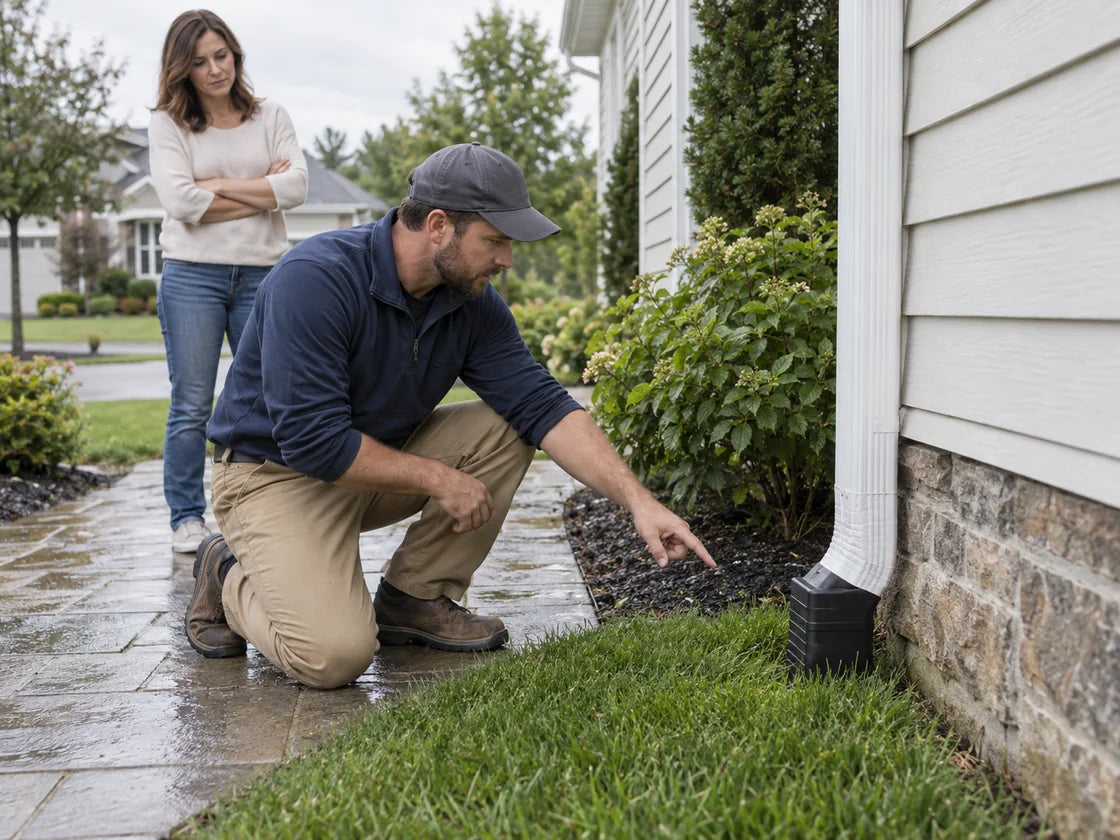
Underground downspout drain line repair should begin with a documented repair question, not an assumed trench route. Ask the contractor to identify the affected section, explain the evidence supporting the proposed work, and describe how completion will be checked. A suitable camera inspection can contribute evidence from the pipe it reaches. It does not clear a blockage, establish every unseen condition, or guarantee that excavation will be unnecessary.
Define what the repair proposal is meant to accomplish
Start by turning “fix the drain” into a specific outcome. This guide is for homeowners reviewing work on private residential roof-drainage piping. It is a planning checklist for a conversation with a qualified provider, not an installation specification or a municipal drainage procedure.
Before discussing construction, write down which downspout is involved, the reported problem, and the known discharge destination. Use a simple label such as “rear patio corner” throughout the paperwork. If the destination or route is unknown, preserve that uncertainty in the request instead of sketching a guessed connection as a confirmed fact.
Then ask the contractor to state the purpose of each proposed task. Is the first visit intended to investigate an unresolved problem? Is the proposed work meant to address a documented defect in a particular section? Does the company recommend changing the arrangement, and if so, what assessment supports that recommendation? Those are different decisions and deserve separate explanations.
If your current evidence is only an overflowing connection, begin with our guide to a suspected underground downspout clog. If you already have findings and a repair proposal, use the steps below to review its scope and the promised handover.
↑ Back to topRequest evidence that connects the finding to the proposed work
Ask what was observed, where it was observed, and how it supports the repair extent. A useful review separates the inspection record from the recommendation. Request the original recording when available, plus the inspector's explanation of the relevant section and any limits on the inspection.
Our suggested evidence packet contains the entry point, direction of inspection, a labeled route sketch, useful still images, and a list of sections not inspected. Ask what reference point any reported distance uses. Also ask the contractor to explain how the proposed work area will be identified on the property. Treat those as explicit questions rather than assuming the video includes every location detail.
For example, a report might say “inspection ended at an obstruction; the remaining run was not viewed.” That is an illustrative statement, not a diagnosis of your pipe. Ask what additional information is needed before choosing the scope. Do not silently change “not viewed” into either “undamaged” or “requires replacement.”
If the proposal covers the full run but the evidence discusses only one area, request the reasoning for that difference. The contractor may have additional findings or site considerations; give them room to explain. The aim is a decision you can understand, not a predetermined insistence on the smallest possible repair.
↑ Back to topCompare investigation, maintenance, localized work, and replacement
Compare the question each option answers before comparing its quoted total. The table below organizes proposal discussions. It does not select a repair method or establish which option is technically suitable for a particular pipe.
| Proposed scope | Question to ask | What to request in writing |
|---|---|---|
| Further investigation | Which uncertainty must be resolved before choosing work? | The inspection objective, access plan, deliverables, and limitations. |
| Maintenance or clearing | What finding supports this step, and what happens if another problem remains? | The included task and how any later repair decision will be handled. |
| Work on a defined section | How were the proposed start and end points chosen? | The section boundaries, connection details to be confirmed, and completion checks. |
| Replacement or a changed route | Why is this extent recommended instead of a narrower option? | The assessed route, intended destination, approvals to confirm, and restoration scope. |
Ask the provider to identify who is responsible for selecting compatible materials and confirming the design details. This article deliberately does not prescribe a pipe diameter, slope, coupling, excavation depth, or trenchless method. Those choices should follow the actual system assessment and applicable requirements, rather than a generic online checklist.
Keep alternative proposals in their original form. Beside each, note the evidence it relies on and the unanswered questions. If one estimate includes investigation and another assumes the diagnosis is settled, ask for clarification before treating the difference as a price comparison for identical work.
↑ Back to topKeep inspection equipment separate from repair tools
A camera's role is inspection and documentation, not clearing or repairing the line. SeeSnake's manufacturer guidance specifically warns against using a camera to clear obstructions because they can damage the equipment or prevent retrieval. Follow the instructions for the actual system being used, and ask the operator to document any point where inspection stops.
If you are considering a Powerwill system, begin with the inspection question and ask about suitability for the actual access and pipe arrangement. Do not buy equipment on the assumption that it will determine the entire repair plan. For a one-time unresolved job, ask a service provider what inspection is appropriate before making an equipment decision.
Read our guide to camera evidence before repair for questions to discuss with an operator. The practical limit remains the same: a recording should be accompanied by an explanation of what it covers and what it does not. The obstruction warning comes from SeeSnake's camera reel best practices.
↑ Back to topMake excavation planning an explicit part of the job
Confirm the utility-notification process before any digging begins. The Common Ground Alliance's 811 guidance says to contact the relevant 811 center, wait the required response period, and confirm that all utilities have responded. It also tells homeowners hiring a contractor to confirm who will make the request.
Ask the contractor to explain the planned work area and how it relates to the inspection findings. Separately confirm the marking process and any additional locating needs with the appropriate local service. Do not treat a drain-camera inspection as a substitute for that process. Follow the official 811 before-you-dig guidance and your state's instructions.
For the project paperwork, request a description of access, affected landscaping or hardscape, and restoration responsibilities. Ask what will happen if conditions differ from the proposal after work starts. A clear approval step for a changed scope is easier to discuss beforehand than while you are trying to understand an unexpected additional task.
↑ Back to topAgree on the completion evidence before work starts
Ask how the provider will demonstrate that the agreed task is complete. Our suggested handover checklist is a project-management aid, not a prescribed technical test. Have the contractor explain which checks are appropriate, what they demonstrate, and what limitations remain.
- Work record: identify the section addressed and describe what was done.
- Photographs: request useful before-and-after views tied to the same location labels.
- Inspection record: ask whether a post-work recording is included and what area it will cover.
- Performance check: request an explanation of any proposed drainage check and its limitations.
- Handover: collect maintenance instructions, written warranty terms if offered, and a contact for follow-up.
If a contractor proposes a water test, ask them to explain the setup, intended observation, and stopping conditions. Let the responsible professional choose and conduct an appropriate procedure. A homeowner checklist should not invent a universal hose duration or flow rate for an unknown installation.
Use the same question at the end that you agreed on at the beginning. If the job was intended to address one documented section, ask what the completion evidence establishes about that section. Keep any unresolved issue in the final notes. Do not rewrite a limited result into a guarantee about every future storm.
↑ Back to topUse a written proposal to keep the decision clear
Review the scope and the contractor's credentials alongside the estimate. FTC advises checking licensing with the relevant state or county authority, requesting proof of insurance, and obtaining multiple written estimates with the work description, materials, completion date, and price. Its guidance also cautions against automatically selecting the lowest bidder.
For this project, add your own questions about the findings, section boundaries, restoration, and completion evidence. Ask the provider to address unanswered items before you decide. Keep the final agreed description with the inspection packet so that both refer to the same job. See the FTC's contractor and estimate guidance.
↑ Back to topLet seasonal rain prompt planning, not rushed work
Heavy rain can be a reason to arrange an assessment when conditions are safe. NHC identifies September 10 as the climatological peak of the Atlantic hurricane season, with most activity from mid-August to mid-October. That historical pattern is not a forecast for your home or evidence that a particular pipe needs replacement. Refer to the official NHC climatology page.
During flooding, follow emergency instructions rather than trying to inspect a drain. NWS advises avoiding floodwater, obeying evacuation orders, and staying out of potentially electrified water. Its flood safety guidance takes priority over collecting photographs or arranging access for routine work.
↑ Back to topKey Takeaways
- Define the repair objective before agreeing to a trench or replacement route.
- Connect each proposed task to documented findings and inspection limitations.
- Compare scopes that answer the same question, including restoration and follow-up.
- Confirm utility-notification arrangements before excavation; camera footage is not clearance to dig.
- Agree on completion evidence in advance, and preserve unresolved questions in the handover.
Frequently Asked Questions
Does an underground downspout problem always require excavation?
Do not assume it does. Ask the provider what has been established and which option is appropriate for those findings. Inspection may help inform the scope, but it does not promise that digging can be avoided.
How do I compare a section repair with full replacement?
Ask why each proposed extent was chosen, what evidence supports its boundaries, and what remains unknown. Compare restoration and completion checks as well as the quoted amount. The correct technical choice requires the actual site assessment.
Can a Powerwill camera repair or clear the drain?
No. Powerwill cameras are inspection and documentation tools. They do not clear obstructions or replace professional repair. Follow the equipment instructions and arrange appropriate help when access or conditions are uncertain.
Should I buy a Powerwill camera before accepting a repair quote?
First ask what inspection evidence is missing and whether the available access suits the proposed equipment. A professional inspection may be the appropriate next step. A purchase should follow a defined inspection need, not a promise of guaranteed repair savings.
What should I keep after the repair?
Keep the agreed scope, location sketch, photographs, inspection recordings, completion notes, and any maintenance or warranty documents provided. Ask that remaining limitations be recorded so a future provider can understand what was actually checked.
Comments
No comments