
Sewer Inspection Cameras for Sale: How to Compare Price, Reach, and Recording Before You Buy
 Michael Carter
0 comments
Michael Carter
0 comments
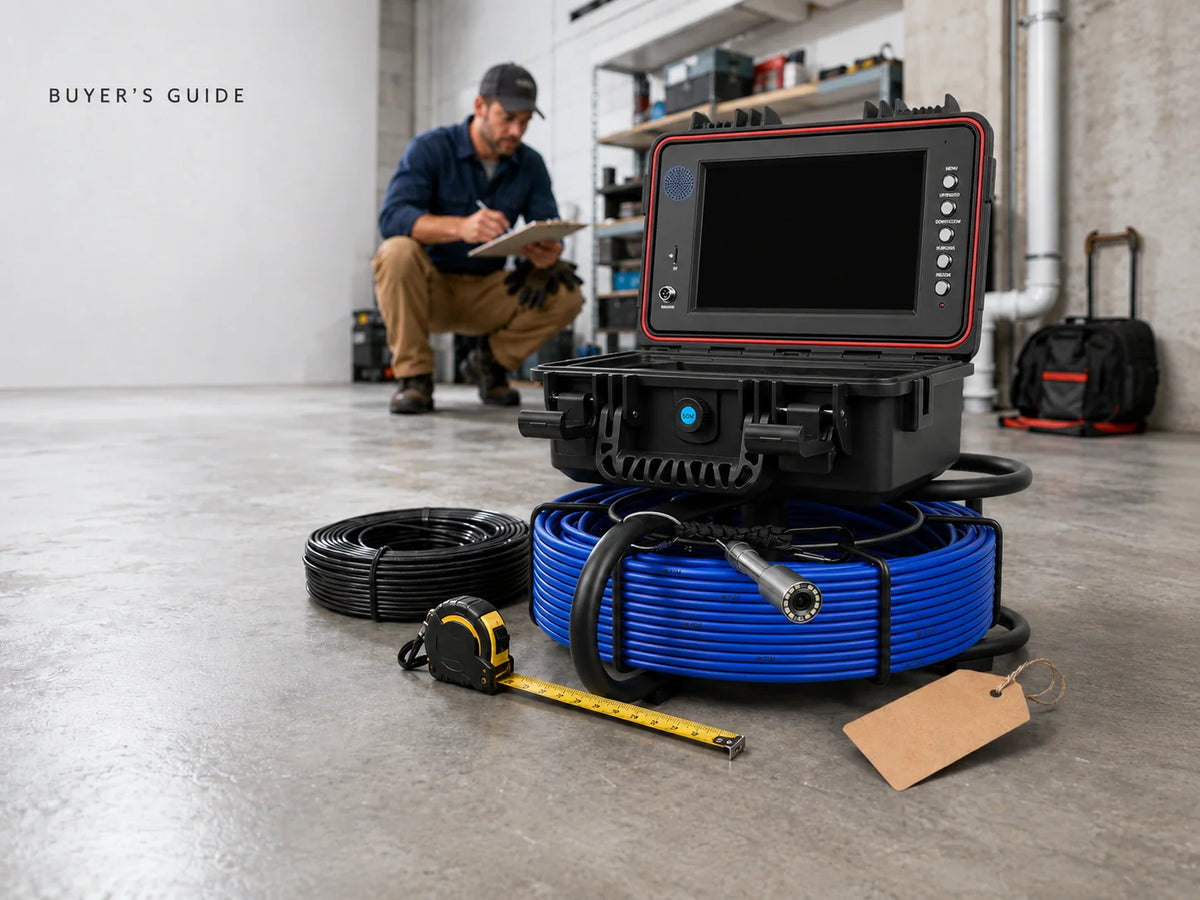
Shopping sewer inspection cameras for sale gets expensive fast if you compare listings by headline specs instead of by inspection workflow. HomeGuide's current pricing guide says professional CCTV sewer drain cameras typically cost $2,500 to $10,000 to buy, while daily rentals usually cost $120 to $225. Angi's current cost guide also notes that basic DIY cameras can start around $300 to $1,000, with more advanced recording-capable systems climbing well above that. That is exactly why the right buying question is not "what is cheapest?" It is "what does this camera need to help me prove before I spend money on cleaning, repairs, or digging?" Powerwill's current lineup makes that comparison practical because it spans homeowner-friendly reels, longer locator-ready systems, and heavier professional platforms without pretending every buyer needs the biggest machine first.
What to Compare Before You Even Look at Price
The first thing to compare is the inspection path, not the product listing. What pipe sizes do you actually need to inspect? How far does the line usually run from the cleanout? Will you review footage once and move on, or will the video need to support an estimate, a tenant dispute, a repair quote, or a home purchase decision?
Those questions decide whether you need a shorter residential reel, a self-leveling mid-tier system, or a longer locator-ready platform. Buyers who skip this step often spend too little on reach or too much on professional features they never use.
The next comparison is usability. Screen size, recording, self-leveling, and cable stiffness matter more than most first-time buyers expect because the value of a camera depends on whether you can interpret and reuse the footage after the line has been inspected. If the footage cannot support the next decision, the listing was cheap for the wrong reason.
Back to topHow Price Bands Map to Real Camera Tiers
| Tier | Typical range | What you usually get |
|---|---|---|
| Basic DIY or short-run inspection | About $300 to $1,000 | Shorter reach, simpler screens, lighter-duty use, fewer pro workflow features. |
| Residential ownership value | Roughly mid-hundreds to low four figures | Enough reach for many homes, better screens, recording, and more stable everyday ownership value. |
| Professional CCTV systems | About $2,500 to $10,000 | Longer reels, stronger jobsite durability, better locating, and more complete service workflow support. |
Those ranges are broad on purpose because not every "for sale" listing is offering the same type of tool. A basic camera may be enough if you only want occasional confirmation. A professional CCTV system makes more sense once the camera has to support service revenue, documentation, and longer runs.
This is where Powerwill is easiest to understand. The PW9D1 family covers the homeowner-friendly and light-duty property tier, the PW9D2 steps up into longer locator-ready ownership value, and the 10DX1 pushes into longer-run pro territory.
Back to topThe Three Features That Change Value Most
The first value-changing feature is reach. Too little cable means an incomplete inspection. Too much cable can mean extra cost and bulk you do not need. That is why buyers should compare 65, 100, 165, 230, and 246-foot classes against the actual property types they inspect, not against abstract future ambitions.
The second feature is orientation and recording. Self-leveling and saved footage matter because the camera is often there to support a decision after the reel is packed away. If you want a customer, buyer, tenant, or repair crew to trust the finding later, clear reusable footage is far more valuable than a one-time live view.
The third feature is locating. Buyers who may dig, mark, or hand repair work to another crew should not treat locator support as a luxury. Buyers who only need visual confirmation can often delay paying up for it. This is why buy-versus-rent logic and business buying logic produce different "best" answers from the same catalog.
Back to topWhich Powerwill Options Are Worth Comparing First
The easiest starting comparison is between the PW9D1 and PW9D2. The PW9D1 is the better buy when you want a practical residential system and do not need the longest reel Powerwill offers. It is easier to justify for homeowners, landlords, and buyers who believe in inspect-before-repair but still want the price and workflow under control.
The PW9D2 is the better comparison point once you care about longer reach, locator-ready workflow, and a more durable all-around ownership platform. It is often the strongest answer for mixed residential and light professional use.
The 10DX1 is what you compare when you know the camera will be earning money on longer or more demanding jobs. It is not the default choice for every buyer. It is the right choice when the job already exceeds what a mid-tier reel can do comfortably.
Key Takeaways
- The smartest way to compare sewer inspection cameras for sale is to start with the inspection path, the proof you need from the footage, and the real property types you inspect.
- Price bands only become meaningful when you separate short-run DIY tools, residential ownership value, and professional CCTV systems that have to support service revenue.
- Reach, recording with stable orientation, and locator support are the three features that change long-term value the most.
- Within Powerwill's lineup, PW9D1, PW9D2, and 10DX1 represent three clear buyer steps rather than three interchangeable listings.
- The best camera for sale is the one that completes your normal inspection cleanly now, not the one with the loudest headline specs on the product page.
FAQ
What should I compare first when shopping sewer inspection cameras for sale?
Compare pipe size, reach, and whether the footage needs to support later decisions like repairs, quotes, or home-purchase negotiations. Those factors matter more than marketing-first specs.
Is the cheapest sewer camera listing usually the best value?
No. The cheapest listing is often the worst value if the reel stops short, the footage is hard to interpret, or the camera cannot support the next repair decision properly.
When should I move from homeowner tier to professional tier?
Move up when the camera will be used repeatedly, on longer lines, or in jobs where the footage needs to support customer quotes, service revenue, or excavation planning.
Which Powerwill model is the best first comparison?
For many buyers, the best first comparison is PW9D1 versus PW9D2 because that is where the homeowner-friendly and longer all-around ownership tiers separate most clearly.
Do I need locator support if I am only shopping cameras for occasional home use?
Not always. Locator matters more once you expect the inspection to lead directly to marking a repair zone or coordinating digging work.
Conclusion
Shopping sewer inspection cameras for sale gets much simpler once you compare what the camera has to prove on the job instead of which listing looks most impressive in isolation. The right buy is the one that gives you enough reach, enough clarity, and enough workflow support for the next decision.
If you want a clean place to compare real options, start with the Powerwill sewer camera collection, then narrow down between the PW9D1, PW9D2, and 10DX1 based on what your next real inspection needs to prove.
Back to top
Comments
No comments