
Sewer Camera Inspection Near Me vs. Owning One: Which Saves More in 2026?
 Michael Carter
0 comments
Michael Carter
0 comments
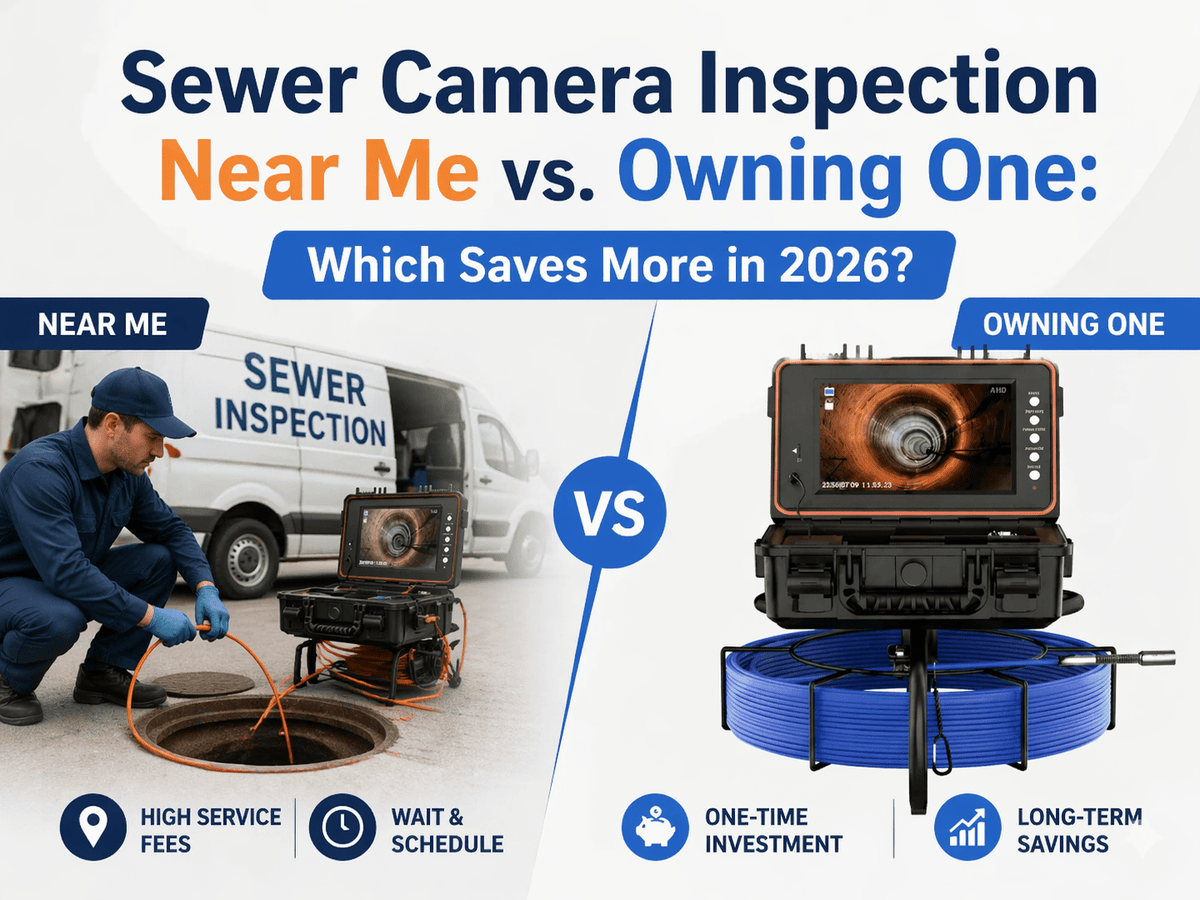
If you are searching for sewer camera inspection near me, you probably want certainty more than anything else. In 2026, a standard local sewer camera inspection often costs about $150 to $300, and many typical residential jobs land around $250 to $400 according to Angi. That makes hiring a pro sensible for one-off needs, but if you expect repeat checks, pre-repair and post-repair verification, or recurring line issues, owning a camera can start saving money after only a few uses.
 Comparing the cost of calling a local sewer camera service with owning a residential inspection system.
Why Homeowners Search This Term
Most people searching for a local sewer camera inspection are not shopping for equipment. They are trying to reduce uncertainty. A tub backs up after the toilet flushes. Drains slow down in more than one room. A home inspector mentions the sewer lateral before closing. The root problem in every case is the same: you need to see inside the line before making a bigger decision.
That is why sewer camera inspections matter so much. They turn a vague symptom into visible evidence. Instead of hearing that you "might" have roots, a belly, grease buildup, or a break, you can see the condition directly.
What a Local Inspection Usually Costs
For a straightforward residential job, local inspection pricing is usually measured in hundreds, not thousands. The issue is that "hundreds" adds up quickly once you need more than one visit.
| Inspection Scenario | Typical Cost | Source |
|---|---|---|
| Standard sewer camera inspection | $150-$300 | Angi 2026 |
| Typical 50-100 ft residential line | $250-$400 | Angi 2026 |
| Longer or more complex runs | $400-$800 | Angi 2026 |
| Specialty camera work | $600-$1,500+ | Angi 2026 |
| Emergency or rush add-on | $100-$300 | Angi 2026 |
Angi also notes pro labor at about $75 to $150 per hour. That matters because the invoice can rise when the line is longer, access is poor, or the technician also needs to locate the problem for a repair crew.
Back to topWhen Hiring a Pro Still Makes Sense
Hiring a local service is still the right choice in several cases. If you need expert interpretation immediately, have an active backup, or expect this to be a one-time inspection tied to a home purchase, paying a pro is reasonable. You are buying speed, diagnosis, and less hands-on work for yourself.
It also makes sense when access is difficult or the property is outside a simple residential use case. Long runs, unusual layouts, and formal documentation requests can justify professional help even when you understand the basic economics.
Where Hidden Costs Start Adding Up
The hidden cost is usually not the first inspection. It is the second, third, and fourth. Many homeowners pay for an initial scope, then pay again after the line is cleared, then again before approving repairs, then again when symptoms return after heavy rain or root regrowth.
That is especially common in older homes, neighborhoods with mature trees, or transactions where buyers and sellers both want their own verification. A single $300 visit is manageable. Three visits at that price is already $900. Add a rush fee once, and you are well past the price of a homeowner-owned system.
There is also a negotiation cost. Without your own footage, every contractor starts from zero. With footage, you can say, "There is standing water at about 52 feet," not just "something is wrong." That changes quote quality.
Back to topWhen Owning Starts to Win
This is where the math becomes practical. Powerwill's PW9D1 product page listed the system at $595.80 when this article was written. Powerwill's selection guide describes it as a 9-inch LCD self-leveling DVR system with distance counter support, optional 512 Hz locating, and cable options up to roughly 164 feet for common residential line sizes.
| Option | Typical One-Time Cost | Total After 3 Uses |
|---|---|---|
| Local standard inspection | $250-$400 | $750-$1,200 |
| Local higher-complexity or rush inspection | $400-$700 | $1,200-$2,100 |
| Own Powerwill PW9D1 | $595.80 | $595.80 plus your time |
So the break-even point is often around the second or third inspection. If your issue is recurring, or you expect to verify before and after repairs, ownership can stop being a gadget purchase and start being a cost-control move.
Back to topWhat You Actually Buy When You Own One
You are not just buying a camera. You are buying timing, evidence, and the ability to inspect before you call for expensive work. That matters more than raw hardware pride.
- You can check the line when symptoms appear, not when the next appointment opens up.
- You can verify whether a clog is actually gone after cleaning.
- You can collect your own footage before comparing contractor bids.
- You can re-check after storms, freezes, or suspicious drainage changes.
- You can reuse the system during resale, landscaping, or major exterior work.
For homeowners, that is the real value proposition. It reduces guesswork before repair and gives you a better basis for every next decision.
Back to topHow to Decide
Hire a local sewer camera inspection if you are very likely to need only one inspection, want the least hands-on involvement, or need formal help immediately. Buy your own system if you own an older home, have recurring symptoms, expect multiple inspections over the next year, or want to compare repair bids from a stronger position.
Either way, the logic stays the same: inspect before repair. The expensive mistake is not paying for a camera. It is paying for the wrong repair because nobody looked first.
Back to topKey Takeaways
- Local sewer camera inspections usually cost a few hundred dollars. Angi's 2026 pricing puts standard inspections at $150-$300, with many normal residential jobs around $250-$400.
- The real cost problem is repetition. Pre-repair, post-repair, second-opinion, and recurring-problem inspections can quickly exceed the price of ownership.
- Owning a camera changes the repair conversation. Footage and distance data help you compare bids with more confidence instead of paying every contractor to rediscover the issue.
- The Powerwill PW9D1 can make economic sense faster than many homeowners expect. At $595.80, it often reaches break-even after roughly two to three local inspections.
- The best decision framework is simple. If you need one inspection, hire locally. If you may need repeat checks, inspect-before-repair ownership becomes much more compelling.
FAQ
How much does a sewer camera inspection near me usually cost?
For a standard residential job, Angi's 2026 pricing says $150-$300 is common, with many typical home inspections landing around $250-$400. Longer runs, emergency scheduling, or specialty equipment can increase the total.
Can a homeowner really use a sewer camera without hiring a plumber first?
Yes, many homeowners can inspect through an accessible cleanout and identify obvious issues like grease buildup, roots, standing water, or a break. The goal is to see before you spend, not to replace licensed repair work when the issue is serious.
How many inspections does it take for buying to make sense?
In many markets, about two to three. If local inspections cost $250-$400 each, ownership can become cheaper surprisingly quickly, especially if you want before-and-after confirmation around repairs.
Do I still need a plumber if I own a Powerwill camera?
Often, yes. A camera helps you diagnose and document. A plumber still handles clearing, repair, replacement, or advanced interpretation when the line condition is beyond a straightforward homeowner decision.
What is the biggest advantage of owning instead of searching near me every time?
Timing. You can inspect when symptoms appear, not when a company can schedule you. That makes ownership especially valuable for recurring issues, older homes, and repair verification.
Ready to inspect before you pay for repairs? The Powerwill PW9D1 sewer camera gives homeowners a practical way to document what is happening inside the line on their own schedule.
Comments
No comments