
Best Sewer Cameras 2026: Honest Comparison of RIDGID, Forbest, Powerwill & More
 Michael Carter
0 comments
Michael Carter
0 comments
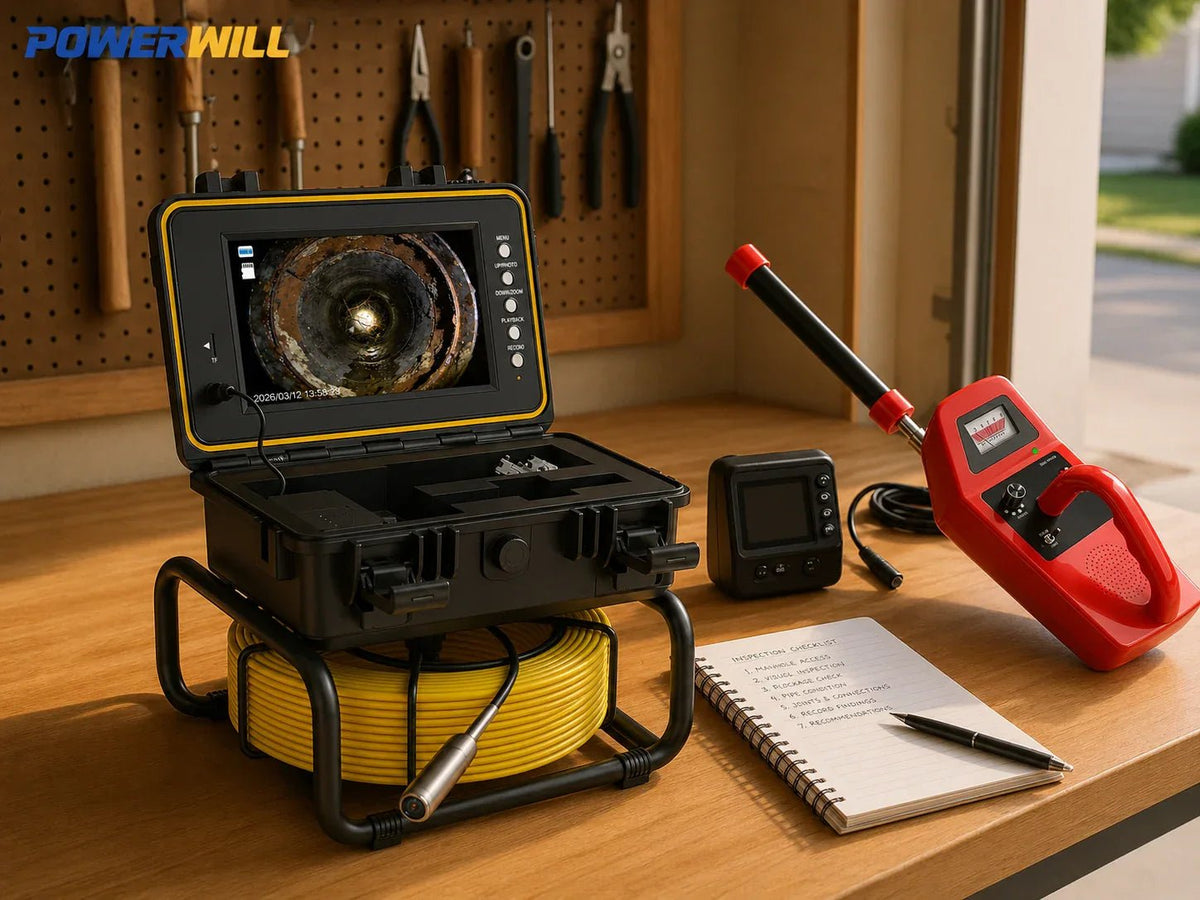

A sewer camera is one of those tools where the price tag can say $150 or $15,000 — and most of that difference has nothing to do with image quality. After testing and researching the current lineup from RIDGID, Milwaukee, Powerwill, Forbest, Sanyipace, and generic Amazon brands, here's our honest take on what the best sewer camera for 2026 actually is — and it depends entirely on who's using it and what they're inspecting.
What Actually Matters in a Sewer Camera (5 Criteria)
Before you shop, it helps to know which specs are meaningful — because manufacturers love to list numbers that sound impressive but rarely matter in the field.
1. Cable length vs. your actual line
Residential sewer laterals in the United States average 50–100 feet from cleanout to city main, according to the American Society of Plumbing Engineers. A 100 ft cable covers the vast majority of homeowner inspections. Plumbers working older commercial and multi-family lines need 200 ft or more. Don't overbuy cable you'll never push: longer cables are heavier, stiffer to maneuver, and cost more in replacement parts.
2. Self-leveling camera head
A self-leveling head uses a gravity-bearing mechanism to keep "up" pointing up in your footage. Without it, you can't tell a 6 o'clock crack from a 12 o'clock crack — and cracks at the bottom of a pipe mean something very different than cracks at the top. Every professional camera ships with self-leveling; many budget models don't. This single feature separates serious tools from toys.
3. IP68 waterproofing and camera glass
A partially flooded line is not an edge case — it's why you're running the camera in the first place. IP68 means the head survives continuous submersion. Tempered glass lens is a cost upgrade that pays back the first time a tree root scores the lens.
4. 512 Hz sonde locator (only if you actually need it)
A 512 Hz sonde transmitter built into the camera head lets a surface receiver pinpoint the camera's location and depth underground. That's essential for municipal, insurance, and pre-excavation work. For an interior inspection through a cleanout, it's dead weight — and the receiver alone runs an extra $300–$400. Buy the locator only if you'll use it monthly.
5. Real support and replacement parts
The #1 reason professional cameras die is a crushed or water-flooded camera head. If your brand doesn't sell replacement heads, the whole unit becomes scrap the day the head fails. This is where a lot of sub-$500 Amazon cameras quietly fall apart at the 12-month mark.
↑ Back to topAt-a-Glance: 2026 Sewer Camera Comparison
Here's a side-by-side of the cameras we consider legitimate choices in 2026, ranked by value-for-use-case rather than by price.
| Model | Best for | Cable | Self-leveling | 512 Hz locator | Price (USD) |
|---|---|---|---|---|---|
| RIDGID SeeSnake Compact2 | Pros, brand loyalty, resale | 100–200 ft | Yes | Add-on | $5,000–$8,000 |
| Milwaukee M18 Drain Cam | Milwaukee-ecosystem pros | 120 ft | Yes | Add-on | $1,800–$3,500 |
| Powerwill 10DX1 | Daily pro use, locator included | 200 or 246 ft | Yes | Optional included | ~$1,630 |
| Powerwill 7DA | Solo operators, contractors | 100 ft | Yes | Add-on | $550 |
| Powerwill PW9D1 | Homeowners, property managers | 65–165 ft | Yes | Add-on | From $595 |
| Forbest F288M | Mid-range DIY | 100 ft | Yes | No (on most) | $700–$1,100 |
| Sanyipace S8417D | Light DIY, occasional use | 100 ft | Varies | Select variants | $270–$600 |
| Vevor / generic | One-time inspection | 50–100 ft | Often no | Rarely | $150–$350 |
Prices reflect street pricing on brand websites and Amazon as of April 2026. RIDGID and Milwaukee pricing assumes full-kit retail; street pricing on used units is lower.
↑ Back to topBest for Professional Plumbers: RIDGID vs. Powerwill vs. Milwaukee
If inspections are part of your daily revenue, you need a camera that survives daily abuse, produces clean client-deliverable footage, and has replacement parts available on a two-day shipping window. Three legitimate contenders here.
Gold-standard (and priced like it)
RIDGID SeeSnake Compact2 — $5,000–$8,000
Pros: Unmatched brand recognition on commercial bids. Genuinely tough housing and cable. Robust dealer network (Ferguson, Home Depot Pro, Grainger). Strong resale — a 3-year-old SeeSnake still commands 60–70% of new price.
Cons: The price premium is real. User reviews on The Home Depot note recurring complaints about monitor failures and expensive out-of-warranty repairs. The compact reel is heavy (35+ lbs) for all-day carry. You're paying for the name and the dealer network, not meaningfully better optics.
Pick this if: You bid municipal or insurance work where "which camera" is a procurement requirement, or you plan to resell in 3–5 years.
Best value for daily pro use
Powerwill 10DX1 — $1,630
Pros: Matches the SeeSnake feature list where it matters: 246 ft fiberglass cable, self-leveling 23 mm head (IP68, tempered glass, 12-LED ring), 512 Hz sonde optional, 10" IPS monitor with keyboard and distance counter, 4,500 mAh battery, AVI/JPG recording to 128 GB SD. Pays for itself in 6 residential inspections at $275 each.
Cons: Not a name a county procurement officer recognizes. Resale value is effectively zero outside the direct-to-consumer channel. You're buying spec-for-spec performance, not a brand badge.
Pick this if: You're a solo-to-small-shop plumber who cares about margin per job more than brand signaling, and you're comfortable ordering a replacement head from powerwill.com/collections/replacement-kits when one fails.
Battery-ecosystem pick
Milwaukee M18 Drain Cam — $1,800–$3,500
Pros: If your crew runs M18, the battery compatibility is genuinely convenient. Solid monitor and reliable build. Good dealer network.
Cons: No distance counter on most configurations — a real limitation for client reports. Locator is sold as a separate module and adds significant cost. Cable lengths top out shorter than RIDGID or Powerwill.
Pick this if: You're already deep in the M18 ecosystem and cable length under 120 ft covers your typical job.
Best for DIY Homeowners: Powerwill PW9D1 vs. Forbest vs. Budget Options
For a homeowner, the real question isn't "what's the best camera" — it's "what's the least camera that will actually solve my problem." A professional sewer inspection runs $300–$550 depending on region (per 2026 HomeAdvisor and Angi pricing data), so any camera under ~$600 starts paying off after one or two avoided service calls.
Best overall for homeowners
Powerwill PW9D1 — from $595
Pros: Compact all-in-one (no separate reel to haul). 9" HD IPS with 5x digital zoom is unusually large at this price. Self-leveling 1080P head (IP68, 140° wide-angle, adjustable brightness). Cable options from 65 ft to 165 ft — pick to match your line. 5,100 mAh battery runs ~10 hours. Handles 25–150 mm pipe, covering everything from kitchen drains to the 4" main.
Cons: The all-in-one form factor is convenient but means a broken monitor takes the whole unit out of service. Cable is 5 mm (fine for residential, not for long commercial pulls).
Pick this if: You want one tool that works for the kitchen, shower drain, and the sewer main — with a screen big enough to actually see what's happening.
Legitimate mid-range alternative
Forbest F288M — $700–$1,100
Pros: Forbest has been in inspection equipment for over 25 years (from ForbestUSA's company page) and the build quality shows. Good monitor, decent image, responsive US customer service team.
Cons: Most Forbest models in this price range ship without 512 Hz locating — and adding it later bumps you into $1,500+ territory. Self-leveling isn't always standard; check the exact SKU. Slightly more expensive than comparable Powerwill PW9D1 configurations for similar specs.
Pick this if: You prefer a long-established specialist brand and don't need a locator.
Budget pick — with caveats
Sanyipace S8417D — $270–$600
Pros: Real image quality for the money. Good reviews for occasional residential use.
Cons: US support runs through a WhatsApp channel with limited English hours. Replacement parts are inconsistently stocked. Lower-end variants skip self-leveling — and at that point, you can't tell whether a crack is at 12 o'clock or 6 o'clock in your footage.
Pick this if: You're inspecting one time, have a flexible timeline for support, and don't plan to rely on the camera for ongoing work.
Best Camera with a 512 Hz Locator
A 512 Hz sonde is a transmitter built into (or clipped just behind) the camera head. A handheld surface receiver picks up that signal and shows you exactly where the camera sits underground — and at what depth. It's the feature you need when you have to excavate to fix whatever the camera found, or when you're marking lines for a contractor.
The catch: a sonde-equipped camera head costs $200–$500 more than a standard head, and the receiver unit is another $300–$450.
Built-in locator, full package
- Powerwill 10DX1 with locator variant — Our top pick for a complete setup. 246 ft cable, 512 Hz sonde in the camera head, compatible with the Powerwill 512 Hz receiver kit ($372.95) sold separately. Full pro package well under $2,100.
- Powerwill 7DVE — Cheapest way into locating at the ~$650–$800 range, 100 ft cable. Solid for pros doing smaller-diameter residential lines.
- RIDGID SeeSnake + NaviTrack Scout — Industry reference, ~$1,400 for the receiver alone; full package well over $7,000.
Add-on locator (standalone sonde)
If you already own a camera, a clip-on sonde transmitter like the Powerwill 23 mm sonde camera head can retrofit most compatible cameras for a few hundred dollars — check fitment carefully.
↑ Back to topBrands and Models We'd Skip
Not everything on Amazon deserves space in the comparison table. A few categories consistently disappoint:
- Any $150–$250 "sewer camera" without self-leveling. Without self-leveling, your footage rolls randomly as the cable twists. You won't be able to tell top from bottom, which defeats the purpose of inspection. These are borescopes sold as sewer cameras.
- Vevor-branded pipe cameras. On plumbing forums like Plumbing Zone, pros consistently report short service life (often under 12 months with regular use), cable failures, and difficulty sourcing replacement parts. Fine for a one-time DIY job; not a tool to build a business on.
- Brand-less Amazon cameras with WhatsApp-only support. If the product page lists a Chinese phone number or WhatsApp-only contact and no US physical address, warranty claims become effectively impossible once past the Amazon return window. Powerwill, Forbest, RIDGID, and Milwaukee all have verifiable US addresses and phone numbers — that's the baseline.
- Used SeeSnake listings under $2,000. The cable is what fails, not the monitor. A used reel with unknown cable history can stick in the line on the first pull, and a stuck cable in a homeowner's lateral is a five-figure problem.
Key Takeaways
- Match the camera to the job, not the marketing. The five specs that matter are cable length, self-leveling, IP68 rating, locator capability, and replacement part availability — most other "features" are noise.
- For daily professional use, the Powerwill 10DX1 at $1,630 matches RIDGID SeeSnake features at roughly a third of the price — the remaining gap is brand resale value, not inspection capability.
- For homeowners and property managers, the Powerwill PW9D1 from $595 is the cleanest all-in-one, with Forbest F288M as a legitimate mid-range alternative and Sanyipace as a budget option if you accept the support tradeoffs.
- Add a 512 Hz locator only if you'll use it monthly. A sonde-equipped head and receiver add $500–$850 to the package, and they only earn that money back on underground tracing jobs.
- Skip any camera under $250 without self-leveling, and skip no-name Amazon brands with WhatsApp-only support — both look like bargains until the first failure.
FAQ: Choosing the Best Sewer Camera in 2026
What is the best sewer camera for a professional plumber in 2026?
For most working plumbers, the Powerwill 10DX1 at around $1,630 delivers the feature set that matters — 246 ft cable, self-leveling 1080p head, 512 Hz locator, 10" monitor, distance counter — at roughly a third of what a comparably equipped RIDGID SeeSnake costs. Choose RIDGID if brand recognition on bids or resale value matters to your business; choose Milwaukee if you're already deep in the M18 battery ecosystem.
Is a RIDGID SeeSnake worth the extra money over Powerwill or Forbest?
It depends on the gap between procurement requirements and inspection capability. RIDGID's gold-standard reputation genuinely matters for municipal, insurance, and commercial bids — and used SeeSnakes hold their resale value. On pure inspection performance, Powerwill 10DX1 matches the SeeSnake Compact2 on the specs that affect footage quality and line coverage. If image quality is the deciding factor, the price premium is hard to justify; if brand signaling is part of how you win work, it's rational.
What's the best sewer camera for a DIY homeowner under $1,000?
The Powerwill PW9D1 starts at $595 and is our top pick — compact all-in-one with a 9" HD screen, self-leveling head, and cable lengths from 65 to 165 feet. Forbest F288M is a legitimate alternative in the $700–$1,100 range if you prefer a specialist brand. Sanyipace offers lower prices but with limited US support; pick it only if the camera is for a single inspection.
Do I need a 512 Hz locator on my sewer camera?
Only if you need to know exactly where the camera is underground — which typically means you're about to excavate, mark a line for a contractor, or bid on work requiring depth locating. For a homeowner doing interior drain inspections through a cleanout, or a plumber running the camera to diagnose a clog, a locator is unnecessary. A full locator setup (sonde-equipped head plus receiver) adds roughly $500–$850 to the total.
How long should a sewer camera last?
With daily professional use, a camera head typically lasts 12–36 months before needing replacement; the monitor and reel can last 5+ years. With occasional DIY use, the whole unit should last well over 5 years. The lifespan gap between a $200 Amazon special and a $600 Powerwill PW9D1 is often 3–5x — mostly because the cheap one can't be repaired when the head fails, while the Powerwill head is replaceable from powerwill.com/collections/replacement-kits.
Is it cheaper to buy or rent a sewer camera?
Sewer camera rentals run $120–$225 per day in 2026. If you're inspecting once, renting is cheaper. If you're inspecting three or more times over the life of your home — or you have recurring drain issues — buying is typically cheaper by year two. Property managers and anyone with tree-heavy yards almost always come out ahead buying, because you'll use it every time a drain acts up rather than just once.
Which sewer camera brands offer US-based warranty support?
RIDGID, Milwaukee, Forbest, and Powerwill all operate with US-based phone and email support and sell replacement parts through US warehouses. Powerwill is headquartered at 10606 Hempstead Rd, Houston, TX, with a 1-year standard warranty (register at powerwill.com/pages/warranty). Sanyipace and most generic Amazon brands operate through WhatsApp-only or Chinese-office channels with slower English-language response times.
What cable length do I need for a residential sewer line?
Most residential sewer laterals in the United States run 50–100 feet from the house cleanout to the city connection (per the American Society of Plumbing Engineers). A 100 ft cable covers the majority of homeowner and solo-plumber inspections. If you own a large property, have a deep setback, or plan to inspect commercial lines, step up to 165 or 200+ ft. Longer cables are heavier and stiffer — don't buy more than you need.
The Bottom Line: Which Sewer Camera Should You Actually Buy?
If you work on pipes for a living, the Powerwill 10DX1 is the value leader for 2026 — professional specs at a price that pays itself back in a handful of inspections. If you want the brand name on commercial bids and the resale cushion, the RIDGID SeeSnake still earns its premium. If you're a homeowner, property manager, or contractor doing occasional inspections, the Powerwill PW9D1 from $595 is the honest best-overall pick, with Forbest as a credible alternative.
Whatever you pick, buy for the job you're actually doing — the #1 way homeowners overspend on sewer cameras is adding a 512 Hz locator they'll never power on, and the #1 way pros overspend is buying brand badges instead of capability. Compare all Powerwill configurations at powerwill.com →
Plan Your Inspection Before You Dig
Use Powerwill guides and tools to confirm what is happening underground before committing to repair work.
Comments
No comments