
7 Warning Signs Your Sewer Line Is Failing
 Michael Carter
0 comments
Michael Carter
0 comments
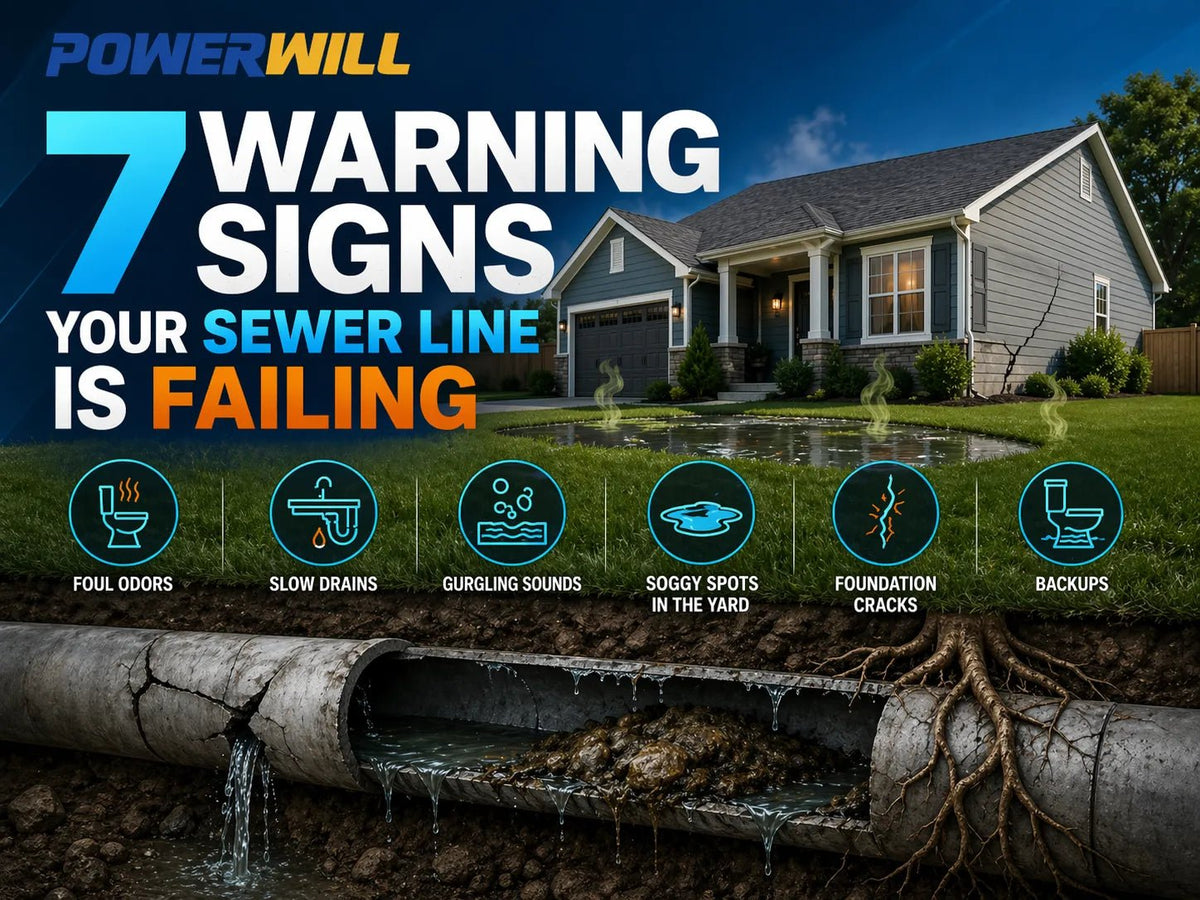
A failing sewer line usually gives you warning signs before it gives you a disaster. If you notice multiple slow drains, gurgling toilets, sewage odor, or wet spots in the yard, treat those as evidence to inspect before you repair. According to the U.S. EPA, sewage backups threaten public health, and Angi's 2026 pricing data shows sewer line repairs average about $2,600 while replacements often run from $1,388 to $5,323 before landscaping and cleanup.
Why early warning signs matter
The expensive part of sewer trouble is usually not the first symptom. It is the delay between the symptom and the inspection. A slow drain becomes a backup. A small crack becomes a yard excavation. A root intrusion becomes a pipe collapse.
The EPA says sanitary sewer overflows can back up into homes, cause property damage, and threaten public health. The agency also estimates at least 23,000 to 75,000 sanitary sewer overflows happen every year in the United States, not counting backups into buildings. That is why homeowners should treat sewer line problems signs as a prompt to inspect, not as something to guess at.
↑ Back to top1. Multiple drains are slow at the same time

If only one sink drains slowly, you probably have a local clog. If the shower, toilet, and kitchen sink all seem sluggish within the same day, the main sewer line becomes much more likely.
That is because all of those fixtures eventually feed one main waste line. When that line is partially blocked by grease, wipes, scale, or roots, the whole house starts acting off at once.
What it may mean: a partial main-line blockage, root intrusion in an older clay or cast-iron line, or a sagging section holding wastewater.
↑ Back to top2. Gurgling sounds from toilets or drains

What it may mean: a developing main-line blockage, a belly in the pipe, or less commonly a vent issue.
↑ Back to top3. Sewage smell inside the house or in the yard
You should not smell sewage in a healthy plumbing system. If the odor keeps returning, do not write it off as an old-house quirk.
The EPA notes that sewage can carry bacteria, viruses, protozoa, and other disease-causing organisms. A sewer odor can come from a dried trap, but if re-filling the trap does not solve it, a cracked line or leaking joint becomes much more likely.
What it may mean: a pipe crack, separated joint, failed toilet seal, or leaking cleanout.
↑ Back to top4. Water backs up in the wrong fixture
This is the classic red flag. Flush the toilet and water rises in the tub. Run the washing machine and a floor drain starts taking on water. That is not random.
Water follows the path of least resistance. If the main sewer line is restricted, wastewater can reverse toward the lowest fixture in the house. Once you see that, treat it as urgent.
What it may mean: a major main-line blockage, root mass, offset joint, or partial collapse.
↑ Back to top5. Bright green grass or soggy patches in the yard
Wastewater acts like fertilizer. If one strip of lawn is unusually green, thick, or wet compared with the rest of the yard, and it lines up with the path from your house to the street or septic system, that matters.
This is especially common with aging clay or cast-iron lines. North Carolina Cooperative Extension notes that tree roots exploit existing cracks and joints in sewer lines. Once a pipe is compromised, leaked wastewater and root growth often reinforce each other.
What it may mean: an underground leak, joint separation, or root intrusion causing both blockage and leakage.
↑ Back to top6. Frequent toilet clogs that keep coming back
An occasional clog is normal. A toilet that clogs every few weeks is not. If repeated plunging fixes the symptom but not the pattern, the real problem may be farther down the line.
This is where homeowners waste money. They keep treating the toilet because that is where the symptom shows up. The actual issue may be thirty or forty feet away in the sewer line.
What it may mean: downstream blockage, root intrusion, or a damaged section catching solids and paper.
↑ Back to top7. Yard depressions, settling, or sinkhole-like spots
When soil washes into a damaged sewer pipe or wastewater erodes the area around it, the ground above can begin to settle. This is one of the most expensive signs because it often means the problem has existed for a while.
Angi's 2026 sewer replacement guide puts replacement costs at $60 to $250 per linear foot, and traditional excavation can add yard, concrete, and cleanup costs on top. Once the ground starts moving, the repair is rarely just a simple cleaning.
What it may mean: a broken or collapsed pipe, long-term leakage, or structural failure that may require spot excavation or replacement.
↑ Back to topWhat these signs cost if you ignore them
The symptom is often cheap. The delay is expensive.
| Service | Current pricing reference | Typical cost |
|---|---|---|
| Main sewer clog repair | Angi 2026 | $187 to $572 |
| Sewer line repair | Angi 2026 | $1,100 to $4,100 average range |
| Sewer line replacement | Angi 2026 | $1,388 to $5,323 typical range |
| Camera inspection | HomeAdvisor 2025 | $271 to $1,730 national range |
The point is not that every home will hit the top of those ranges. The point is that a camera inspection is usually much cheaper than approving the wrong repair or waiting until wastewater enters the house.
↑ Back to topWhat to do before you authorize a repair
The smartest homeowner sequence is simple. Reduce heavy water use if you are already seeing backup. Inspect the line before you approve excavation, lining, or replacement. Use the footage to compare repair bids based on evidence, not guesses.
That is where owning a camera can change the math. The Powerwill PW9D1 is currently listed at $595.80 and includes a 9-inch HD IPS monitor, self-leveling camera head, DVR recording, IP68 waterproofing, and cable options up to 165 feet depending on configuration. Powerwill's selection guide places it in the residential 2-inch to 6-inch pipe range, which covers many homeowner sewer checks.
For homeowners with older homes, mature trees, repeated symptoms, or multiple properties, the value is not just cost. It is clarity. You can show a contractor the actual root mass, crack, offset, or standing water instead of describing symptoms from memory.
Key takeaways
- Multiple slow drains at once usually point to a main-line problem, not a single fixture clog.
- Gurgling and cross-fixture backup are early pressure warnings that often show up before a full sewage backup.
- Sewer odor, wet yard patches, and bright green grass can mean wastewater is already escaping underground.
- Recurring toilet clogs often signal a downstream restriction that plunging will not solve.
- The cheapest move is usually to inspect before repair, because the price gap between cleaning and replacement is huge.
FAQ
How do I know whether it is my sewer line or just a clogged drain?
If only one fixture is affected, think local clog first. If several fixtures act up together, especially in different rooms, the main sewer line is much more likely.
Is a sewer smell always a broken line?
No. A dry trap or failed toilet seal can also cause odor. But if the smell persists after easy checks, the line should be inspected.
Can tree roots really get into sewer pipes?
Yes, but usually by exploiting an existing crack, joint, or opening. Healthy modern pipe is much harder for roots to invade than aging clay or cast iron.
How urgent is water backing up into the tub when I flush?
Treat it as urgent. That usually means the main line is restricted enough that wastewater is searching for another exit.
When does buying a camera make sense?
It makes the most sense for homeowners with older homes, repeated symptoms, multiple properties, or a desire to verify conditions before paying for repair work.
Conclusion
Most sewer failures do not start with a disaster. They start with a pattern: a slow drain, a gurgle, a smell, a damp patch in the yard. If you catch those signs early and inspect before you repair, you stay in control of the decision and usually spend less.
That is the homeowner advantage. You do not need to become a plumber. You just need clear evidence before someone starts digging. If you want to inspect first, the Powerwill PW9D1 gives you a practical residential camera option with self-leveling video, onboard recording, and the reach most home sewer runs need.
Plan Your Inspection Before You Dig
Use Powerwill guides and tools to confirm what is happening underground before committing to repair work.
Comments
No comments