
512Hz Sewer Camera Locator: What It Is, Why It Matters, and Who Needs One
 Michael Carter
0 comments
Michael Carter
0 comments
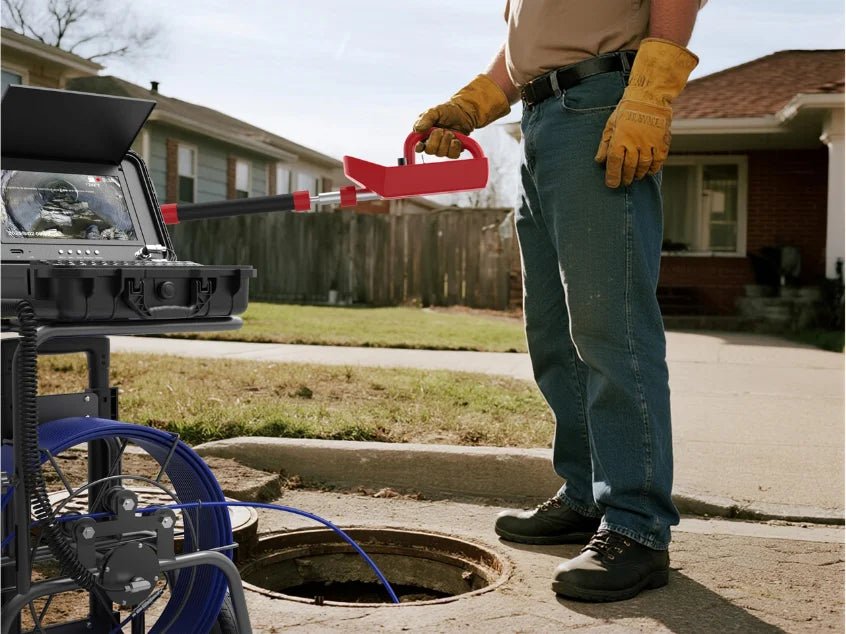

A 512Hz locator receiver wand pinpoints the exact surface position of a buried pipe — guiding excavation to the right spot on the first dig.
A 512Hz sewer camera locator is a two-part system — a radio transmitter built into the camera head and a handheld receiver used above ground — that lets you pinpoint exactly where underground the camera is sitting. When you find a blockage 60 feet into your sewer line, the locator tells you the precise surface position and depth so you know exactly where to dig. For professional plumbers doing underground sewer work, it’s an essential tool. For homeowners troubleshooting an indoor drain, it’s usually unnecessary. This guide explains how the technology works, who genuinely needs it, and which Powerwill cameras include it.
What Is a 512Hz Sewer Camera Locator?
A 512Hz sewer camera locator is not just one device — it’s a paired system made up of two components that work together.
The sonde transmitter lives inside the camera head (or mounts separately on the push cable). When you push the camera through a pipe, the sonde continuously broadcasts a 512-hertz electromagnetic signal in all directions. Think of it as a tiny radio beacon traveling through your pipe.
The receiver (locator wand) is held above ground by the operator. It detects the 512Hz signal transmitted from below and displays its strength on an indicator screen or LED bar. As you walk toward the camera’s position, the signal gets stronger. When you’re standing directly above the camera head, the signal peaks — that’s your dig point.
The “512Hz” part refers to the signal frequency. This frequency was established as an industry standard because it offers strong soil and concrete penetration while staying distinct from common electrical interference. That standard is universal — a Powerwill 512Hz sonde receiver will read signals from any brand’s 512Hz camera, and vice versa.
↑ Back to topHow a 512Hz Locator Works in the Field
The locator workflow has three steps, and each one matters.
Step 1 — Push the camera to the problem area
As you push the cable through the pipe, the distance counter on your camera monitor tells you how far in you are. When you spot the blockage, root intrusion, or crack on the monitor, note the cable footage (for example, “73 feet in”).
Step 2 — Switch the receiver to far mode, then near mode
Walk the surface above the suspected pipe route. Most professional locator receivers have two detection modes: far mode (detects signal up to 10 feet depth) for initial tracking, and near mode (refines to within 3 feet) for precise pinpointing. According to specifications from professional-grade locator manufacturers, effective detection depth for standard 512Hz sondes ranges from 5 to 16 feet, depending on soil type, pipe material, and signal strength.
Step 3 — Mark the surface location
Once the receiver indicates peak signal, mark the ground. That’s the exact surface point above your camera head — and your dig or access point. Professional plumbers use spray paint or pin flags. For interior wall access, this prevents unnecessary demolition. This entire process takes 5–10 minutes in the field and can save thousands of dollars in misdirected excavation.
↑ Back to topWho Actually Needs a 512Hz Locator?
The honest answer: not everyone. But if your work falls into any of these categories, a 512Hz locator isn’t a nice-to-have — it’s essential.
Licensed Plumbers Doing Main Line Work
If you’re a plumber inspecting residential sewer laterals — the underground pipes connecting a home to the city main — you will routinely encounter problems that require excavation. According to Angi’s 2026 pricing data, sewer line excavation costs between $50 and $200 per linear foot, and a full line replacement averages $3,319 nationally, with complex jobs reaching $10,000 or more. Digging in the wrong spot wastes hours of labor and risks damaging adjacent utilities. A 512Hz locator turns a vague “there’s a blockage somewhere underground” into a precise surface point and depth reading. For a licensed plumber, the locator pays for itself on the first job where it saves even two hours of misplaced digging.
Contractors Dealing with Underground Drain Systems
General contractors and drain-cleaning specialists who work on exterior drainage — French drains, downspout tie-ins, storm drains, and septic system laterals — deal constantly with the question of “where exactly is this pipe running?” Camera systems with a 512Hz locator answer that question without ground-penetrating radar equipment that costs $10,000 or more.
Inspectors Documenting Depth and Location for Client Reports
Home inspectors and sewer inspection contractors increasingly include pipe depth readings in their inspection reports. A 512Hz locator lets you note “root intrusion at 34 feet depth, approximately 8 inches below grade, 4 feet from the east fence line” — the kind of precision that justifies an inspection fee and gives the homeowner actionable information for a contractor quote.
Property Managers with Recurring Drain Issues
If you manage apartment buildings or multi-unit properties, you’ve likely had the frustrating experience of calling a plumber for a recurring drain backup, paying for a camera inspection, and still not knowing exactly where the problem is located underground. A camera with a locator closes that loop and eliminates guesswork across repeat service calls.
↑ Back to topWho Doesn’t Need One (and Can Save the Money)
This is the section most sewer camera articles skip — and it’s important, because a locator adds $100–$400 to the price of a camera system, and plenty of buyers don’t need it.
Homeowners doing their own drain inspection almost never need a locator. If you’re checking a slow kitchen drain, a toilet that’s been backing up, or a basement floor drain, the camera footage tells you what you need to know. Your concern is “what’s in the pipe” — not “where exactly is the pipe underground.” Purchasing a camera with a locator for a purely visual inspection adds unnecessary cost.
DIYers troubleshooting indoor plumbing fall into the same category. Interior pipes — under-slab runs are the one exception — are accessible from the walls and floor. Pinpointing their surface location isn’t the goal; seeing inside them is.
Contractors doing above-grade inspections (checking drain-waste-vent systems during rough-in, verifying pipe runs in open walls) have no use for locator capability. The pipes are visible.
512Hz Locator vs. Standard Sewer Camera: What’s the Real Difference?
Here’s a direct side-by-side of what each system gives you:
| Feature | Standard Camera (No Locator) | Camera + 512Hz Locator |
|---|---|---|
| Live video of pipe interior | ✓ Yes | ✓ Yes |
| Distance counter (footage reading) | ✓ Yes | ✓ Yes |
| Photo / video recording | ✓ Yes | ✓ Yes |
| Locate camera position above ground | ✗ No | ✓ Yes |
| Pinpoint depth underground | ✗ No | ✓ Yes (5–16 ft typical) |
| Mark precise dig point on surface | ✗ No | ✓ Yes |
| Ideal for | Interior / accessible pipes | Underground sewer laterals |
| Price premium vs. base model | — | +$100–$400 depending on brand |
The locator doesn’t change the camera’s ability to see inside the pipe — that’s identical on both systems. What it adds is spatial awareness: the ability to relate what you see on the monitor to a physical surface location above ground.
↑ Back to topWhat to Look for When Buying a Camera with a 512Hz Locator
Not all locator-equipped cameras are created equal. Here’s what to check before buying.
Is the sonde built into the camera head or a bolt-on add-on?
Integrated sondes (transmitters built directly into the camera head) provide a cleaner signal with no external connection points to fail. Add-on sondes mounted on the push cable can work well but introduce an additional joint. Check the product specification carefully.
Does the system include the receiver wand?
Some cameras advertise “512Hz capability” but sell the receiver unit separately. Make sure you’re getting both the transmitter (in the camera) and the receiver (handheld locator) — otherwise you have a signal you can’t read above ground.
Depth capability
Entry-level locator systems reliably detect at 5–8 feet depth. Professional-grade systems reach 16 feet or more. Most residential sewer laterals run at 2–8 feet depth, so 8-foot detection is adequate for the majority of residential work.
Cable reach
If you’re doing main-line sewer work, your camera needs enough cable to reach past standard 100-foot runs. Residential laterals average 50–150 feet from the house to the city main. A camera with 65 feet of cable won’t reach the full line on many properties.
Powerwill options with 512Hz locator
If you need a 512Hz locator:
- Powerwill 7DVE — 100ft fiberglass cable, 7” IPS monitor, 512Hz locator included. Best for professional plumbers and property managers who need locator capability at a mid-range price point.
- Powerwill 10DX1 — 246ft cable, 10” IPS screen, 512Hz locator optional, self-leveling camera head, keyboard controls with distance counter. The professional flagship for licensed plumbers and inspection contractors doing full main-line work. From $1,630.
- Powerwill also sells the 512Hz Sonde Receiver Kit ($372.95) separately to add locating capability to compatible existing cameras.
If you don’t need the locator:
- Powerwill PW9D1 — From $595.80. 65ft, 100ft, or 165ft cable options, self-leveling, 9” IPS screen, IP68, 5100mAh battery. Best for homeowners and entry-level inspectors who need visual inspection without locator cost.
- Powerwill 7DA — $550. 100ft cable, 7” monitor, self-leveling DVR. Solid everyday camera for plumbers whose work stays above grade or in accessible pipe runs.
All Powerwill cameras include a 1-year warranty, 30-day returns, and US-based technical support from the Houston, TX team — a meaningful difference from brands offering only overseas support.
↑ Back to topKey Takeaways
- A 512Hz locator is a two-part system — transmitter in the camera, receiver above ground. The sonde broadcasts a signal as the camera moves through the pipe; the handheld receiver pinpoints the camera’s surface position and underground depth. Without both components, the system doesn’t work.
- The 512Hz frequency is an industry standard, not a proprietary feature. This universal specification means a receiver from one brand can read a sonde from another — useful when retrofitting locator capability to an existing camera setup.
- Professional plumbers doing main-line underground work need it; homeowners doing visual inspections usually don’t. If you’re planning to excavate or need to know where a buried pipe runs, a locator is essential. If you’re looking inside accessible drains, it’s an unnecessary added cost.
- Detection depth for most residential systems is 5–16 feet, covering the majority of residential sewer laterals that run 2–8 feet underground. Deeper commercial or municipal lines may require industrial-grade systems with greater detection range.
- Powerwill’s 7DVE includes 512Hz locator at a mid-range price; the 10DX1 flagship covers the full 246ft professional range. For homeowners and inspectors who don’t need underground location, the PW9D1 and 7DA deliver the same camera video quality at lower cost.
FAQ — 512Hz Sewer Camera Locator Questions
What does the “512Hz” in 512Hz locator mean?
512Hz refers to the electromagnetic signal frequency transmitted by the sonde inside the camera head. This frequency was chosen as an industry standard because it penetrates soil, concrete, and common pipe materials effectively while remaining distinct from everyday electrical interference. Most professional sewer camera brands use 512Hz, which is why receivers from one brand can generally detect sondes from another.
How deep can a 512Hz locator detect underground pipes?
Most standard 512Hz locator systems reliably detect at 5–8 feet of depth. Professional-grade systems can reach 16 feet or more. The vast majority of residential sewer laterals run between 2 and 8 feet underground, so standard systems cover most residential use cases. Deeper municipal or commercial lines may require higher-powered industrial locators.
Do I need a 512Hz locator for home drain inspection?
Probably not. If you’re inspecting interior drains — kitchen lines, bathroom drains, a backed-up toilet — the camera footage itself tells you everything you need. A locator is only useful when you need to physically locate where the pipe is underground to guide excavation or mark a dig point. For visual-only inspection, save the money on a camera without locator capability. The Powerwill PW9D1 starts at $595.80 and covers all residential visual inspection needs.
Can I buy just the locator receiver separately to add to my existing camera?
Only if your existing camera’s sonde already transmits a 512Hz signal. The receiver wand reads signals — it doesn’t create them. If your camera doesn’t have a 512Hz transmitter built in, a standalone receiver won’t help. Powerwill sells a compatible 512Hz Sonde Receiver Kit for $372.95 and replacement camera heads with 512Hz sondes at powerwill.com/collections/replacement-kits.
Does a 512Hz locator tell me what’s wrong with the pipe, or just where the camera is?
It only tells you where the camera is. The visual diagnosis — spotting root intrusion, cracks, grease buildup, or pipe collapse — comes from the camera’s lens and monitor. The locator adds spatial context: once you know from the video that there’s a root ball at 58 feet in, the locator tells you where on the surface that 58-foot point is located so you know exactly where to dig.
Is 512Hz locator capability worth the extra cost for a professional plumber?
Yes — in most cases by a significant margin. Sewer lateral excavation costs $50–$200 per linear foot (Angi, 2026). The difference between digging in the right spot vs. the wrong spot — or needing to excavate an extra 15 feet because you missed the mark — can easily add $500–$2,000 in labor and restoration costs on a single job. A locator system that costs $200–$400 more than a standard camera pays for itself the first time it prevents misdirected digging.
How accurate is a 512Hz locator’s surface pinpoint?
In normal soil conditions, a quality 512Hz locator system can pinpoint the camera’s surface location to within 1–3 feet. The near-mode detection (used for final pinpointing after far-mode tracking) typically narrows accuracy to within approximately 1 meter (about 3 feet). Factors that reduce accuracy include steel-reinforced concrete overhead, proximity to high-voltage electrical lines, and pipe runs deeper than 10 feet.
Make the Right Call for Your Use Case
The 512Hz sewer camera locator is one of the most misunderstood features in the camera inspection market — often sold to people who don’t need it, and sometimes overlooked by professionals who do.
The rule is simple: if your pipes are underground and you might need to dig, a 512Hz locator is worth every penny. If your pipes are inside the building and you just need to see what’s in them, skip the locator and put that budget toward more cable length or a better screen.
Need underground location capability? The Powerwill 7DVE includes 512Hz locator at a professional mid-range price. For serious main-line work with up to 246ft of reach, the Powerwill 10DX1 is the professional flagship.
Just need visual inspection without the locator? The Powerwill PW9D1 starts at $595.80 with self-leveling, IP68 waterproofing, and up to 165ft of cable — everything you need without paying for features you won’t use.
All Powerwill systems include a 1-year warranty, 30-day returns, and real US-based technical support at +1 (213) 375-3998. Questions before you buy? Reach the Houston tech team at support@powerwill.com or visit powerwill.com/collections/sewer-camera.
Plan Your Inspection Before You Dig
Use Powerwill guides and tools to confirm what is happening underground before committing to repair work.
Comments
No comments