
Sewer Camera 10DX1 Solves Hidden Blockage | Wheeled Drain Camera Test
 Michael Carter
0 comments
Michael Carter
0 comments
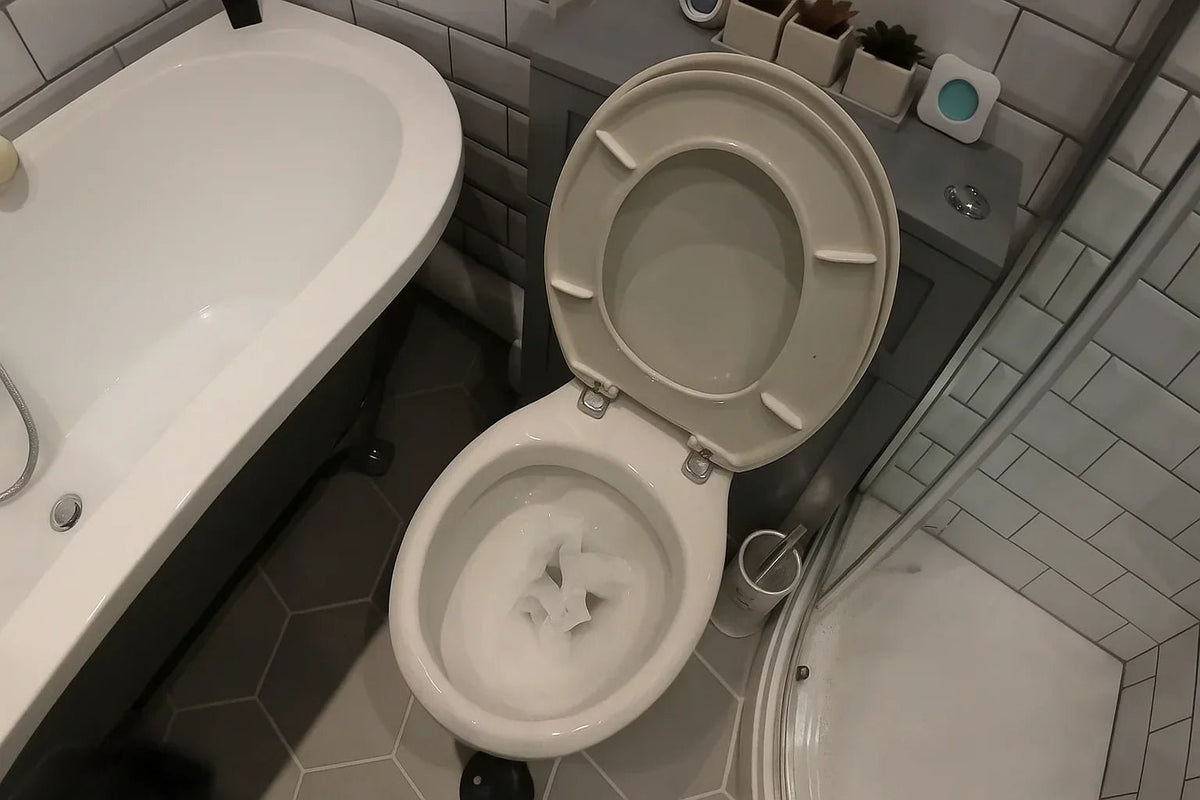
Field Diary: Overflowing Toilet — Powerwill 10DX1 in Action
This service call was perfect for a real-world test of the Powerwill 10DX1 sewer camera.
In this article, we'll break down how we tackled an overflowing toilet issue using the Powerwill 10DX1 sewer camera. We'll cover:
- Initial Problem — Overflowing Toilet & Suspected Wipes
- First Use of the Powerwill 10DX1
- 10DX1 Highlights (Quick Walkthrough)
- Advancing the Camera & Findings
- Clearing the Blockage & Verification
- FAQs
Initial Problem — Overflowing Toilet & Suspected Wipes
The toilet was clearly backed up, and plunging did nothing. While working the plunger, I noticed gurgling from the shower drain — a clear sign of a shared blockage. With no access from the outside, the only entry point was under the bathroom floor.
First Use of the Powerwill 10DX1
External Inspection & Assessment:
Tracing the pipe layout showed that the line ran under the conservatory, with no clean-out installed. This made it an ideal test case for a compact self-leveling camera.

10DX1 Highlights (Quick Walkthrough)
The Powerwill 10DX1 is an all-in-one system designed for both convenience and durability. Here are some key features:
- Integrated camera system — camera, Auto-Reel Storage System, and monitor in one package.
- Rugged reel with locking strap and telescopic pull handle.
- 10-inch LCD color monitor mounted on a flexible gooseneck for easy viewing.
- 5× digital zoom and self-leveling camera that automatically keeps the image upright.
- Built-in DVR with distance counter and timestamp overlay.
- Full-size reel with 264 ft × 7 mm fiberglass push cable, ideal for inspecting 3"–10" pipes.
- Heavy-duty frame that can operate vertically or horizontally.
- LED brightness control and both AC/DC power cords.
- Video output port and TF card slot for recording and easy sharing with clients.
- Built-in 512 Hz transmitter for quick and accurate camera locating.
- Durable 7 mm diameter fiberglass push cable, perfect for long, straighter runs and larger pipes.
Advancing the Camera & Findings
At approximately 4.5 m, we reached a junction with visible build-up on the clay pipe. A still frame was saved for the client report. The blockage was caused by paper and wipes accumulation that had dried over time.

Clearing the Blockage & Verification
After a few flushes, the obstruction cleared. No rods were needed this time, which made cleanup easier. We flushed again, advanced the camera, and verified the full run was clear.
FAQs
-
Can I inspect small PVC under the sink?
Yes, use a compact self-leveling head and avoid forcing through tight bends — choose an alternate entry if needed. -
How accurate is 512 Hz locating?
When swept correctly at multiple angles, the 512 Hz locator is accurate enough to mark a repair spot and minimize excavation.
Comments
No comments